Description
Soledad
Conceptual photographic research
September 2016 | Variable dimensions
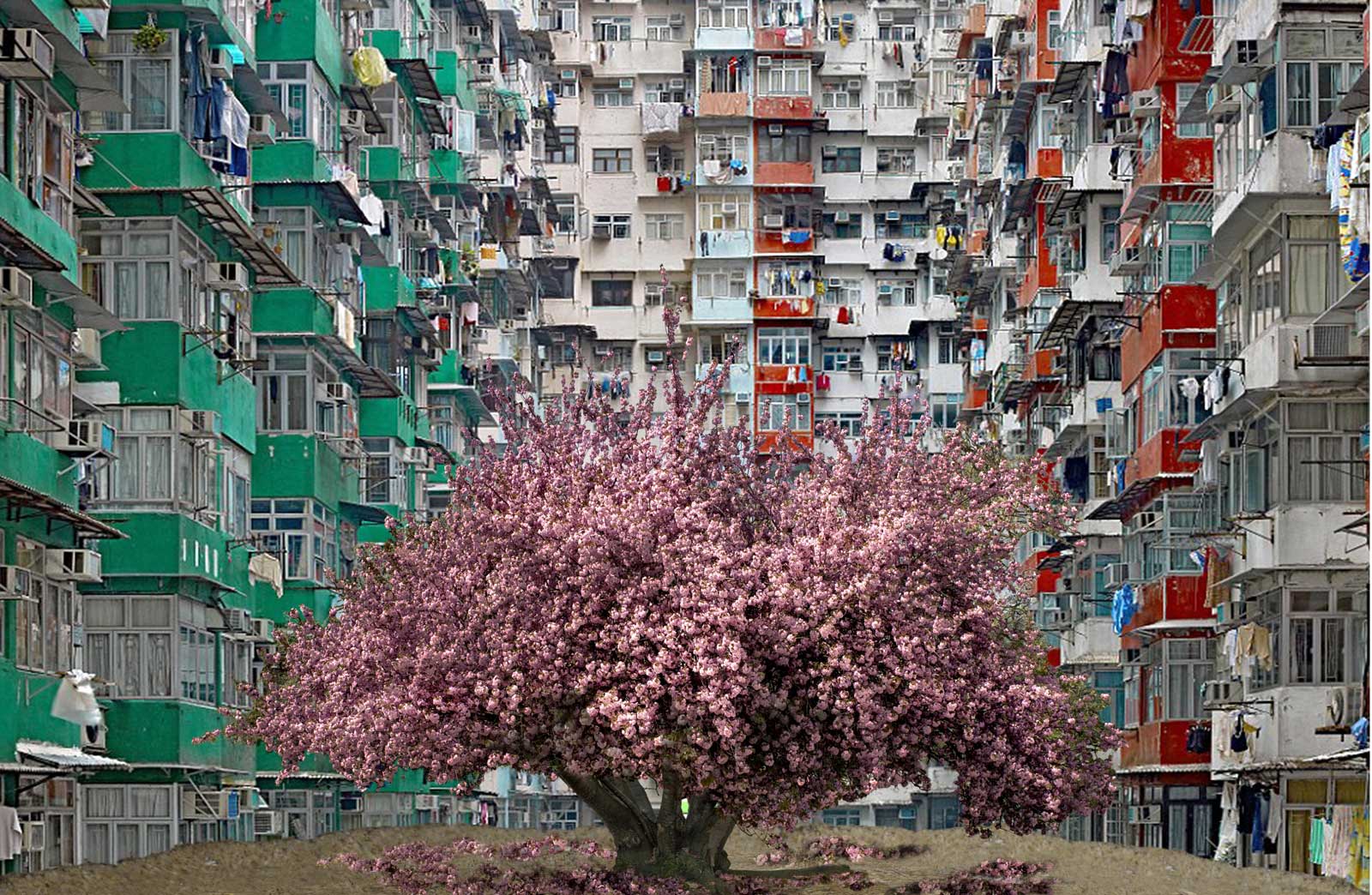
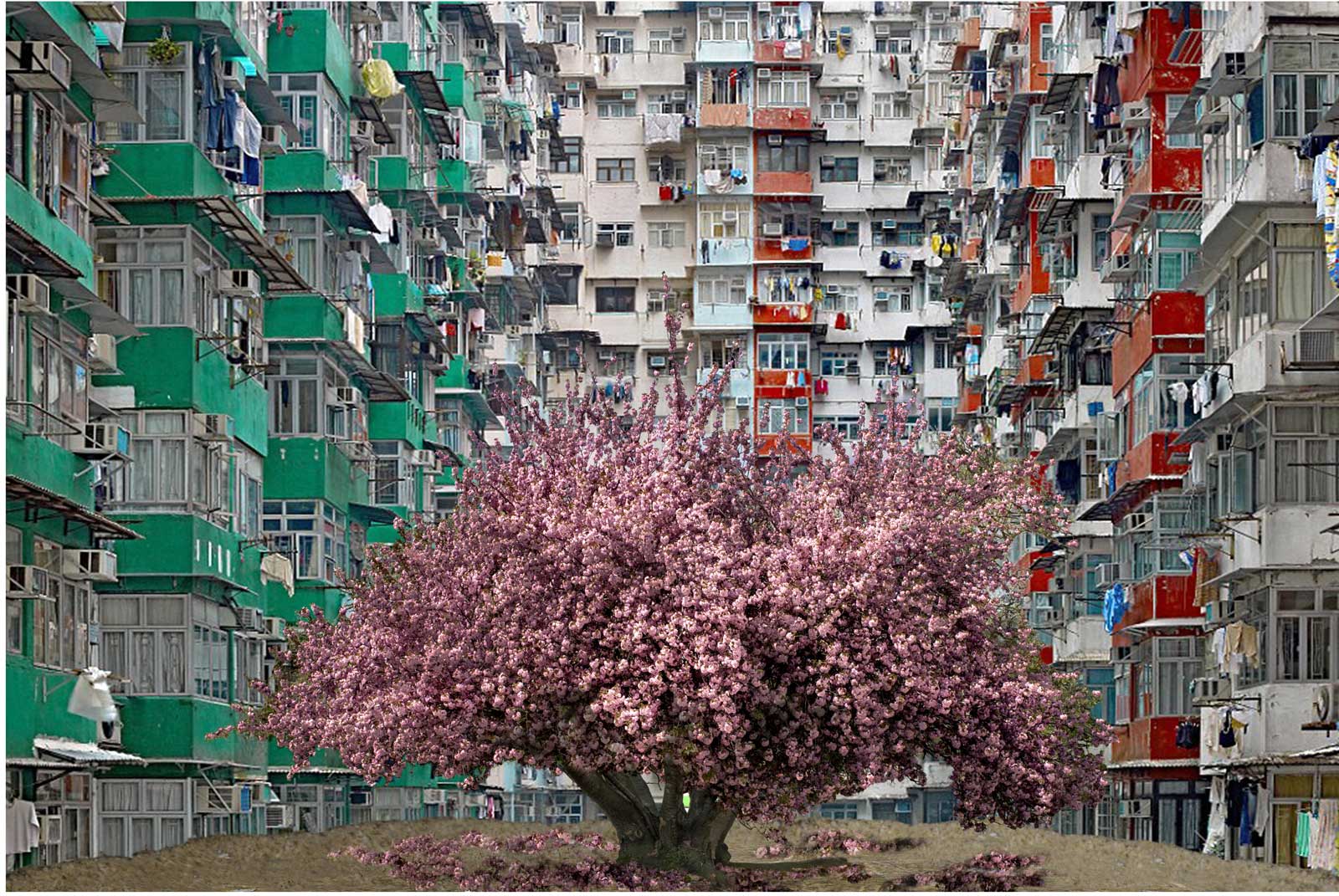
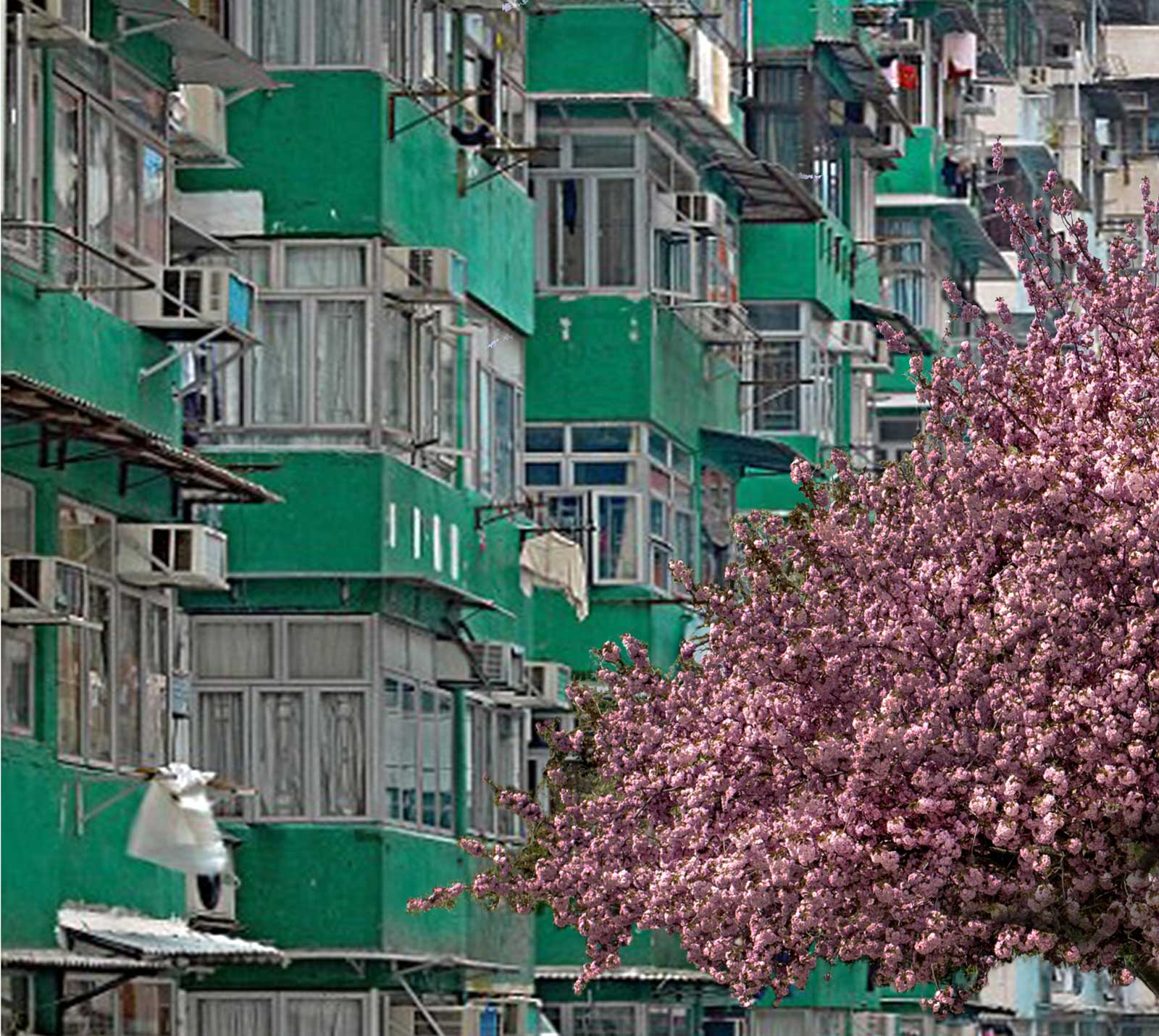
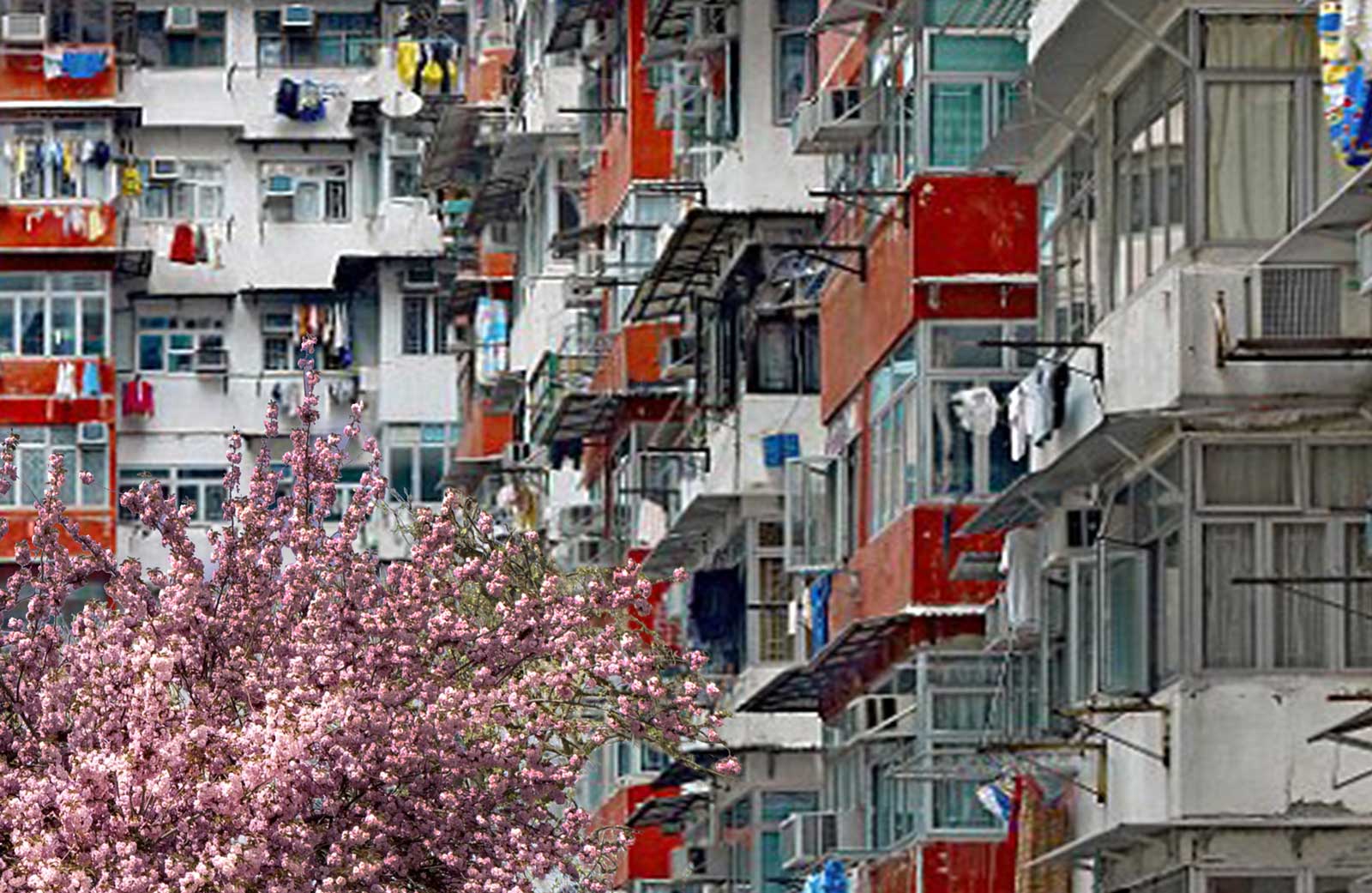
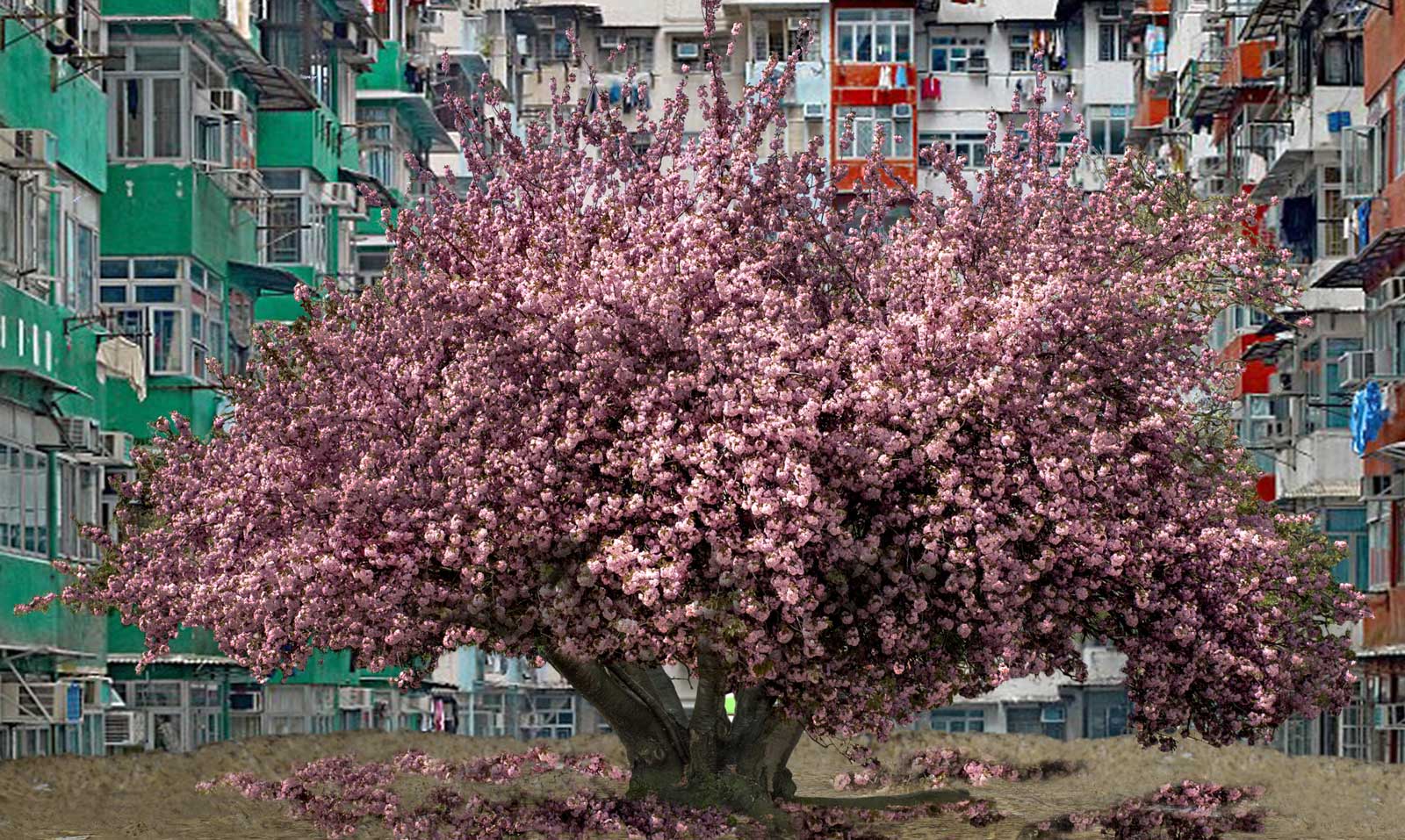
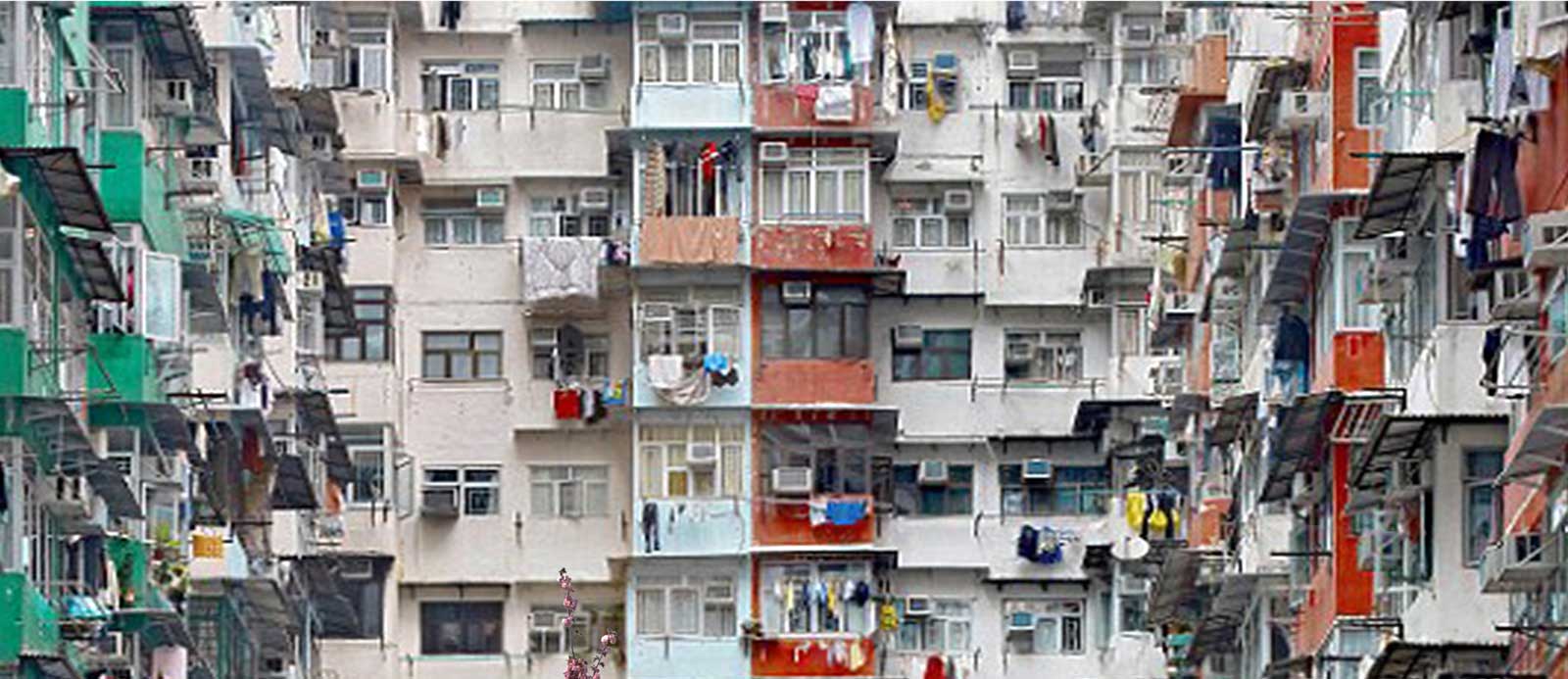
The cherry blossom tree burst with pink at the center of this concrete jungle, abundant magnificent spring bloom that seemed to defy all logic, how could it live thrive bloom with such exuberance in this tiny space surrounded on all sides by Soviet apartment blocks that rose toward the sky like gray green red orange cliffs, brutalist architecture that had transformed millions of humans in Eastern Europe into tenants of boxes stacked vertically, total standardization of housing where each apartment resembled all others and where individuality disappeared in the infinite repetition of identical windows identical balconies identical facades.
September twenty sixteen, fifty-four years old, fourteen years living in France, and this image brought me directly back to my Romanian childhood under Ceaușescu when Bucharest was covered in these communist housing projects that the dictator proudly called « urban systematization », destruction of charming old neighborhoods with their individual houses their gardens their trees, replacement by concrete blocks where people were packed like sardines, maximum efficiency optimal use of available space, but zero beauty zero soul zero respect for human need for greenery nature connection with non-human living things.
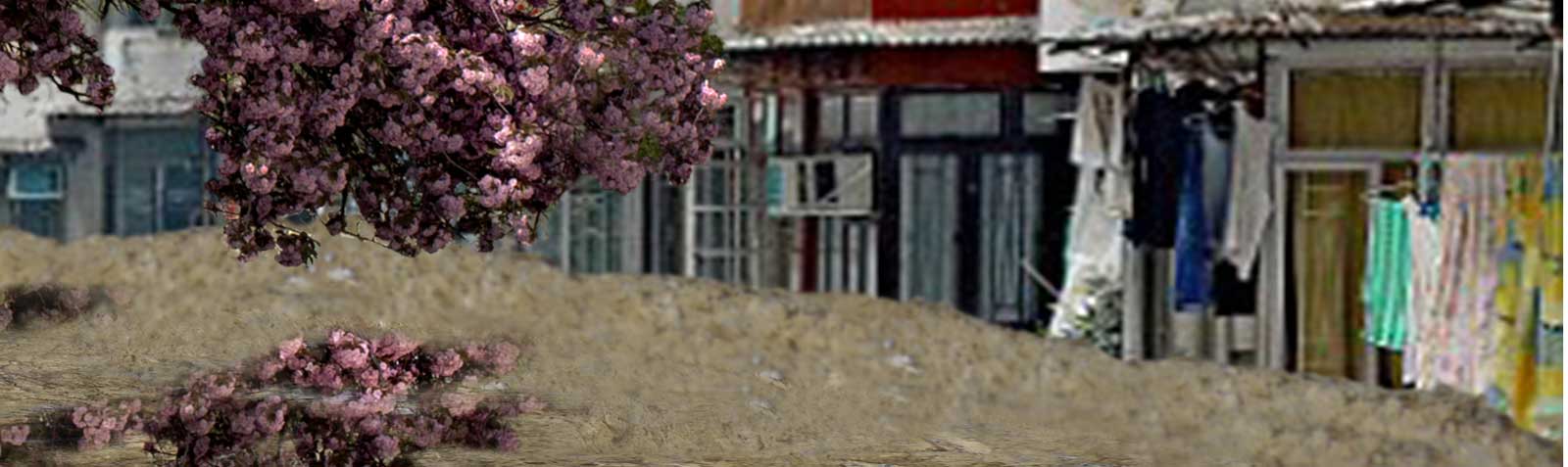
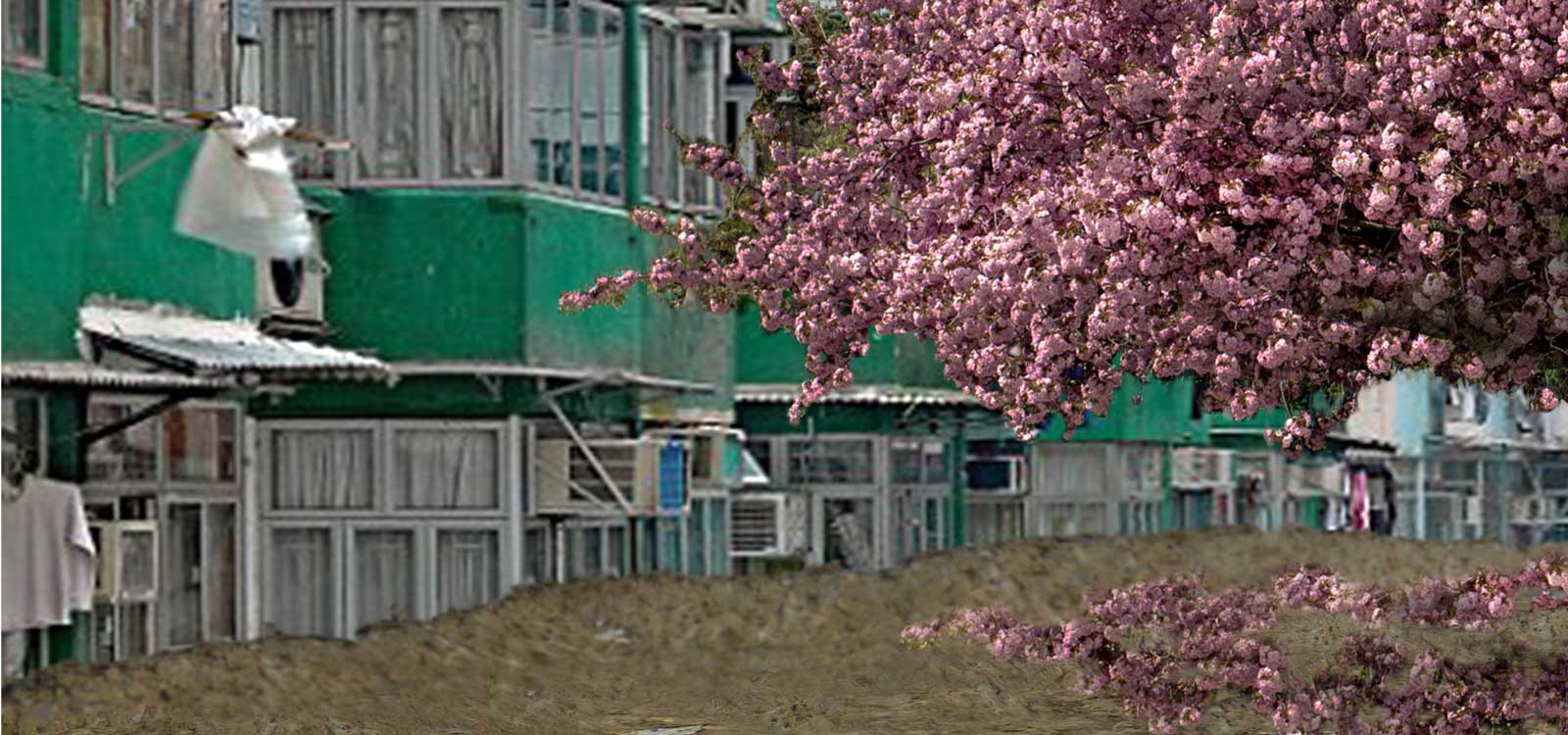
And precisely in my image a crucial detail changed everything — the earth rose, the ground level increased progressively, you could see it clearly because the ground floors of the buildings were partially buried, the windows half buried, the doors beginning to disappear under this mysterious telluric rise. Nature was reclaiming its rights slowly inexorably, the soil was rising to cover the concrete, bury these constructions that had violated it, soft but implacable geological revenge, and the Soviet buildings were sinking millimeter by millimeter into this ground that swallowed them like quicksand.
But the tree at the center resisted, its roots plunged deep maintaining the level around it, it functioned like a natural dam that prevented the earth from rising further, vegetation savior protecting these buildings from total burial even though they perhaps didn’t deserve saving, even though architecturally they represented everything that shouldn’t be done, even though ideologically they embodied this communist will to crush the individual under the collective, to deny diversity for uniformity, to transform humans into interchangeable units in the great machinery of the totalitarian state.
Soledad — I had chosen this Spanish title rather than French solitude or Romanian singurătate, and this linguistic choice evoked García Márquez and his masterpiece One Hundred Years of Solitude, this family saga that unfolded in the imaginary village of Macondo where magical realism allowed speaking truths about Latin America that ordinary realism could not express. And my image also practiced a form of urban magical realism, this solitary tree surviving miraculously saving miraculously, this earth rising to engulf civilization, this silent struggle between the living and the inert where for once the living won.
September twenty sixteen and world urbanization continued its mad expansion, megacities in Asia counted tens of millions of inhabitants, Hong Kong Singapore Tokyo Shanghai Mumbai, record density, buildings rising ever higher, nature chased out relegated eliminated, a few trees sometimes survived in tiny parks, botanical curiosities that city dwellers visited on Sunday to remember that something else existed besides concrete steel glass, but globally nature lost, retreated, disappeared under demographic pressure and urban expansion that seemed never to stop.
But in my image the trend reversed, the earth rose to reclaim what had been stolen, and the tree led this reconquest while moderating it, it didn’t let the earth engulf everything too fast, it managed the transition between the human era and the post-human era, guardian of the border between two worlds, and its pink flowers proclaimed that life continued that beauty persisted that spring always returned despite communist winters despite oppressive architectures despite all human efforts to suffocate the natural under the artificial.
Colored buildings — green on left, red and orange on right — showed these pathetic attempts to make joyful what was fundamentally sad, gray facades had been repainted after the fall of communism, bright colors added to brighten daily life of inhabitants, but the structure remained the same, spatial configuration unchanged, and no color however bright could compensate for the fact that these buildings had been designed without love without imagination without respect for those who would live there for decades.
Each window contained one or more human lives, entire families in fifty-square-meter apartments, and all these lives stacked vertically, neighbors above neighbors below neighbors left neighbors right, forced overcrowding paradoxical anonymity, you heard others through poorly insulated walls but never spoke to them, millions of juxtaposed solitudes, and the title Soledad took on new meaning — not just the solitude of the solitary tree amid concrete, but the solitude of humans living in these stacked boxes, alone together, isolated in the crowd, this modern urban solitude perhaps worse than rural solitude because it was lived surrounded by millions of other solitary ones.
The tree resisted and saved, its invisible roots worked underground to anchor maintain stabilize, and its visible blooming celebrated this modest victory, these pink ephemeral flowers that would fall in days but return next year and the year after, eternal cycle that would continue long after the buildings completely collapsed after earth completely buried them after nature reclaimed possession of spaces it should never have lost.
September twenty sixteen, fifty-four years old, fourteen years in France, and I still carried these images of communist Bucharest, gray blocks of my childhood where we lived packed, and seeing this tree resist filled me with strange hope, hope that nature was stronger than we thought, that it could survive our worst architectural excesses, that it waited patiently for its hour to reclaim what belonged to it, and perhaps in a hundred years in a thousand years these Soviet buildings would become vegetation-covered hills where forests of blooming cherry trees would grow, and no one would remember there had been humans packed in concrete boxes, just the earth that had covered everything digested everything transformed everything into fertile humus, and the solitary tree would become a dense forest where instead of Soledad would reign plant community natural solidarity recovered harmony, September twenty sixteen Soledad forever.
Cornel Barsan
September 2016