Description
Cryogenic Dream
Conceptual photographic research
February 2016 | Variable dimensions
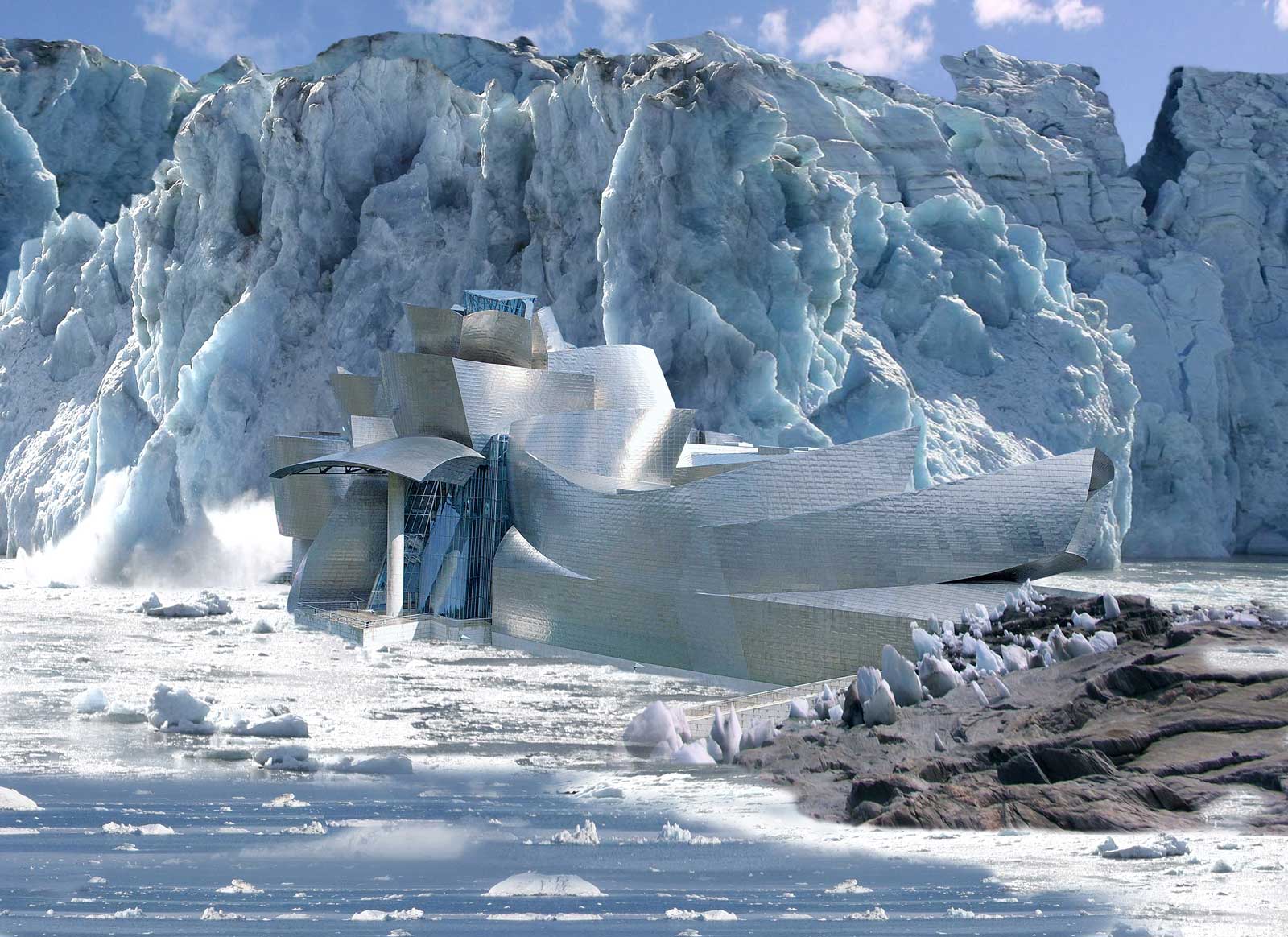
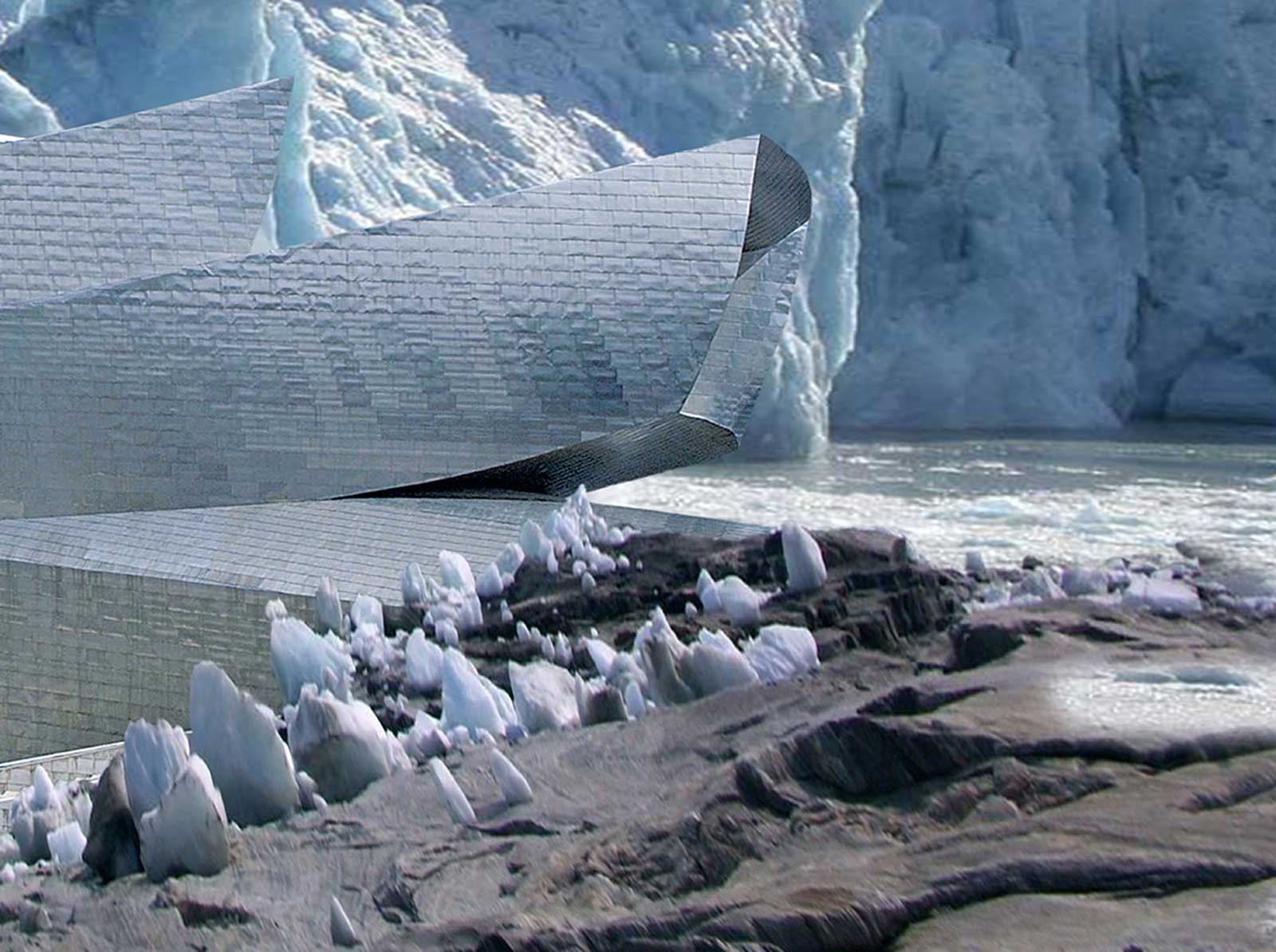
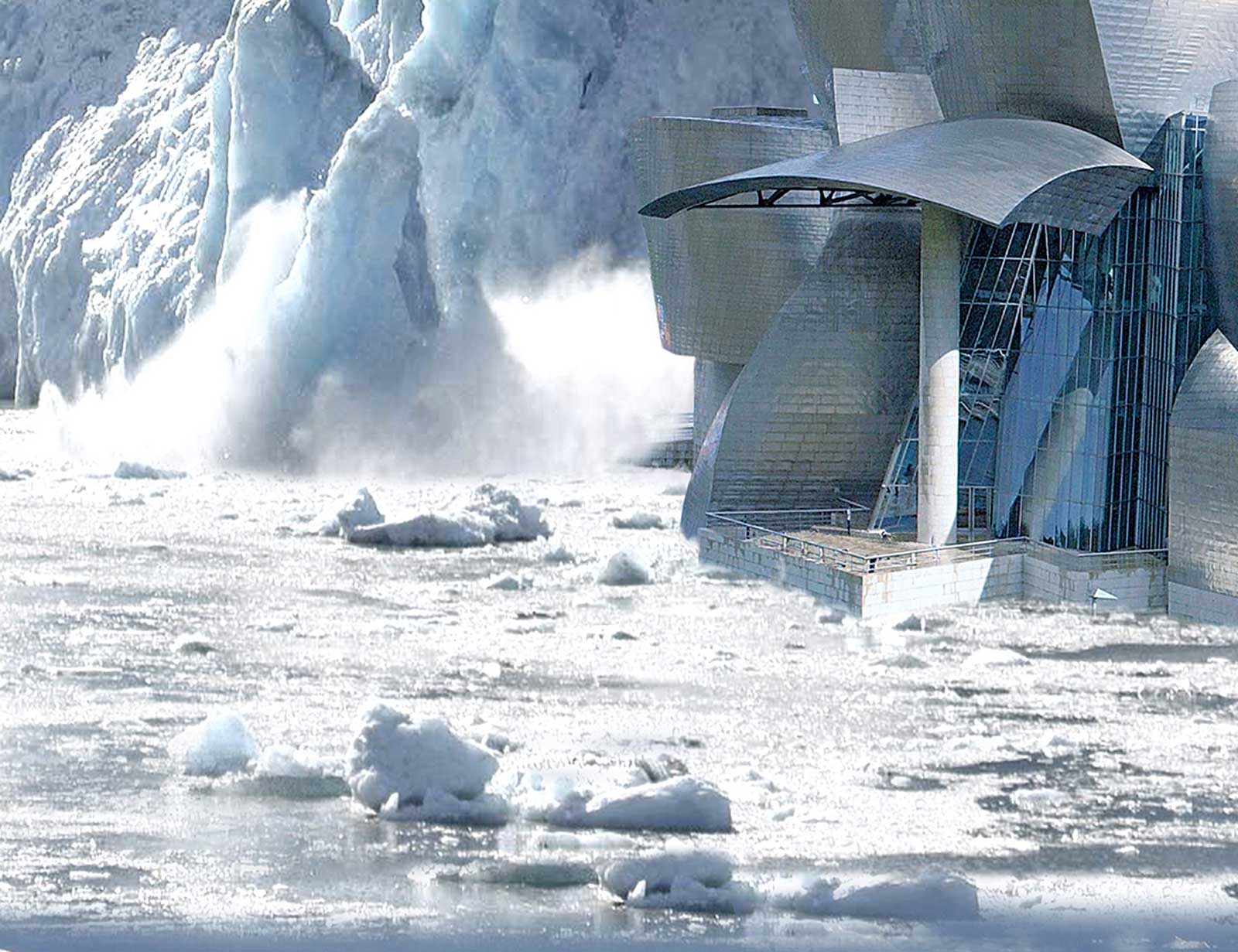
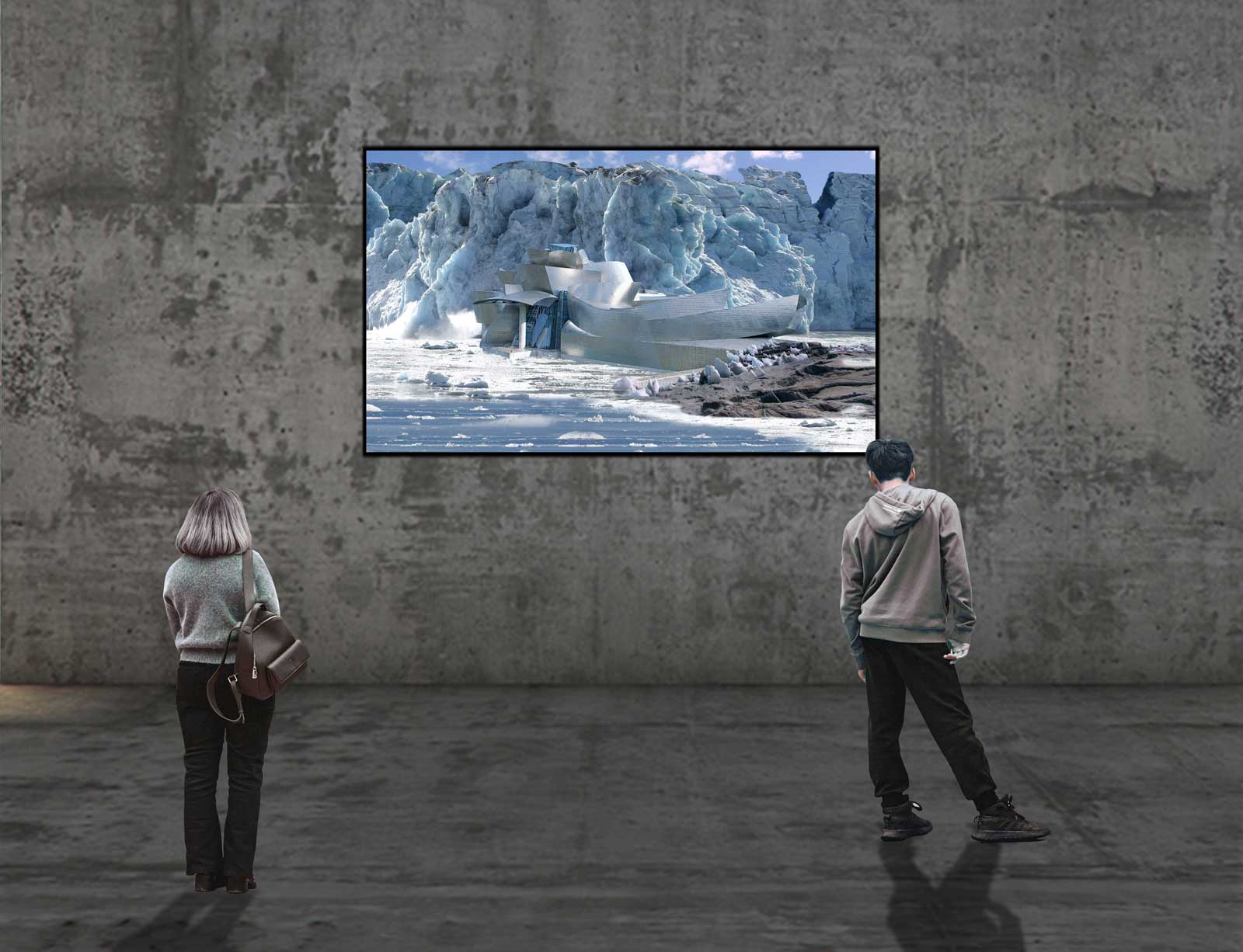
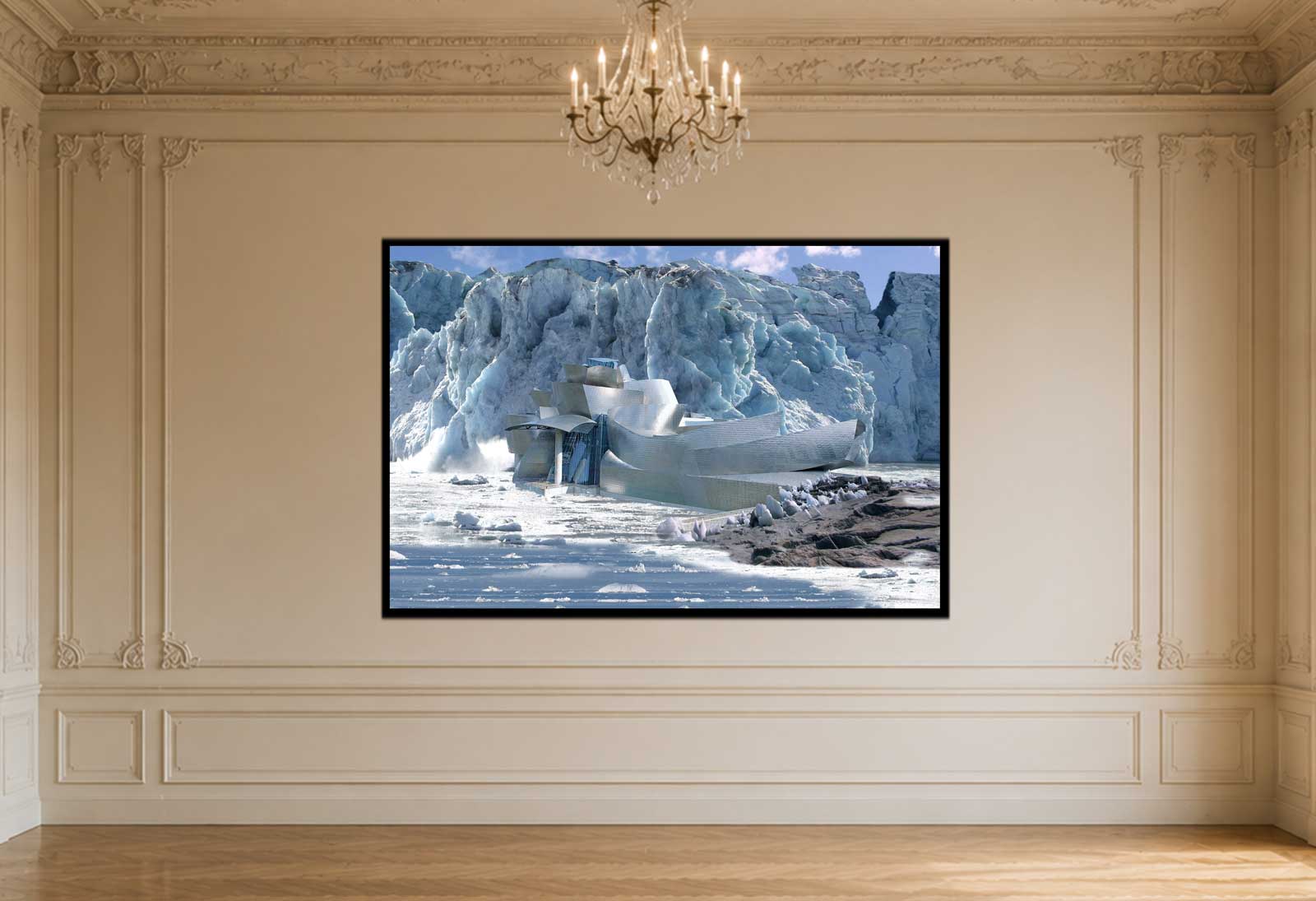
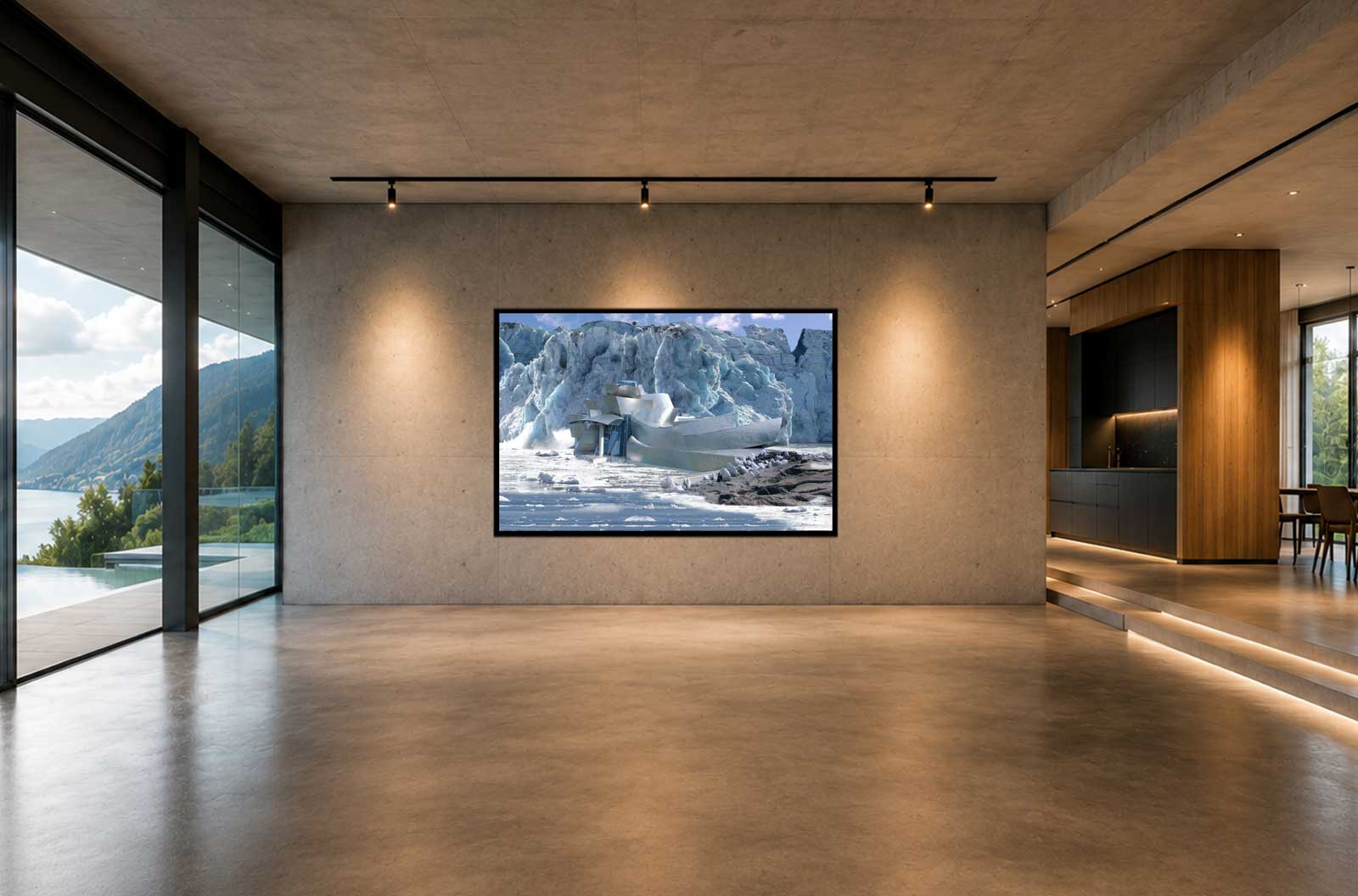
Frank Gehry had designed the Guggenheim in Bilbao like a bouquet of metal flowers, sensuous curves of titanium that rippled under Basque light, deconstructivist architecture that had transformed a declining industrial city into a global tourist destination from its opening in nineteen ninety-seven. The Bilbao Effect, they called it, this phenomenon where a single iconic building could revitalize an entire urban economy, and since then dozens of cities worldwide tried to reproduce this miracle by commissioning star-architects to design spectacular museums meant to attract millions of visitors and billions in investment. But me in February twenty sixteen was transplanting this architectural masterpiece far from Bilbao, very far, I was placing it delicately on the melting Arctic ice shelf, and suddenly all its beauty all its technical prowess all its economic success took on a bitter taste of cold ashes.
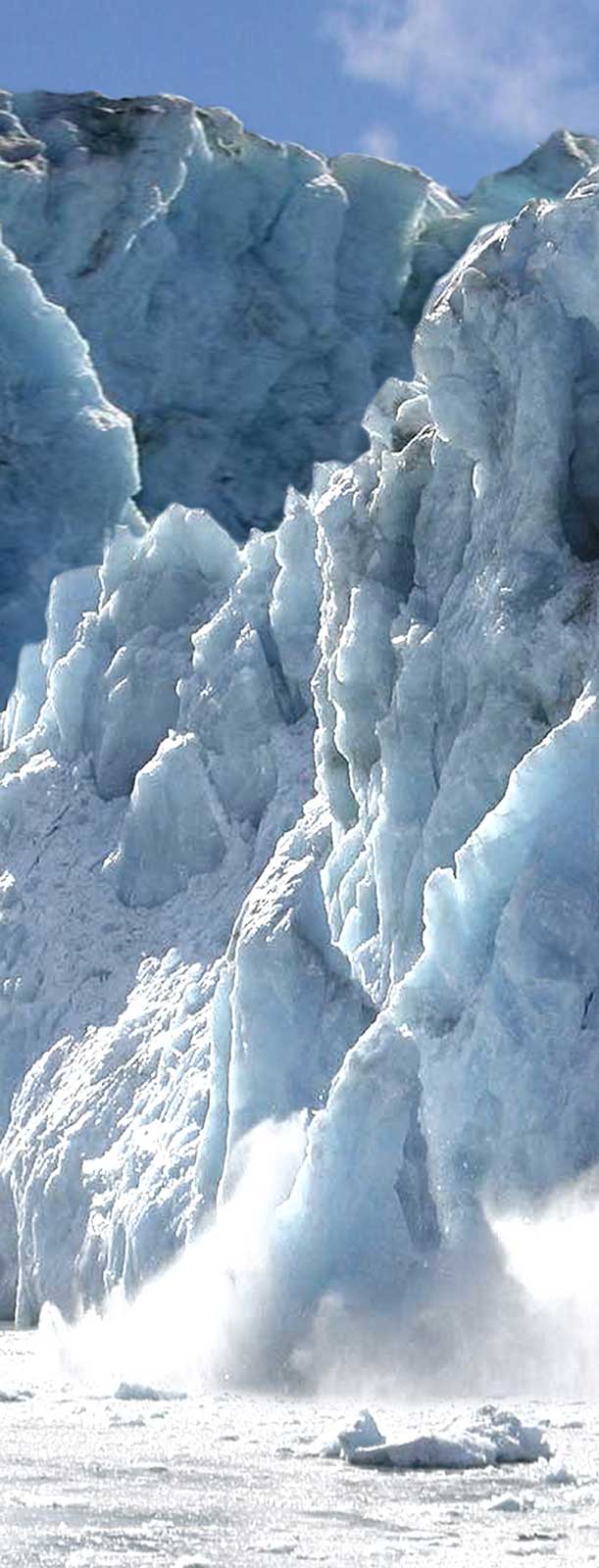
The glacier behind the museum was fracturing, immense blue-white mass cracking and breaking apart, pieces falling into the sea with a crash no one heard because there was no one, just this museum stranded like a cultural Ark of the Covenant come too late to save anything. February twenty sixteen, three months after COP21 in Paris where climate agreements had been signed in euphoria, commitments to limit warming to two degrees below pre-industrial levels, promises to reduce CO2 emissions, beautiful diplomatic words while the Arctic continued melting at record pace, glaciers retreating sea ice disappearing hungry polar bears, slow-motion catastrophe everyone could see coming but no one could really stop.
Cryogenic Dream — the cryogenic dream, that crazy idea from Walt Disney who supposedly had his body frozen after death hoping that future science could resurrect him, technological immortality, absolute faith in human progress, belief that we could overcome even death if we developed the right technologies. And in my image it was all of Western civilization getting cryogenically frozen, the Guggenheim ark preserved freezing masterpieces by Picasso Kandinsky Rothko while the planet paradoxically burned with heat, while temperatures rose and melted thousand-year-old ice, cryogenic dream of a civilization wanting to save its art but not the nature that made it possible.
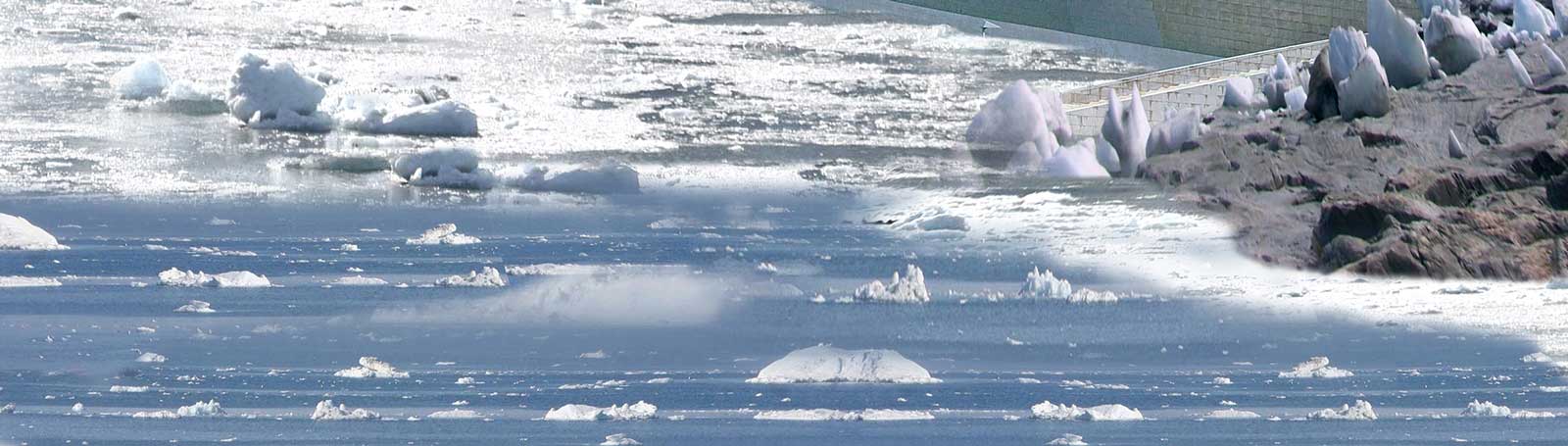
The museum was almost floating on this water scattered with ice, absurd anachronism, and all the irony was concentrated in this juxtaposition — we preserved our paintings our sculptures our installations in climate-controlled museums at precise temperatures and humidity, we spent millions to restore conserve protect our cultural heritage, but we simultaneously destroyed the natural environment that allowed our civilization to exist, we saved Picasso while killing oceans, we protected Rothko while acidifying seas, we catalogued Kandinsky while causing the sixth mass extinction of living species.
February twenty sixteen and the Bilbao Effect had spread everywhere, every city wanted its Gehry museum its Zaha Hadid cultural center its Santiago Calatrava opera house, spectacular architecture that cost fortunes in construction and maintenance, pharaonic cultural budgets for institutions that mainly served to impress tourists and valorize surrounding real estate, cultural gentrification where art became pretext for urban development and museums functioned like secular cathedrals attracting consumer pilgrims coming to admire our civilization’s artistic relics.
But in my image the museum attracted no one anymore, it drifted alone on melting ice shelf, useless beauty, architectural prowess without public, brilliant titanium for nothing because the glacier behind it was collapsing and soon the museum would float on an ice-free ocean, navigate eternally searching for a welcoming shore that would no longer exist because all coasts would be submerged by rising waters. Cryogenic dream turning nightmare, preservation becoming absurd, culture surviving nature but for what exactly, for whom, in what uninhabitable devastated world where humans themselves might have disappeared or taken refuge in underground air-conditioned bunkers awaiting a hypothetical improvement that would never come.
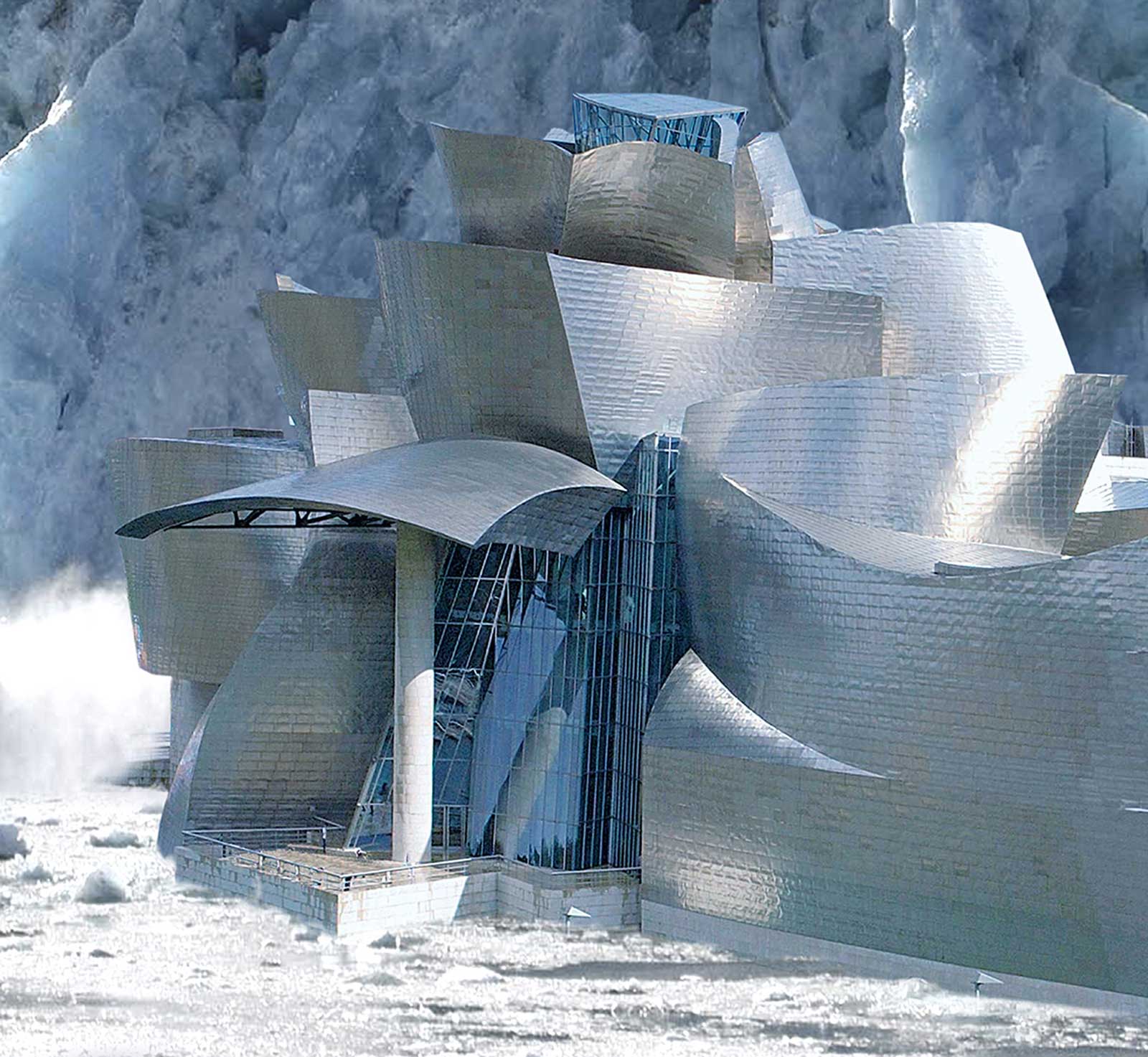
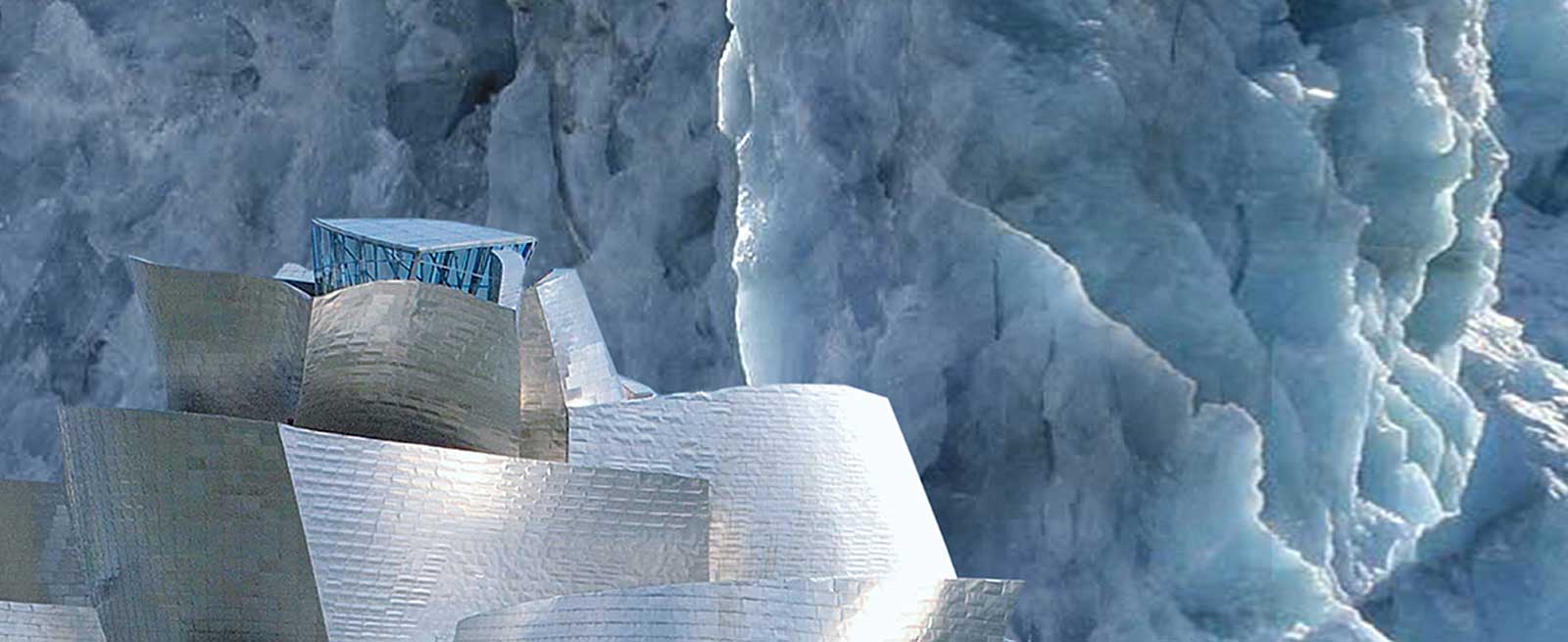
Gehry’s rippling titanium reflected the last icebergs, metal mirror surfaces capturing whites and blues of dying ice, aesthetic symbiosis between human art and agonizing nature, but this formal beauty served nothing, changed nothing, prevented nothing of the disaster unfolding inexorably. And maybe that was the bitterest message of this image — art will not save the world, culture will not compensate for ecological destruction, we cannot console ourselves with our museums when oceans are dead and the atmosphere unbreathable, all the beauty accumulated in all the Guggenheims of the world will be worthless in a world become uninhabitable for the human species.
Cryogenic Dream in February twenty sixteen, fifty-three years old, and I dreamed this Arctic museum like one dreams a shipwreck, like one visualizes a gentle apocalypse where the world’s end would be aesthetically sublime, where we would sink with grace admiring our own creations while everything collapsed around us, cultural Titanic playing its last concert while ice — inverse of the fatal iceberg — melted and abandoned us to the rising ocean that would slowly but surely engulf us, and the Guggenheim Bilbao would drift eternally on Arctic waters become temperate carrying its cargo of masterpieces no one would ever see again, Ark of the Covenant stranded on a liquid Mount Ararat, posthumous testimony of a civilization that knew how to create beauty but not preserve it, that could build magnificent museums but not a livable world, that dreamed the cryogenic immortality of its culture but forgot the essential — that without a habitable planet there would be no culture no museum no Gehry no Picasso nothing at all, just the silence of empty oceans and the mute cry of the last whale vainly seeking its disappeared kin in waters too hot of an Arctic become Mediterranean.
Cornel Barsan
February 2016