Description
Canvas Shot
Conceptual photographic research
February 2016 | Variable dimensions
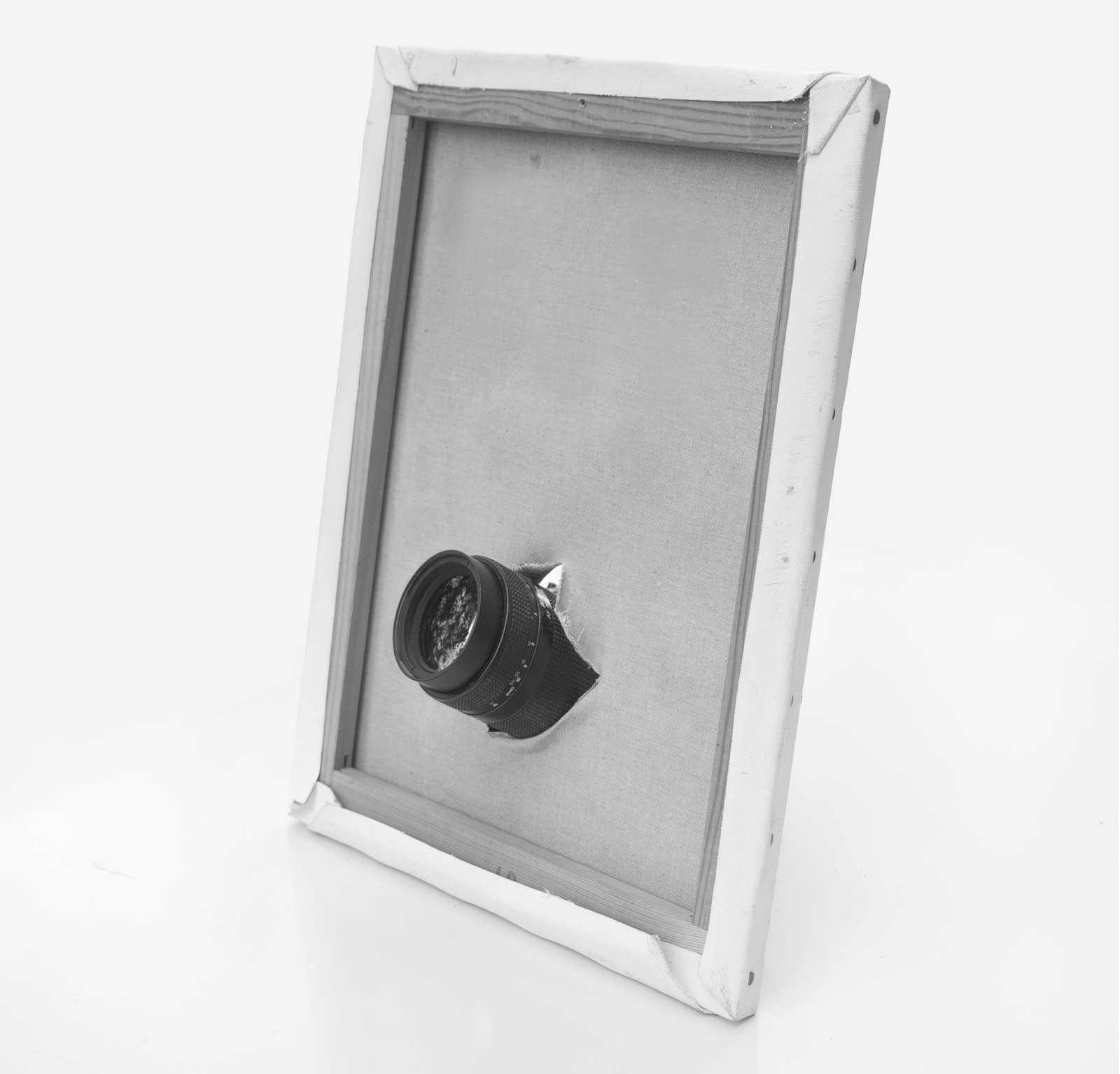
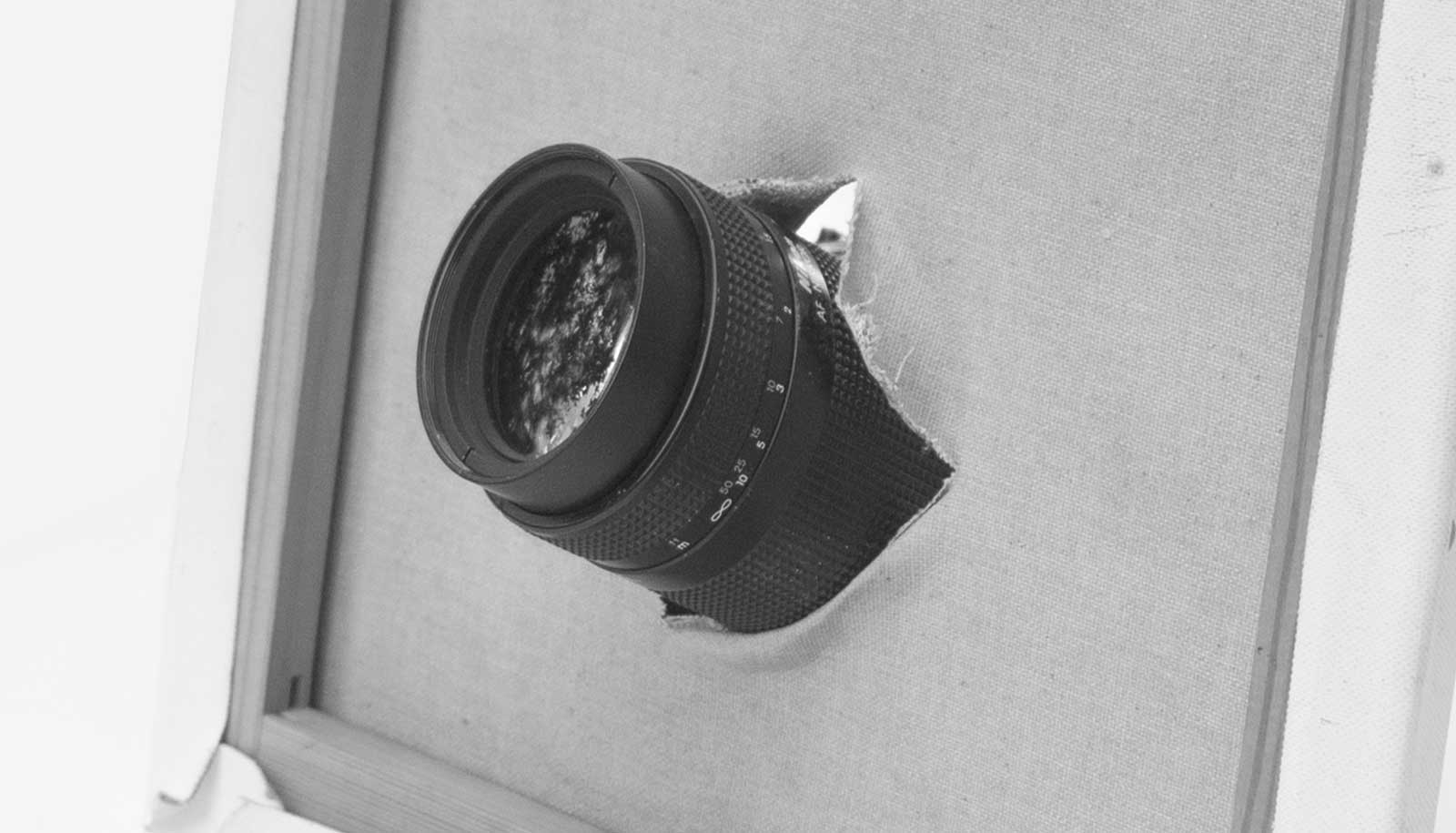
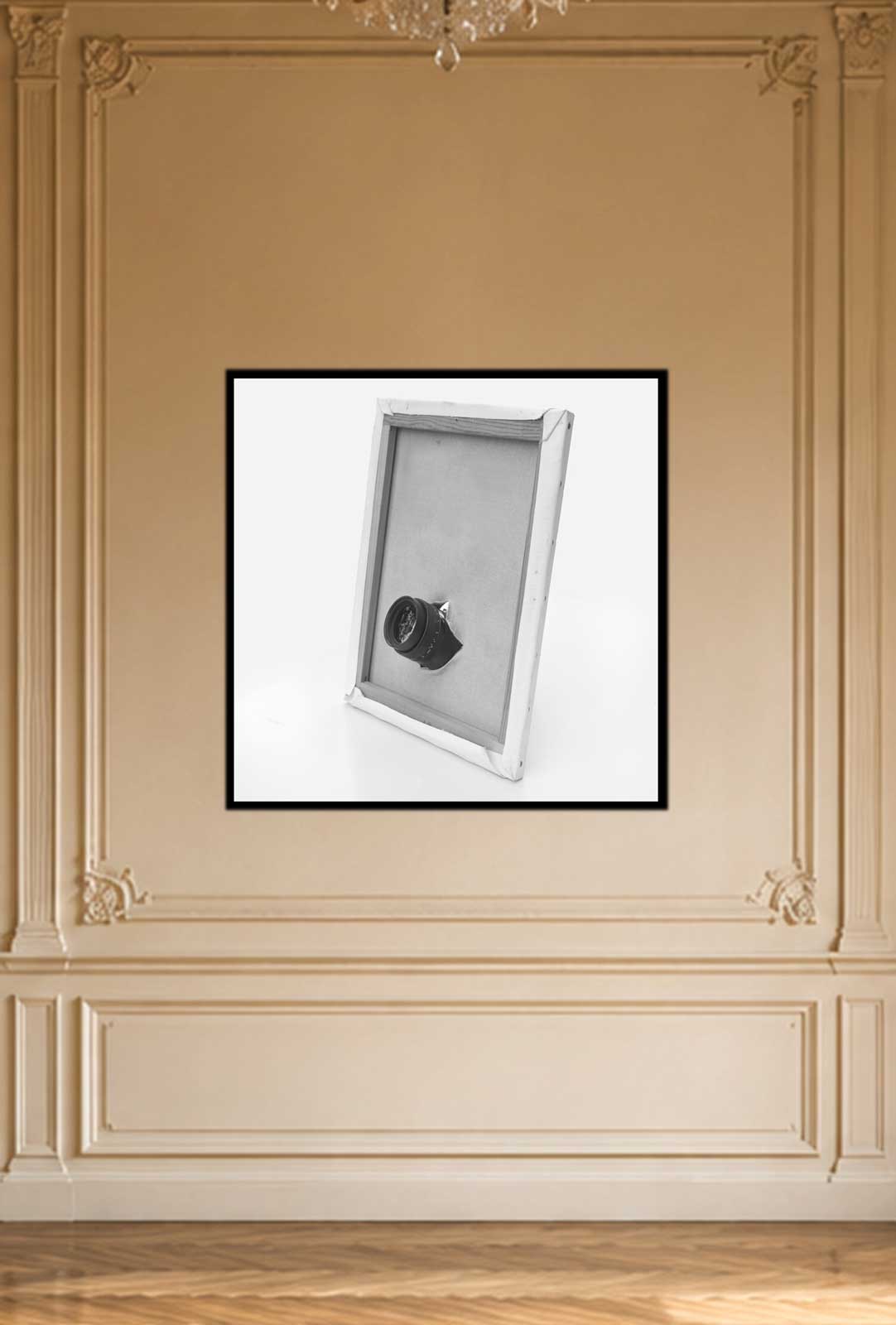
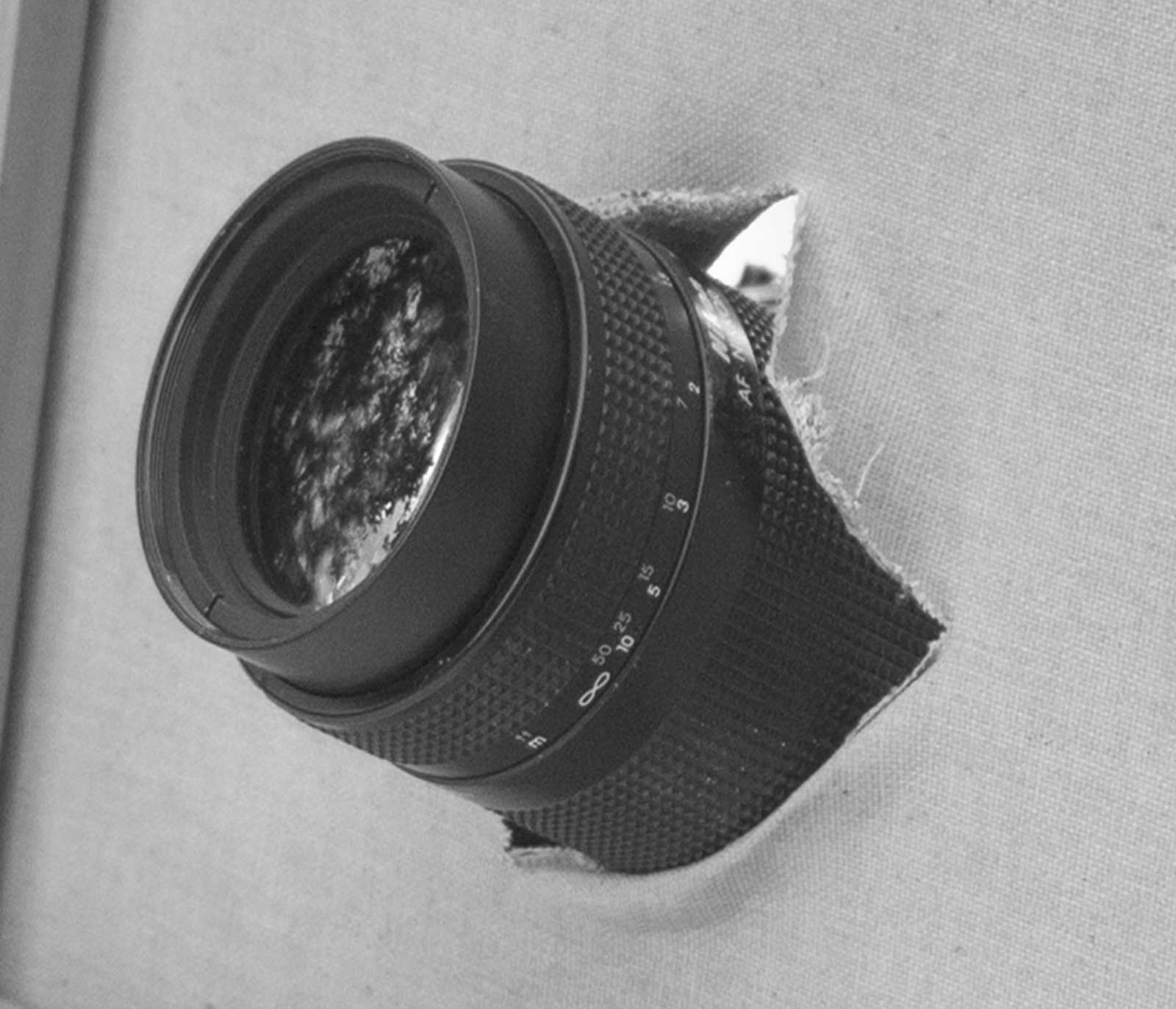
The canvas was blank, white, stretched on its wooden frame like a flag of surrender or like a target on a shooting range. And indeed it was a target, because at the exact center a photographic lens pierced it through and through, black lens protruding from white fabric like a bullet that had passed through, like a projectile that had perforated the pictorial surface to reveal the back of the frame, the construction secrets, raw wood, metal staples, all this hidden architecture that supported the noble surface where the painter was supposed to create their work.
February twenty sixteen, fifty-three years old, three months after the Bataclan, and this photograph spoke of war but not the war against terrorism, an older more subtle more existential war — the war between painting and photography, this centuries-old conflict that had lasted since the invention of the daguerreotype in eighteen thirty-nine when suddenly painters found themselves facing a machine capable of capturing reality with a precision that no brushstroke could ever equal. Delaroche supposedly declared in eighteen thirty-nine « painting is dead from today on », dramatic prophecy that proved false but that captured well the anxiety of an entire profession facing this new threatening technology.
Canvas Shot — the title played on ambiguity, the canvas photographed but also the canvas attacked shot executed, and both meanings overlapped because photographing was already a form of aggression, optical rape, violent penetration of the lens into the sacred space of the canvas that should have remained virgin inviolate reserved for the painter’s brush. The lens like a lance piercing the shield, the lens like a bullet piercing flesh, the lens like a phallus penetrating by force, all these metaphors of male violence telescoped in this brutal minimalist image where photographic technology literally violated the pictorial surface.
And the canvas remained blank, this was crucial, it had never been painted, it had been killed before even being born, murdered in its potential, all the works it could have borne cancelled at once by this photographic projectile that had pierced it. Double irony because this scene itself was photographed, documented by the camera that was also the murderer, self-photography of the crime, the murderous medium recording its own murder of painting, visual confession where photography admitted its destructive role while accomplishing it simultaneously.
February twenty sixteen and the painting versus photography debate seemed outdated, both coexisted peacefully in museums and galleries, no one spoke anymore of the death of painting, on the contrary the art market saw canvases by Picasso Basquiat Richter sell for tens of millions while photography remained generally cheaper less valued less prestigious. But me in February twenty sixteen I was both, painter AND photographer, artistic schizophrenia, and I felt this conflict internally, this aesthetic civil war where part of me defended the ancient nobility of manual handcrafted unique painting while another part embraced the modernity of mechanical reproducible democratic photography.
The lens passed through the canvas and showed the back, the back of the frame, revelation of what should have remained hidden, truth behind the surface. Photography always did that, it revealed, it documented, it showed what really existed instead of showing what the artist imagined or idealized. Testimonial function of photography versus creative function of painting, captured reality versus invented reality, mimesis versus poiesis, all that old philosophical debate about the nature of art crystallized in this simple image — white canvas, black lens, violent perforation.
And three months after the Bataclan the metaphor resonated differently too, because art itself had been attacked that November night, culture targeted, café terraces rock concert everything that represented casual artistic bohemian Parisian life had been literally shot, real bullets passing through real bodies not just photographic metaphors passing through symbolic canvases. Canvas Shot spoke of this vulnerability of art, of this impossibility of painting when bullets fly, of this difficulty of creating in a violent world where beauty seemed derisory futile powerless against armed hatred.
Lucio Fontana had slashed his canvases in the fifties and sixties, Concetto Spaziale, revealing the space behind the surface, violent but creative gesture, destruction that became creation. Niki de Saint Phalle had shot rifles at her paintings filled with pouches of paint that exploded in colors, spectacular performance where violence produced beauty. But my Canvas Shot inverted all that, the bullet produced nothing, it passed through and left just a hole, a void, an absence, no color explosion just the black gaping of the lens staring on the other side like a dead eye gazing at nothingness.
Black and white photographic for this image, obvious choice, the medium photographing itself in its war against the other medium, photography dominating the scene visually technically symbolically, and painting reduced to this blank empty silent dead canvas before it lived, ghost of a work that would never be created, annulled potential, murdered future. February twenty sixteen, fifty-three years old, and I documented this impossibility, this creative sterility that followed collective trauma, those weeks those months when I looked at the blank canvas in my studio and did not know what to paint because everything seemed derisory after what happened, so I photographed this helplessness, I transformed the block into work, I made the impossibility of painting the very subject of my photograph, Canvas Shot, the canvas executed, painting dead, art wounded but surviving anyway in another form, mutating, adapting, refusing to die completely even pierced through and through by the murderous lens that was also the lens witness that documented the crime so we would never forget it.
Cornel Barsan
February 2016