Description
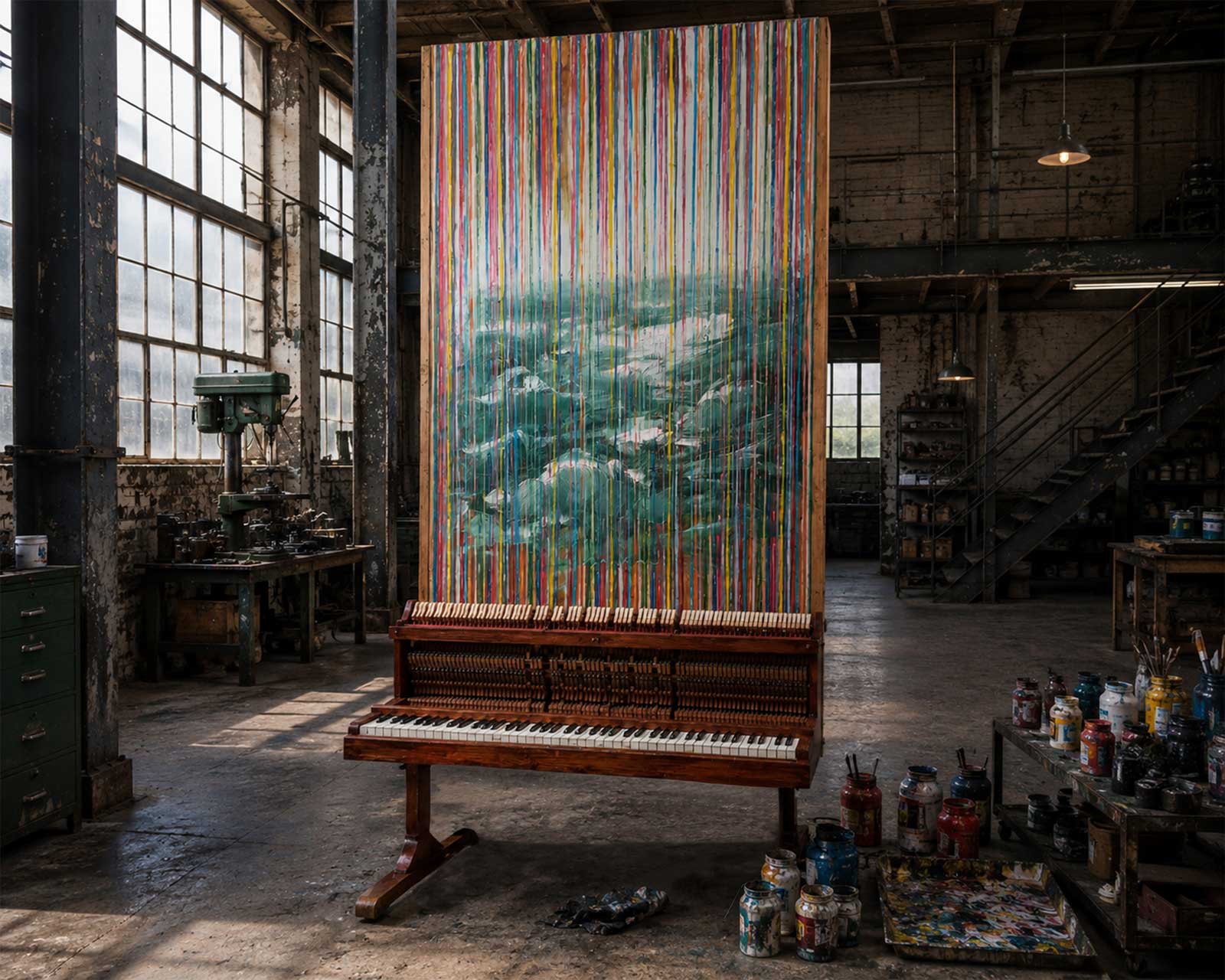
PEINT-PIANO OPUS 12 IN TEMPERED GREY-GREENS
April 2025, Paris
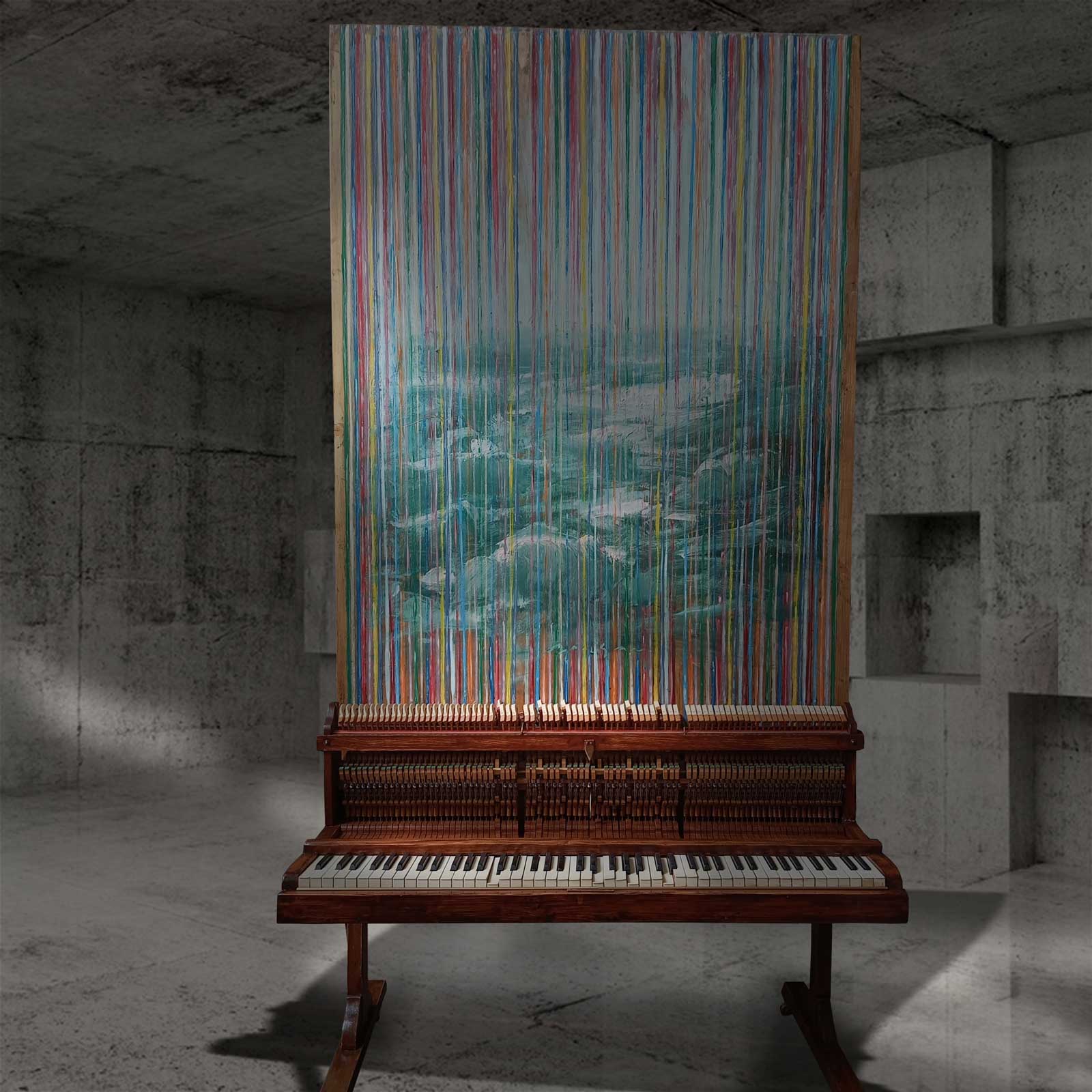
Peint-Piano Opus 12 in Tempered Grey-Greens. April two thousand twenty-five. Sixty-two years old. The breathing piano. The singing ocean. Scriabin resurrected in painting. The twelve colors falling like cosmic rain. The mystic chord vibrating in silence. Geppetto creating Pinocchio. The instrument coming alive. Music made visible. Painting made audible. The dream accomplished one hundred ten years after the composer’s death. And me constructing this impossible object in my Parisian studio while the world continued its dizzying descent, Gaza in ruins for eighteen months, Trump in power for a hundred days, Ukraine bleeding for three years, machines composing soulless music, and me, obstinate artisan, patiently assembling wood and paint and colors and invisible strings, still believing that an object of beauty could resist chaos, still believing that art had meaning, that Scriabin was right, that fusion was possible, that ecstasy existed, that the ocean truly breathed, that the piano truly played ancestral music continuously, like a cosmic heartbeat, like universal respiration, and I worked day after day, week after week, March, April, the colored vertical lines, the twelve colors of the chromatic scale, C red, C# violet, D yellow, D# steel reflection, E petroleum blue, F deep red, F# brilliant blue, G rosy orange, G# violet, A green, A# metallic reflection, B blue, and I repeated them octave after octave, as Scriabin had dreamed, as Bach had done with his Well-Tempered Clavier, twenty-four preludes and fugues in all keys, masterful demonstration of the tempered system, and I was making my demonstration, my fusion, my manifesto, Peint-Piano Opus 12, my synthesis-work, everything I was condensed into a single object, musician painter sculptor poet mystic, all together, inseparable, as the piano and the panel were now inseparable, as music and painting had become one thing, one body, one breath.
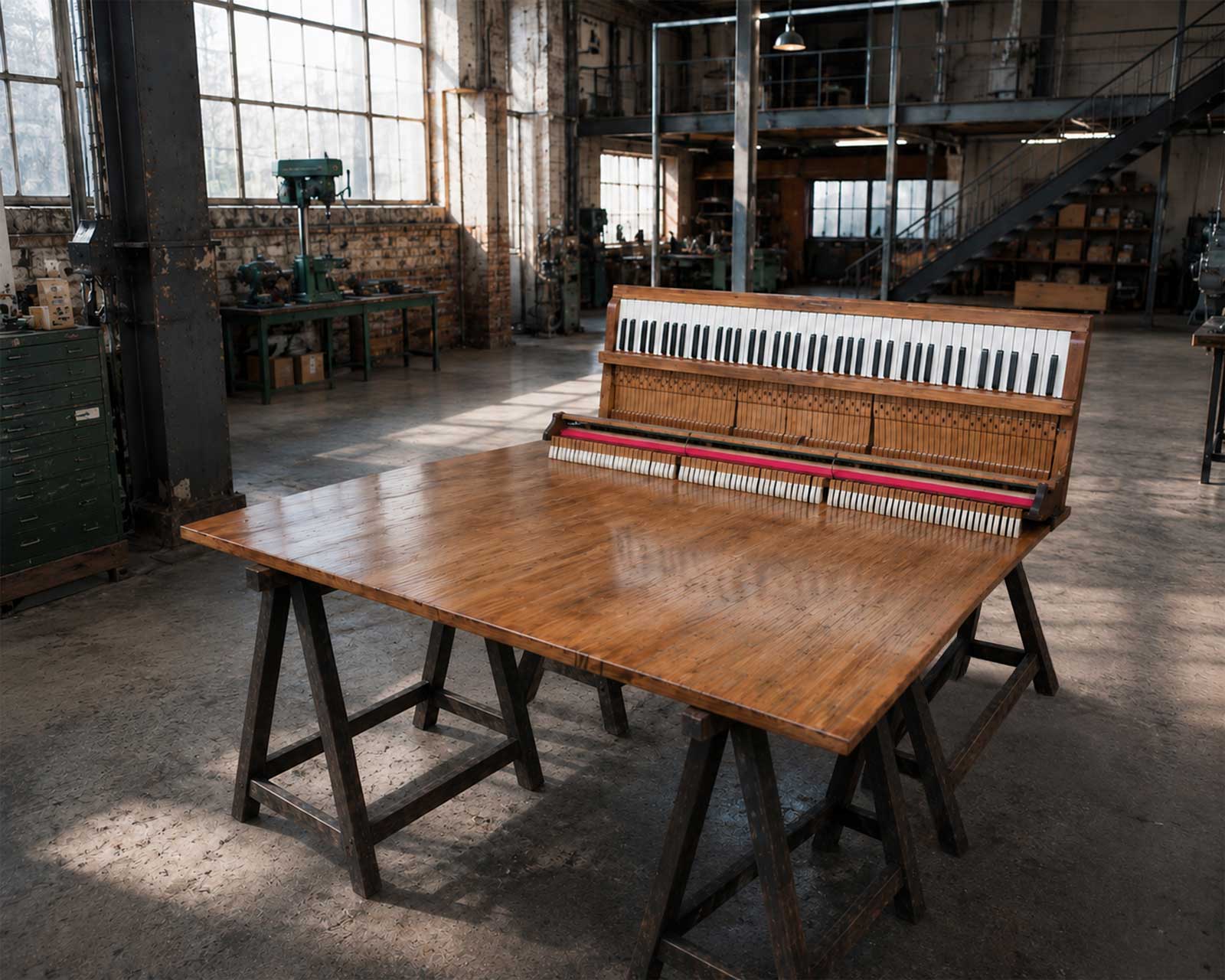
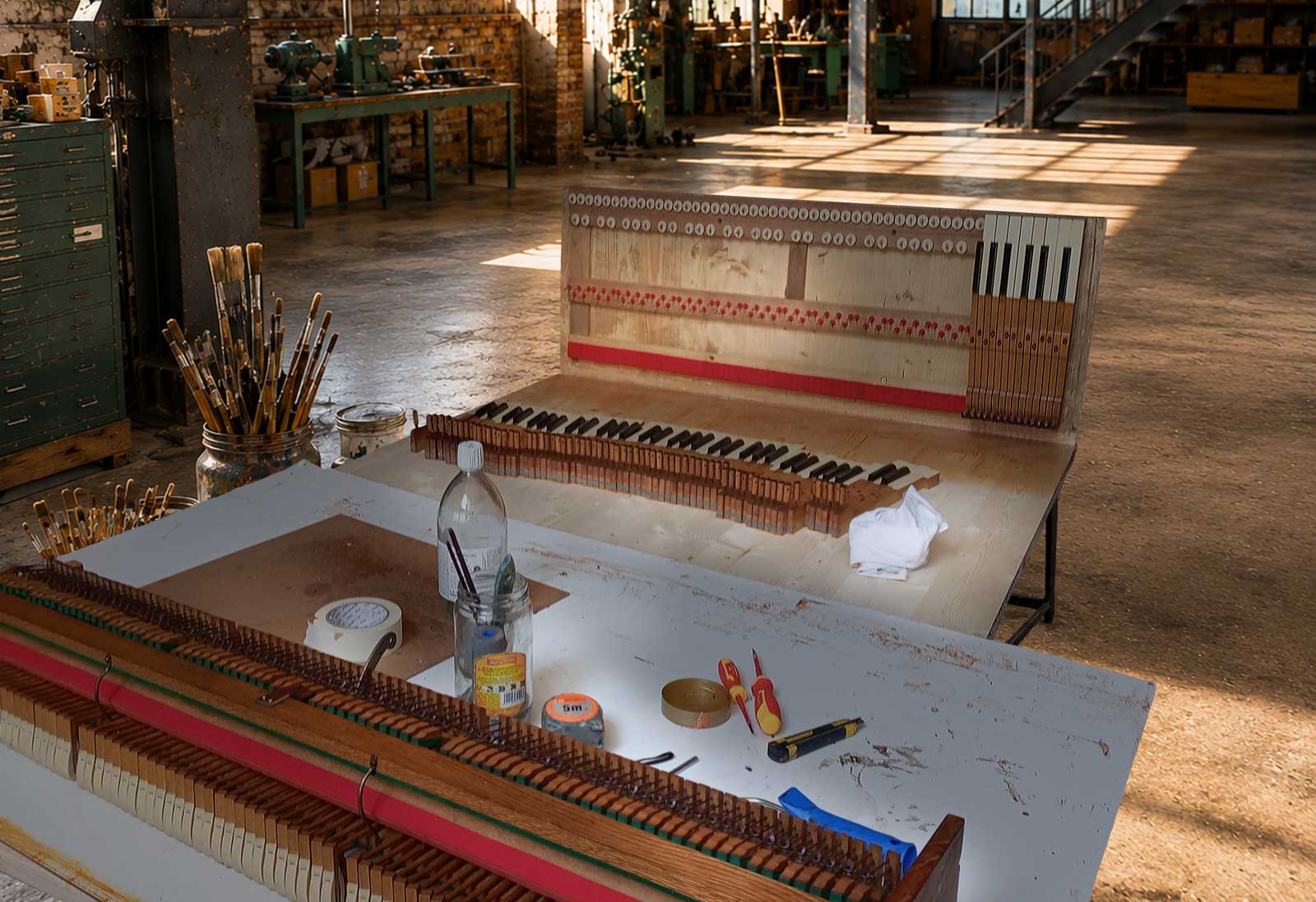
I remember my mother who had first placed me before a piano, I was six years old, Brașov, seventies, the cold apartment, the old upright piano, the keys yellowed by time, and her hands guiding my hesitant fingers, Do Re Mi Fa Sol La Si Do, the scale, the alphabet of music, the basis of everything, and I loved it, I loved the sound, I loved the resonance in the wooden case, I loved feeling the vibrations under my fingers, as if the piano breathed, as if it were alive, and it was, of course it was, all instruments are alive if you love them enough, if you give them enough attention, enough passion, enough faith, Geppetto and Pinocchio, the creator and his creation coming alive through love, through devotion, through obstinacy, and I played for years, piano, guitar, violin, all these instruments that accompanied me in my Romanian childhood, in my adolescence under Ceaușescu, and then I moved to painting, to sculpture, to photography, but music never left, it stayed there, in my hands, in my inner ear, in my way of seeing colors, composing a canvas, structuring an image, everything was still musical, everything was rhythm and harmony and counterpoint and fugue, I painted as one composes, I sculpted as one orchestrates, and one day, March two thousand twenty-five, I had this crazy idea, this impossible dream, to truly fuse, materially, physically, a piano and a painting, to create the object that Scriabin had dreamed of but never been able to realize, the clavier à lumières, the instrument that projects colors, synesthesia incarnated, and I began looking for an old piano, not just any one, it had to have a history, a patina, a soul, and I found it in a suburban Parisian flea market, an upright piano from the thirties, dark wood, visible mechanism, spruce soundboard still resonant, magnificent abandoned object, forgotten, like I had been exiled, like my country had been forgotten after the fall of the Wall, and I brought it back to my studio, I cleaned it, partially restored it, not too much, I had to keep the traces of time, the scratches, the stains, the wear, all that was part of it, of its history, of its life.
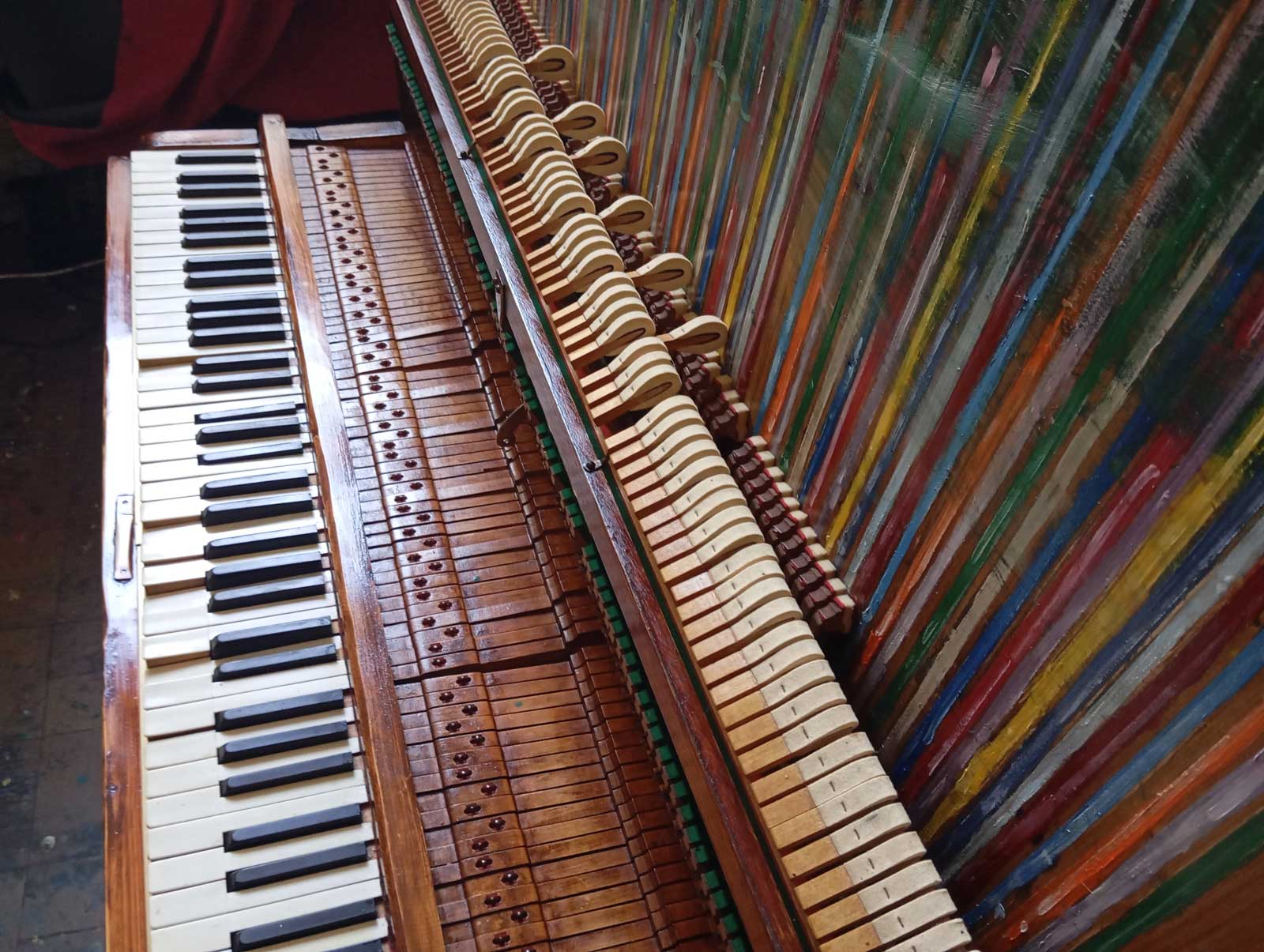
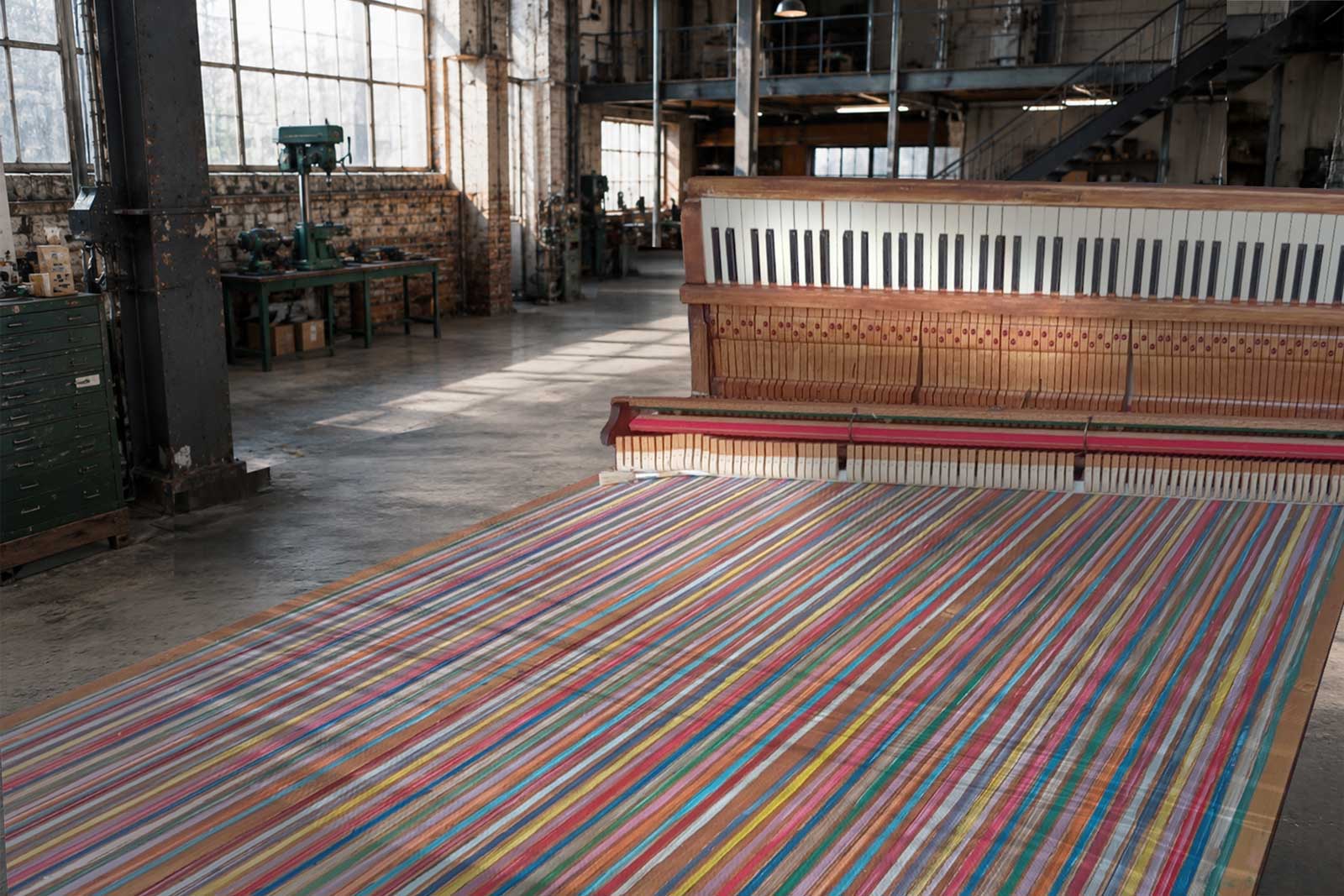
And then I built the panel, large vertical format, like a giant easel fixed above the piano, perfect symmetry, the piano supporting the painting, the painting crowning the piano, balance, fusion, marriage, and I began painting the lines, the twelve colors of Scriabin, C red C# violet D yellow D# steel reflection E petroleum blue F deep red F# brilliant blue G rosy orange G# violet A green A# metallic reflection B blue, and I painted them vertically, like strings, like columns of light, like cosmic rain falling from the top of the tableau, and at the center, progressively, a form emerged, I hadn’t really planned it, it came all by itself, guided by my hand, by my unconscious, by the interior ocean I have carried within me forever, this metaphorical ocean which is primordial music, original sound, the breathing of the world, waves that never stop, eternal ebb and flow, cosmic tide, and I painted this ocean in grey-greens, tempered tones, neither too warm nor too cold, balanced, harmonious, like a well-tempered chord, like Bach’s system transposed into painting, tempered grey-greens, title that imposed itself, poetic evidence, musical wordplay, scholarly and accessible reference at once, and the colored lines crossed this ocean, rain falling on water, strings of cosmic harp, curtain of light, translucent veil before an interior landscape, and gradually the work took form, took life, truly breathed, I felt it, it was no longer an inert object, it had become a living being, Pinocchio become real boy, piano become breathing creature, and I worked with devotion, with faith, with love, as one prays, as one meditates, as one makes an icon in the Orthodox tradition, sacred image, window to the divine, object of contemplation, and that was it, Peint-Piano had become my personal icon, not of Christ nor saints, but of my own spirituality, of my faith in art, in fusion, in beauty as resistance to world chaos.
April two thousand twenty-five. Outside, the world continued. Trump in power since the twentieth of January, a hundred days of chaos, absurd decrees, shameless lies, systematic destruction of everything built, American democracy in tatters, Europe terrorized, allies betrayed, enemies encouraged, and Gaza, my God Gaza, eighteen months of total war, incessant bombings, organized famine, fifty thousand dead, perhaps more, perhaps much more, who still counted, who still looked at these unbearable images, these shredded children, these screaming mothers, these collapsed buildings, these destroyed hospitals, and Ukraine, three years already, three years of heroic and vain resistance, three years of deaths and destructions, and the weary West, compromised aid, Trump threatening to stop everything, Putin smiling, victory in sight, and climate, of course climate, records broken every month, +1.6°C now, irreversible, accelerated, ice melting, giant fires, catastrophic floods, but no one really acted, everyone continued as if nothing was wrong, business as usual, and artificial intelligences, novelty of the year, Suno, Udio, machines now composing music automatically, \ »in the manner of Bach\ », \ »in the manner of Beethoven\ », \ »in the manner of Miles Davis\ », sophisticated algorithms analyzing thousands of works and generating \ »new compositions\ » in seconds, and the furious debates, is this still art, is this creation or just calculation, musicians worried, threatened in their very existence, soon replaceable, obsolete, useless, and me in my Parisian studio, obstinate artisan, outdated perhaps, ridiculous surely, painting by hand, slowly, patiently, lovingly, colored lines on a wooden panel fixed to an old piano, realizing the dream of a composer dead for one hundred ten years, Scriabin who had wanted to fuse sound and color, who had composed Prometheus with his clavier à lumières in 1910, visionary utopian work barely realizable with the technology of the time, and who had died at forty-three without having been able to accomplish his ultimate dream, the Mysterium, total seven-day work combining music light dance perfumes, collective ecstasy, transfiguration of humanity, grandiose and mad project, and me, humble exiled Romanian painter, I was taking up this dream, accomplishing it my way, not with technology, not with ephemeral projections, but with matter, wood, paint, permanence, sculptural object that doesn’t disappear after the concert, that remains, that testifies, that affirms that yes, fusion is possible, that yes, beauty still exists, that yes, art still has meaning despite everything, despite chaos, despite wars, despite machines, despite climate collapse, despite Trump and Putin and Netanyahu and all destroyers, art resists, art testifies, art breathes.
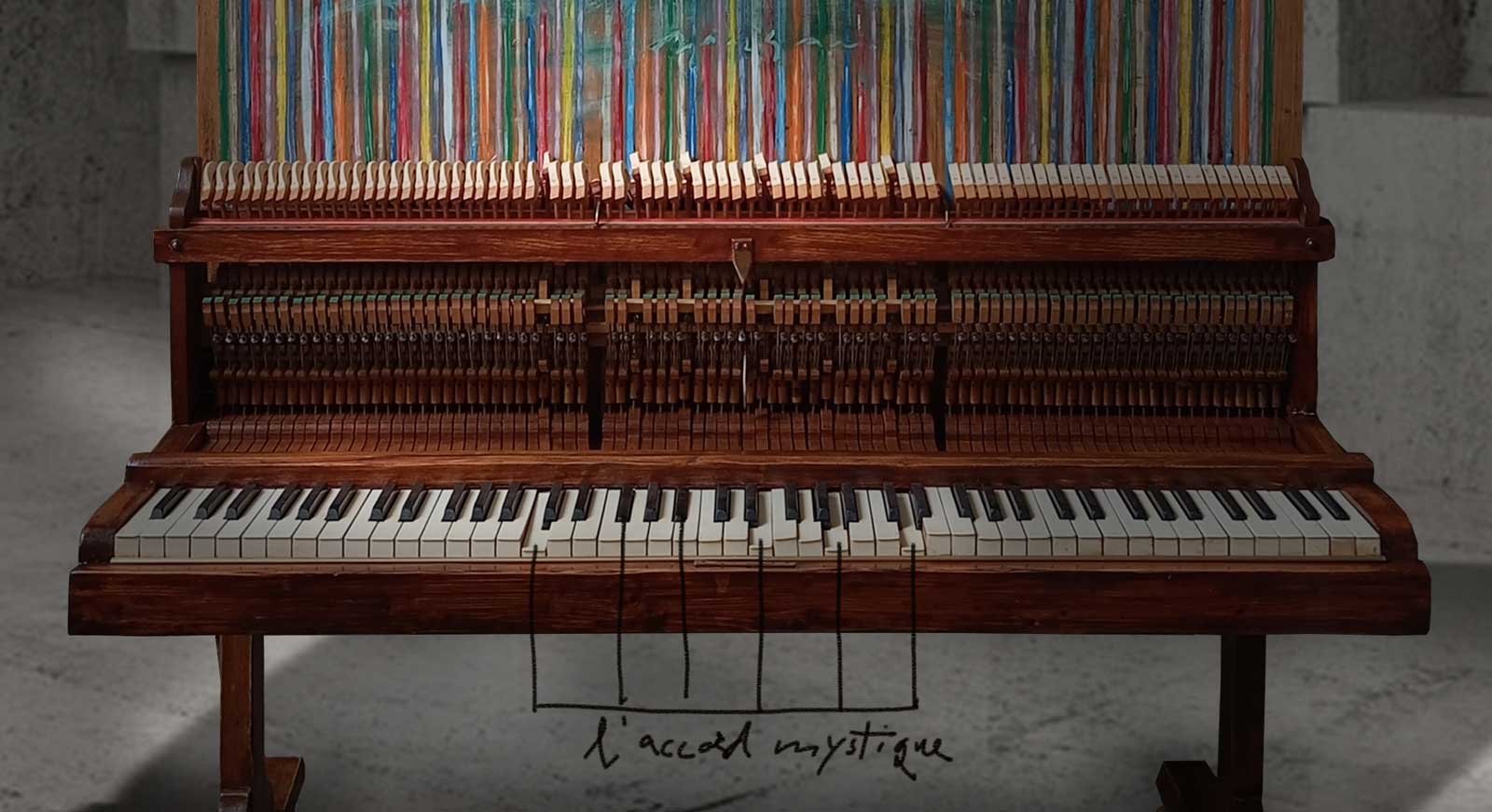
And the mystic chord, of course, Scriabin’s mystic chord, C-F#-Bb-E-A-D, six suspended notes, ambiguous, neither consonant nor truly dissonant, floating in an indefinite harmonic space, sensation of mystery, of opening, of infinite possibilities, Scriabin used it as the basis of his last works, Prometheus, Poem of Ecstasy, mystical compositions seeking to transcend classical tonality, to open doors to other dimensions, to ecstasy, to the divine, and I wanted to inscribe this chord in my painting, not literally of course, I am not synesthetic, I don’t claim my colors correspond exactly to sounds, but poetically, structurally, the six colors corresponding to the six notes of the chord are more present, more intense, red brilliant-blue violet petroleum-blue green yellow, they dominate the composition, they create visual harmony, the mystic chord translated into painting, and I inscribed the words \ »The mystic chord\ » at the bottom of the keyboard, invitation, indication, for whoever would want to play, for whoever would understand, for whoever would seek the key to the work, and I imagine the possible concert, the potential performance, someone sits at the piano, plays these six notes together, C-F#-Bb-E-A-D, and simultaneously looks at the corresponding colors on the panel, fusion accomplished, poetic synesthesia, Scriabin’s dream finally realized, one hundred ten years after his death, by a Romanian painter in a Parisian studio while the world was collapsing.
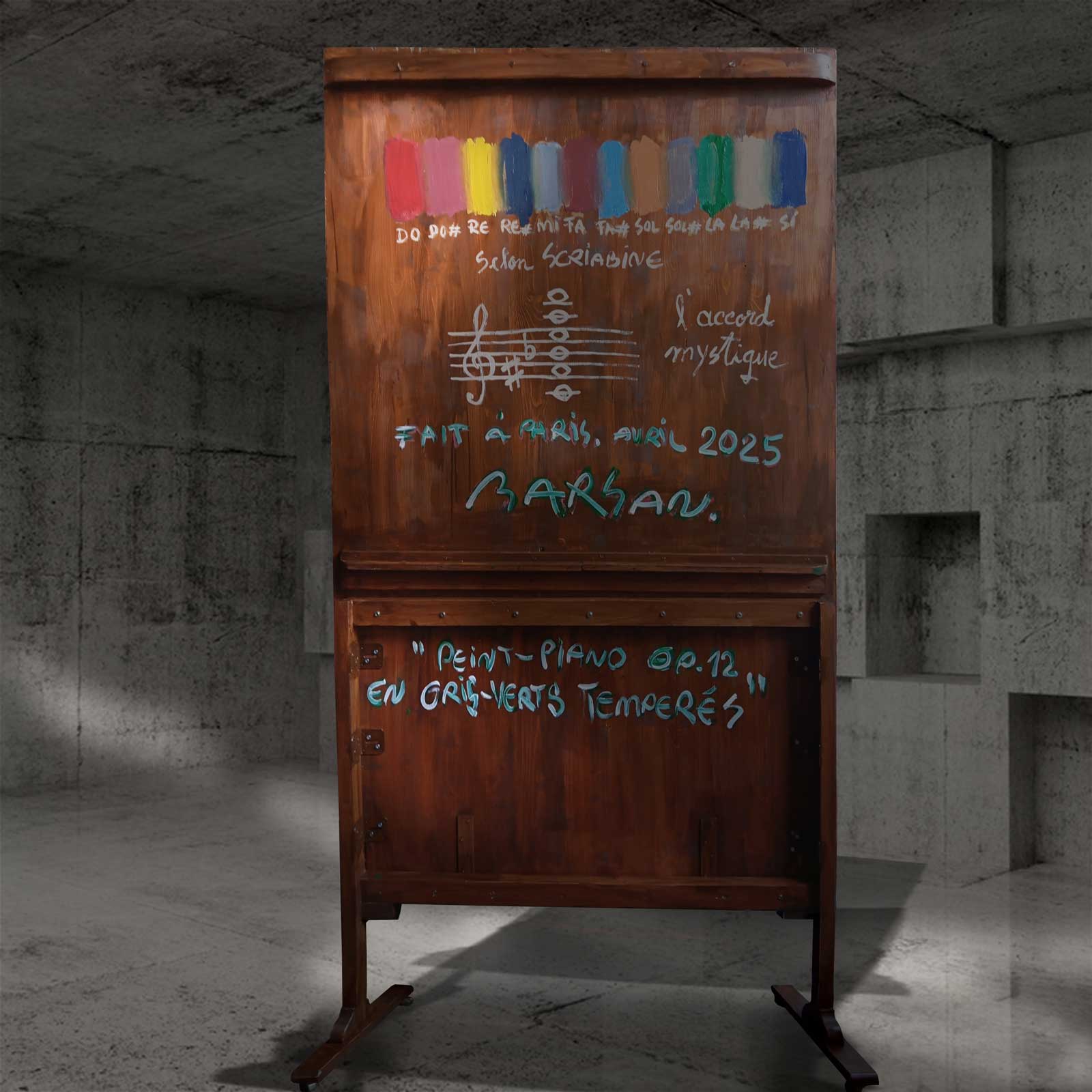
On the back of the panel, I wrote by hand, spontaneous manifesto, studio note become part of the work, the complete chromatic scale with corresponding colors according to Scriabin, C# red D yellow D# steel reflection E petroleum blue F deep red F# brilliant blue G rosy orange G# violet A green A# metallic reflection B blue C red, and then \ »The mystic chord\ », and then \ »Made in Paris, April 2025\ », and then my signature, M.ARSAN, and then the complete title, \ »Peint-Piano opus 12 in Tempered Grey-Greens\ », opus 12 like Beethoven opus 12 violin sonatas, like Scriabin opus 12 two impromptus, like Chopin opus 12 brilliant variations, I too have my opus 12, my manifesto-work, my declaration of faith, and \ »Tempered Grey-Greens\ » poetic wordplay, Bach’s well-tempered clavier transposed into oceanic colors, temperate zone between cold and hot, tempered emotions between ecstasy and despair, fragile balance, precarious harmony, threatened beauty but still present, still possible, still alive.
And I think of Geppetto, humble Tuscan carpenter who had carved a puppet from a piece of talking wood, Pinocchio the marionette who wanted to become a real boy, and Geppetto who loved him like his son, who believed in him, who had faith in this wooden creature, and the blue fairy who granted the wish, who gave life to the marionette, who transformed dead wood into living child, magic of love, magic of faith, magic of creative passion, and I feel like Geppetto, solitary artisan in his studio, creating an impossible object, piano-painting-sculpture-instrument, hybrid object existing in no established category, neither purely musical nor purely pictorial nor purely sculptural, but all at once, total fusion, absolute synthesis, and this object comes alive through my love for it, through my faith in it, through my obstinate passion, I see it breathe, I hear it play its ancestral music, I feel the ocean pulsing in it, the waves rising and falling in cosmic rhythm, the tide that never stops, and yes, Peint-Piano is alive, as alive as Pinocchio, as real as a real boy, because I believe in it, because I created it with love, because I put all my soul into it, all my history, all my life, musician become painter who never stopped being a musician, exiled Romanian carrying within him Brașov and Paris, Ceaușescu and freedom, childhood at piano and maturity at easel, everything condensed in this unique object, my indirect self-portrait, not my face but my soul incarnated in piano-painting.
And the ocean, of course, the central ocean, blurry grey-green form emerging from the curtain of colored lines, abstract aquatic landscape, clouds or waves, living organic matter, and this ocean gives the impression that the piano plays ancestral music continuously like breathing, that’s what I wrote in my explanatory note, and it’s true, profoundly true, the ocean is primordial music, the sound that existed before notes, before instruments, before composers, the original sound of the universe, the Big Bang still resonating thirteen billion years later, cosmic waves, gravitational tides, breathing of the cosmos, expansion and contraction, systole and diastole, universal heartbeat, and my piano plays that music, not a particular melody, not an identifiable piece, but THE sound, THE eternal music that will never cease as long as there’s a universe, as long as there are waves, as long as there’s air that vibrates, and I look at this painted ocean and I truly hear this music, I’m not crazy, I’m not hallucinating, it’s just that art sometimes succeeds in capturing something invisible, inaudible, making it present, materializing it, and Peint-Piano does that, it makes the invisible visible, it makes the inaudible audible, it accomplishes the magic that Scriabin sought, the absolute fusion of senses, universal synesthesia, mystical ecstasy through total perception.
April two thousand twenty-five. I finished the work one evening, late, alone in the studio, artificial light, silence around, Paris asleep, and I stepped back to look, to finally see the whole, the piano and panel united, the complete object, finished, accomplished, and I felt something strange, a mixture of satisfaction and sadness, joy at having succeeded and melancholy knowing it would change nothing, that the world would continue its mad indifferent race to my little creation, Gaza would continue to burn, Trump would continue to lie, Ukraine would continue to bleed, climate would continue to collapse, machines would continue to compose without soul, and my Piano-Painting would stay there, in my studio, beautiful useless object, magnificent and vain, derisory testimony of an obstinate artist who still believed that a piano and paint could make sense in this ruined world, and I cried a little, not much, just a few tears of fatigue and uncertainty, was it worth it, did it have meaning, was Scriabin right to believe in ecstasy, could art truly transcend, transform, transfigure, or was it just noise and color, signifying nothing, accomplishing nothing, changing nothing, and I don’t know, honestly I don’t know, after twenty-three years of exile and sixty-two years of life and forty years of creation I still don’t know if art has meaning, if it serves something, if it justifies the effort, the time, the passion, the obsession, but I continue anyway, because it’s all I know how to do, because it’s who I am, because without it I would be nothing, I wouldn’t exist, and so I wiped my tears and looked once more at Piano-Painting, and it was beautiful, truly beautiful, and it breathed, truly it breathed, the grey-green ocean pulsed softly, the colored lines vibrated subtly, the ancestral music played in silence, and I thought that maybe it was enough, maybe creating beauty in an ugly world was already something, maybe resisting chaos through harmony was already a victory, small derisory victory but victory nonetheless, and I smiled, smiled sadly but smiled nonetheless, and I inscribed on the back of the panel \ »Made in Paris, April 2025\ », future date become present, present that would soon become past, but preserved in the work, captured forever, Peint-Piano Opus 12 in Tempered Grey-Greens, my icon, my Pinocchio, my Scriabin dream, my obstinate faith in impossible fusion.
Seven months later, November two thousand twenty-five, I would paint Soledad, the overwhelmed Christ sitting in the desert, unable to leave, overwhelmed by the weight of consciousness, surveying a world become sterile, and I would wonder what had happened between April and November, between Scriabinian ecstasy and Christological despair, between the ocean that breathes and the desert that suffocates, between ancestral music and overwhelmed silence, what had changed, the world or me, had the world worsened or had I just understood that even Peint-Piano, even this beauty, even this fusion, wasn’t enough, that something more was needed, a presence, a consciousness, a Christ even silent even overwhelmed even unable to save, just there, witness, guardian, watcher, and I would understand that the two works answered each other, opposed and complemented each other, Peint-Piano hope, Soledad despair, Peint-Piano possible transcendence, Soledad necessary painful consciousness, Peint-Piano Scriabin, Soledad Christ, music and prayer, ecstasy and vigil, beauty and pain, two faces of the same coin, of the same life, of the same humanity that creates and suffers, that dreams and collapses, that sings and weeps, and me between the two, aging exiled artist, obstinately painting his personal icons, testifying to this absurd time, this impossible world, this life that continues despite everything, despite Gaza and Trump and Putin and climate and machines, despite God’s silence and the cosmos’s indifference, life that continues, art that continues, the piano that breathes, the ocean that plays, ancestral music continuously like a heartbeat, like breathing, always, still, until the end.
Peint-Piano Opus 12 in Tempered Grey-Greens. April two thousand twenty-five. Scriabin resurrected. Geppetto and Pinocchio. The breathing icon. The mystic chord. The twelve tempered colors. The interior ocean. Faith in the impossible. Art as resistance. Beauty despite chaos. Opus 12 of a musician who paints. Opus 12 of a painter who composes. Opus 12 of an exile who still believes.