Description
ADAM AND EVE ON MARS
June 2025, Paris
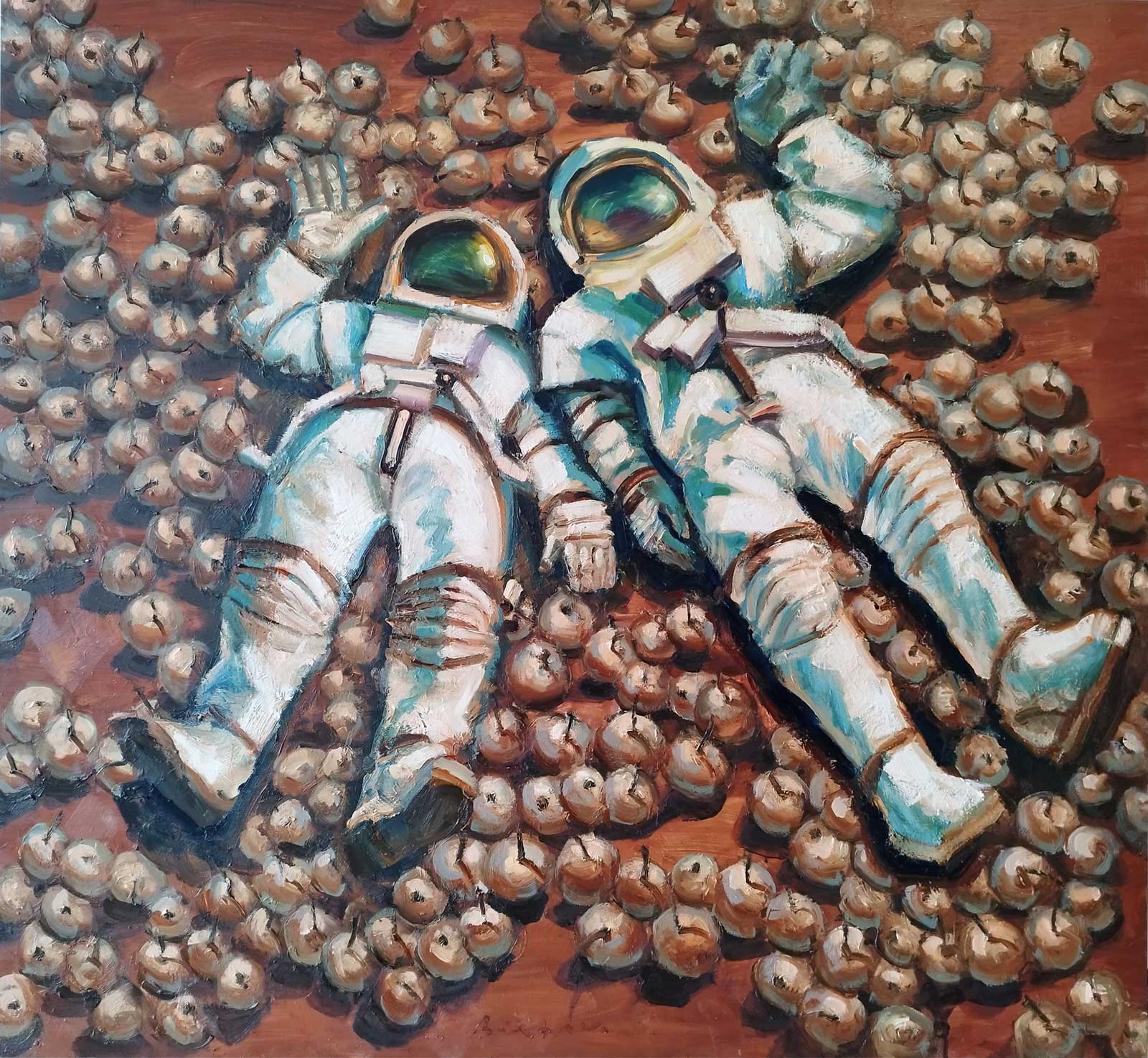
Adam and Eve on Mars. June two thousand twenty-five. Sixty years old. Twenty-two years since I had left Brașov, Romania and come here, to France, to restart my life at thirty-eight, an age when normally you don’t restart anymore, when you’re established, settled, rooted somewhere, but I had left everything, abandoned everything, my hometown, my friends, my language, my culture, to come here, to this foreign country, to start from zero, and now twenty-two years later, sixty years old, I was painting two astronauts lying on Mars, Adam and Eve, the primordial couple, the first humans on a new planet, and I realized that my own migration from Romania to France was just a tiny, terrestrial, insignificant version of this cosmic migration that all of humanity would have to make one day, when Earth would be exhausted, dead, uninhabitable, when we would have destroyed our original Garden of Eden and would be forced to migrate to Mars, then to other planets, other solar systems, other galaxies perhaps, eternal cosmic migrants, eternal exiles, eternal restarters, Adam and Eve who restart on each new planet, forever.
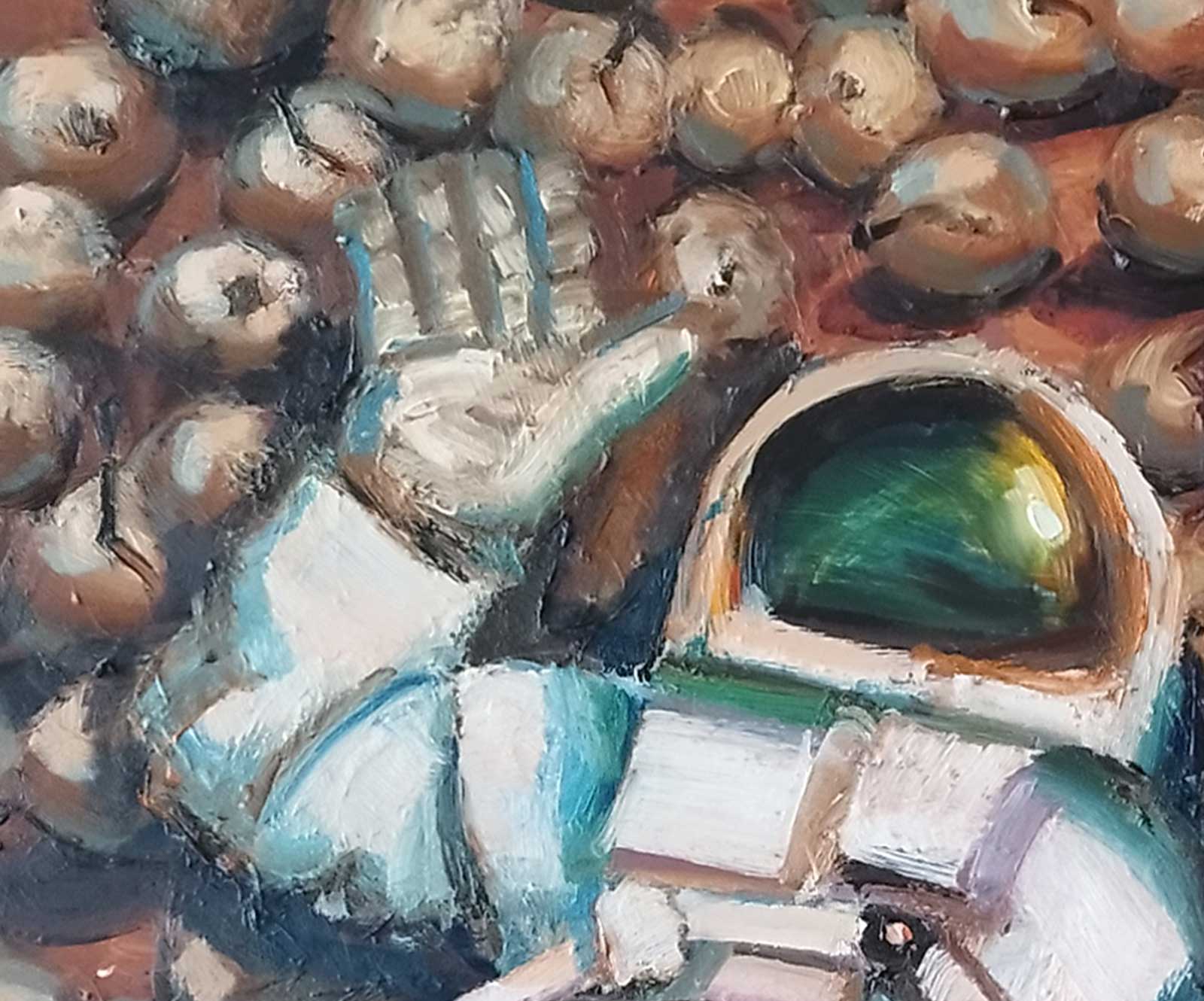
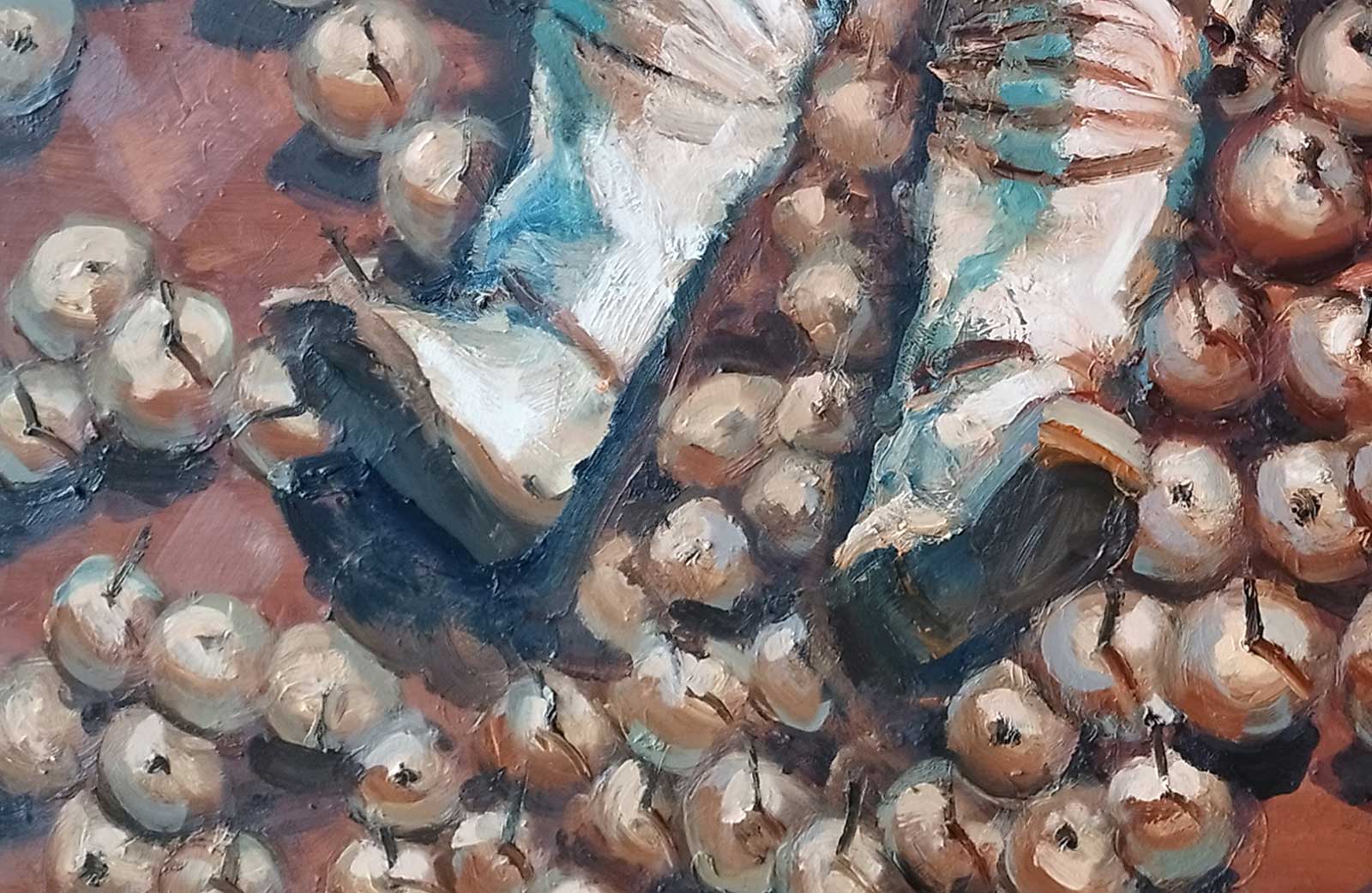
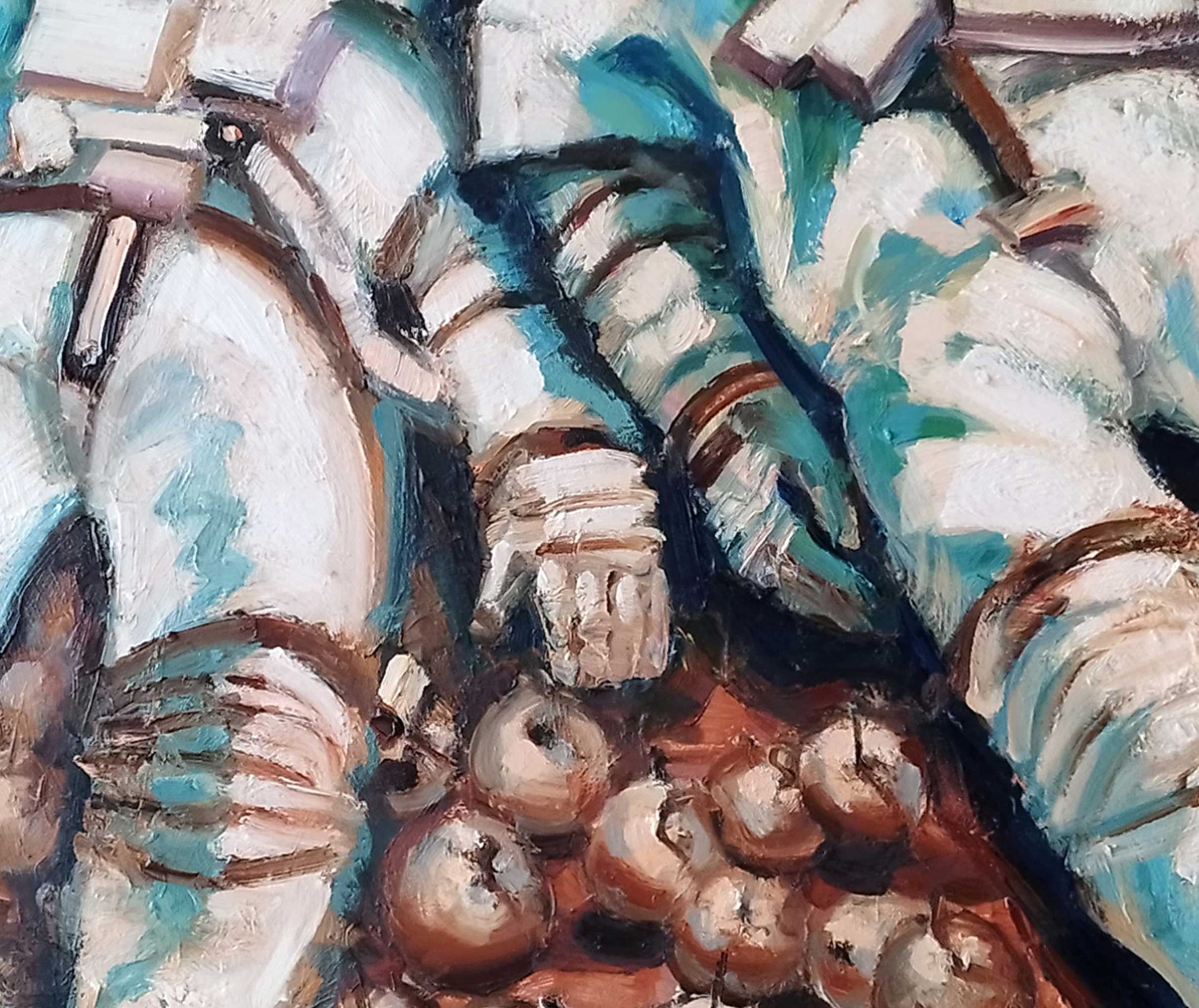
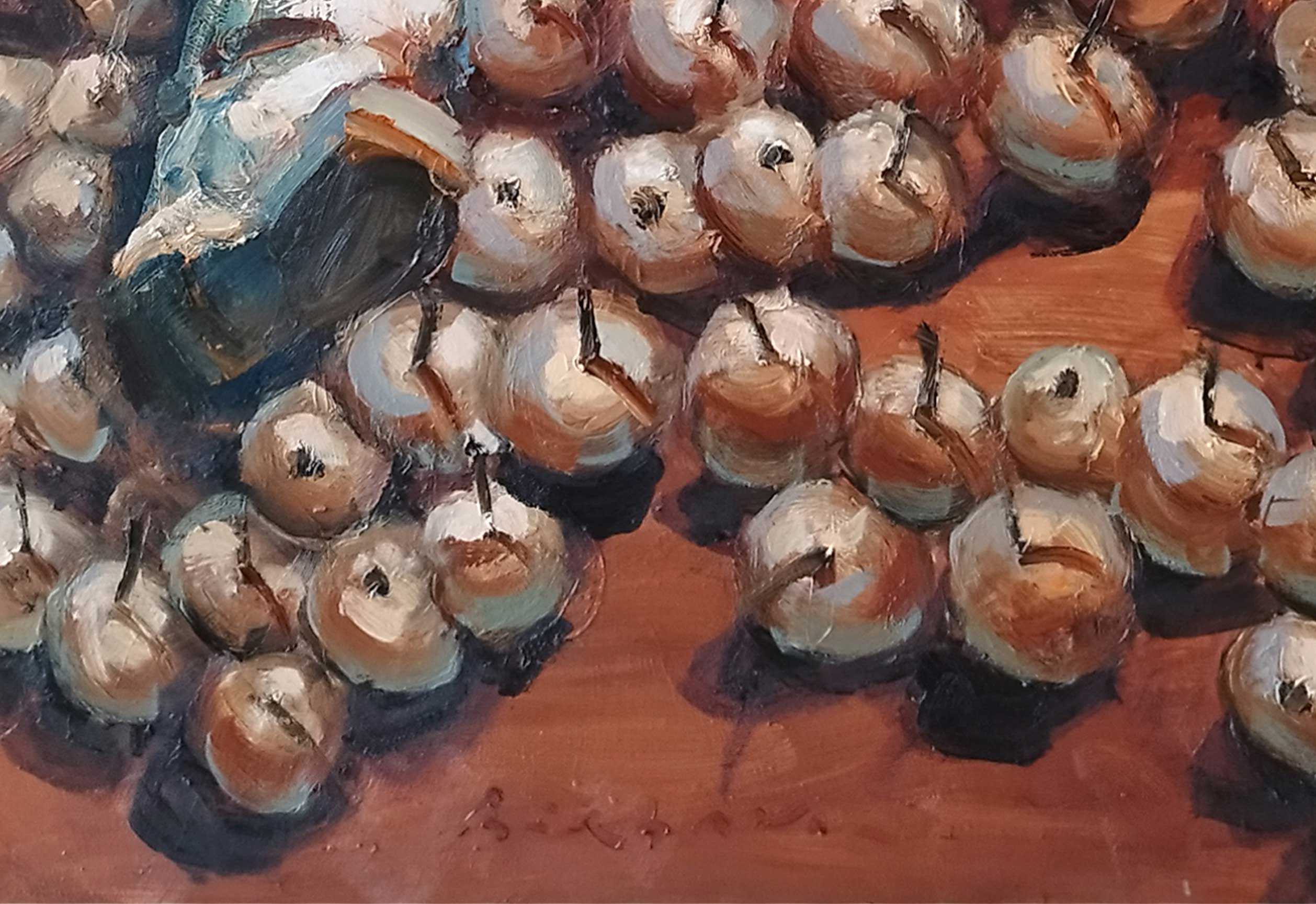
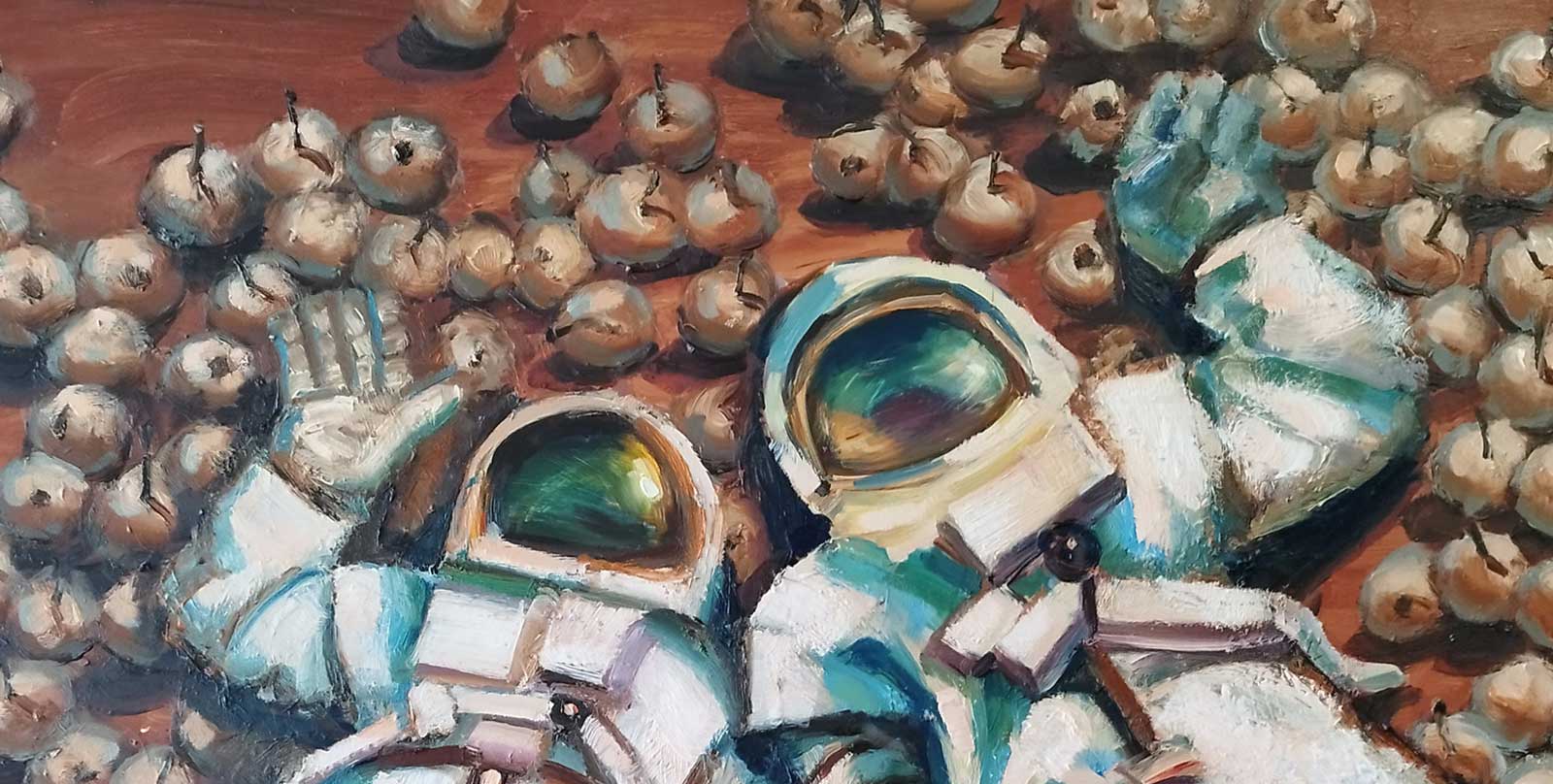
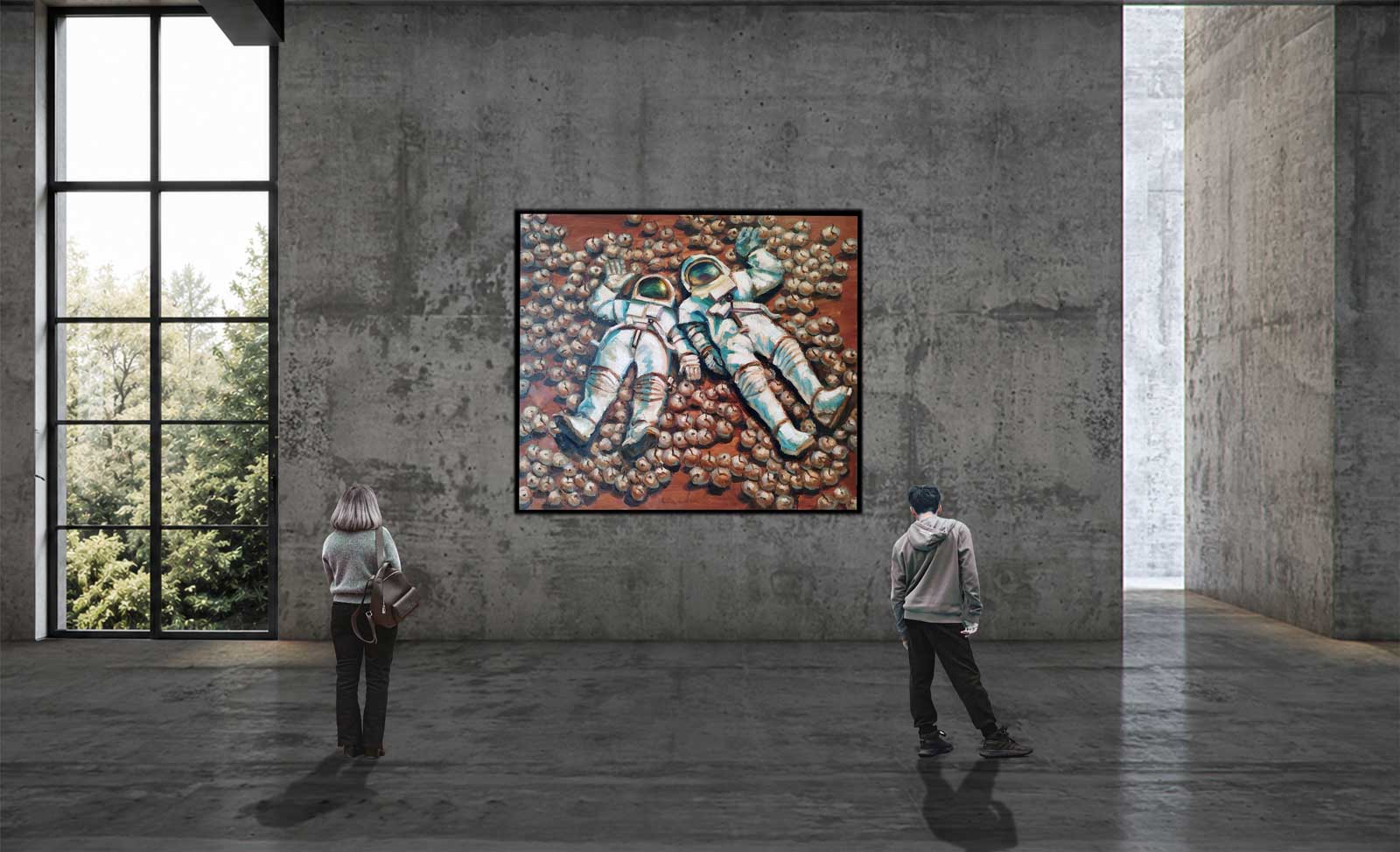
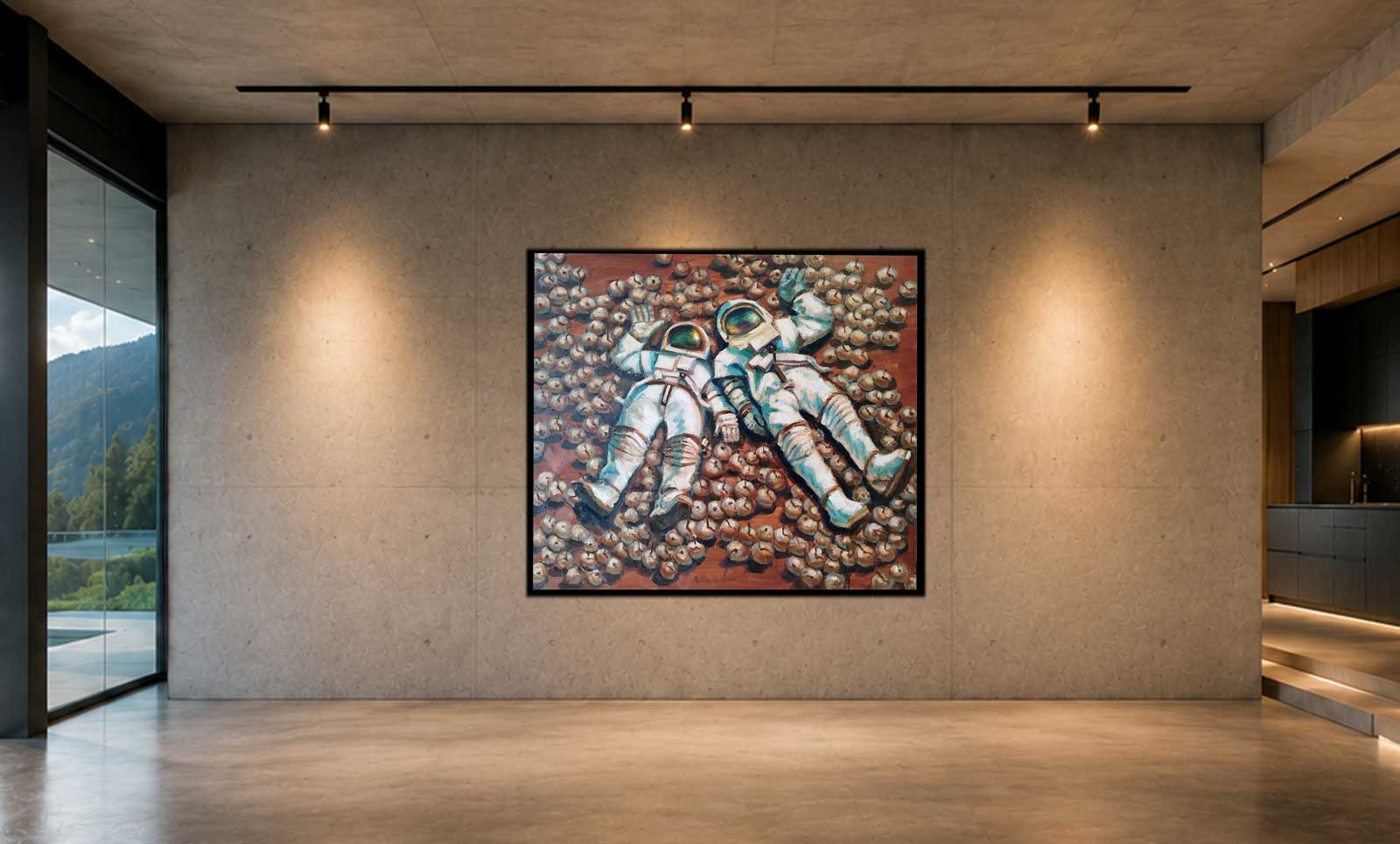
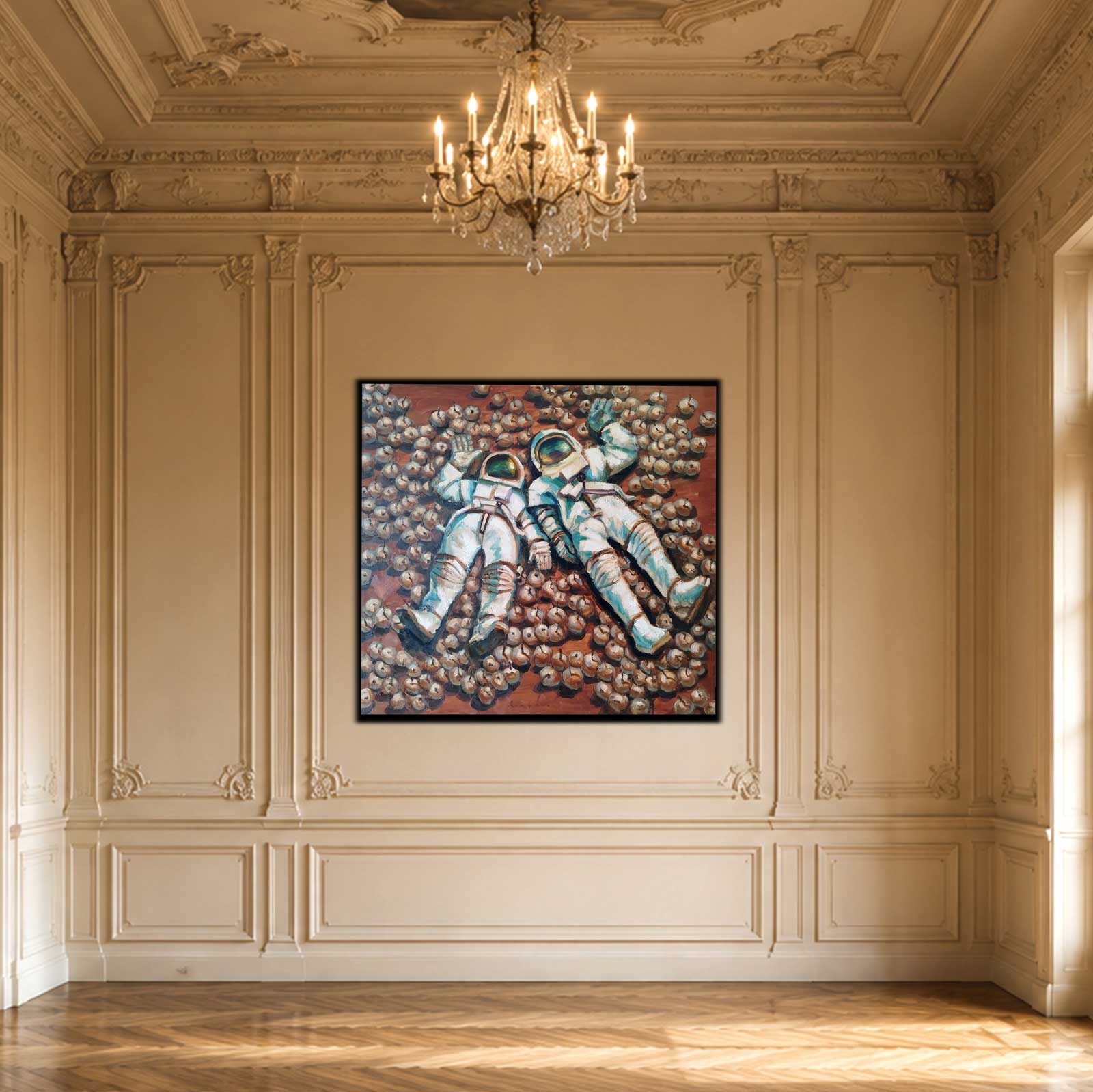
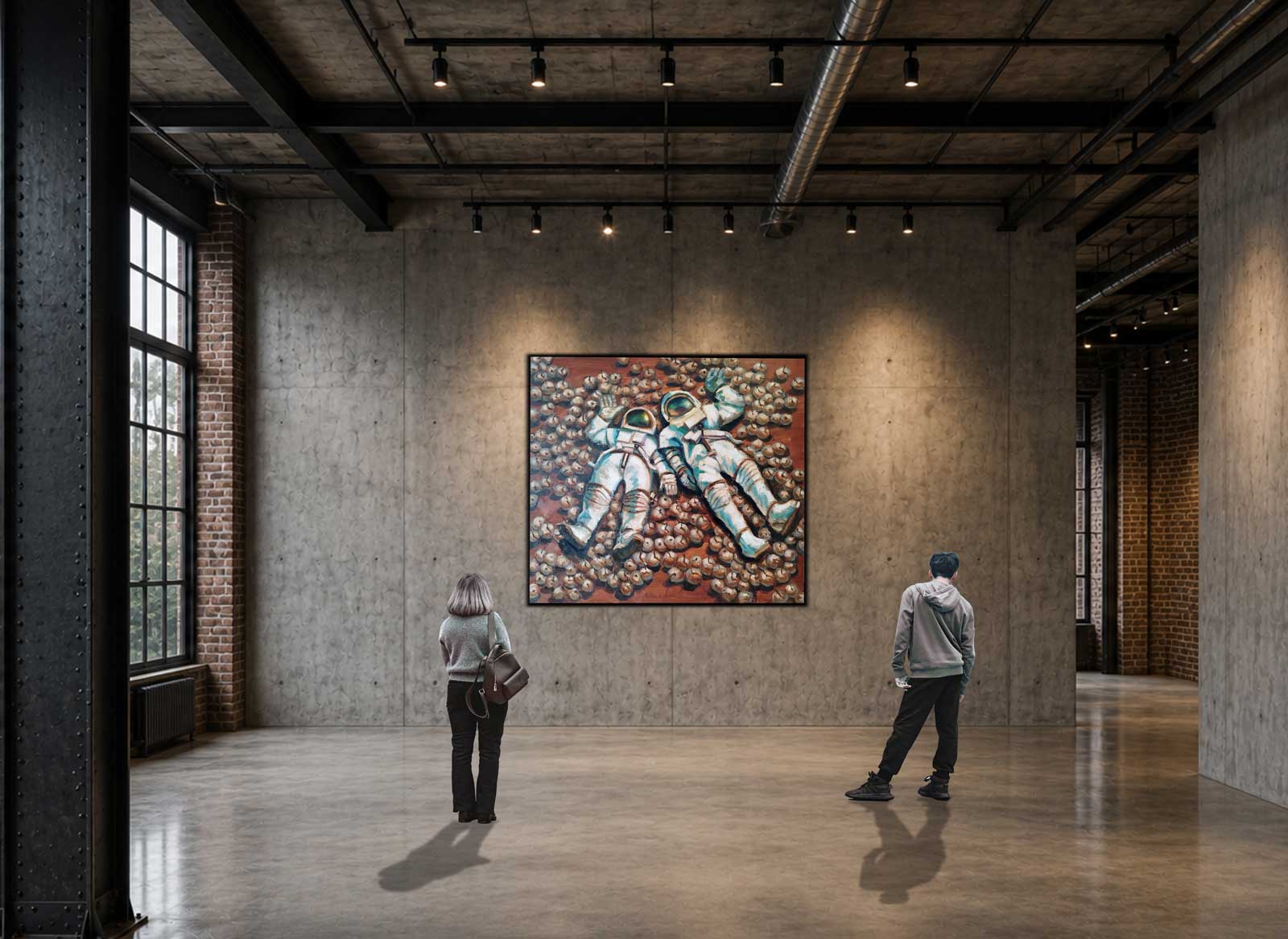
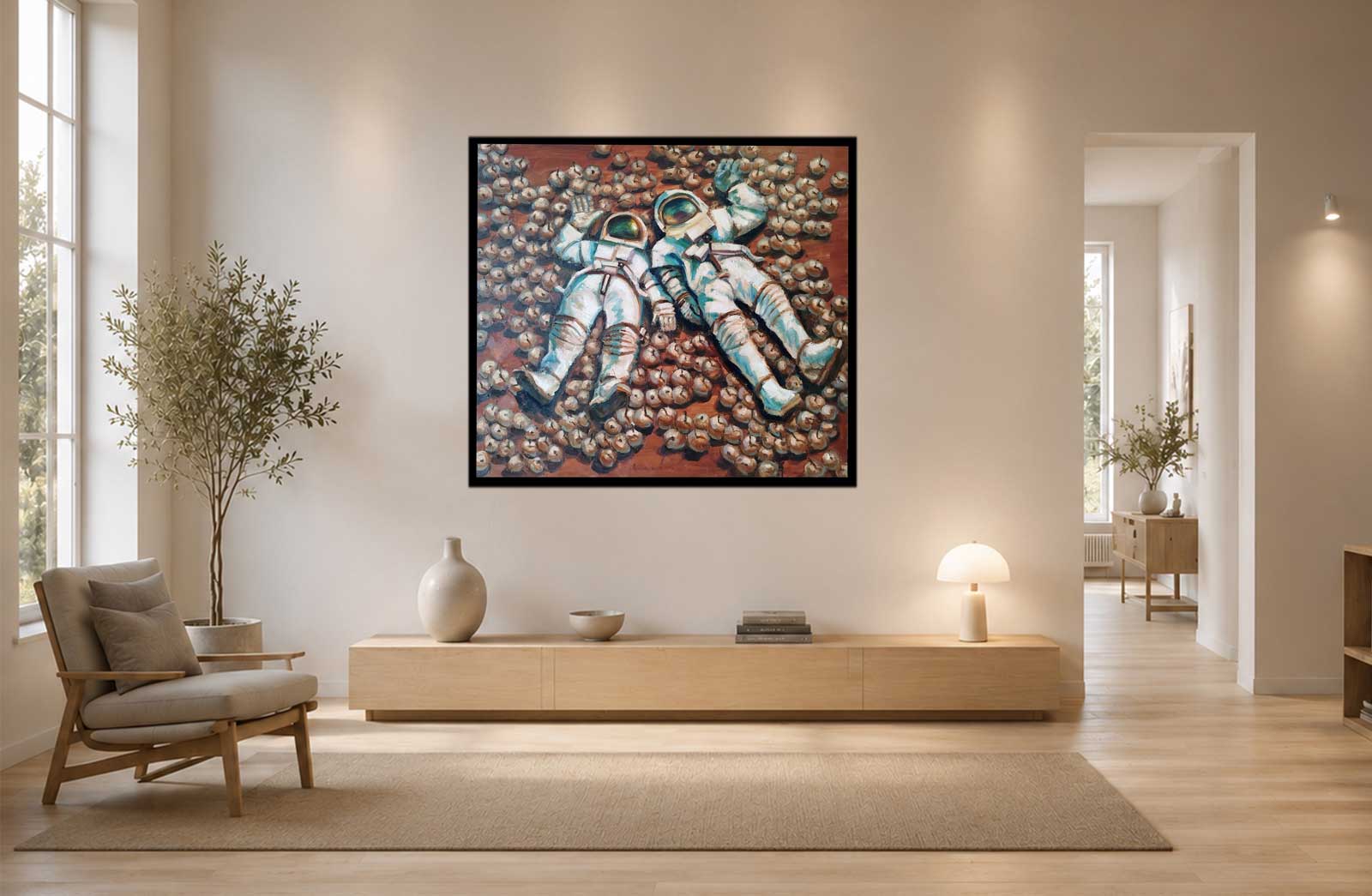
The painting showed two astronauts in blue and white space suits, lying on the Martian red-brown soil, side by side, close to each other, not glued together but close, in that proximity that says « we are together, we are not alone, » and their transparent helmets revealed their faces, their open eyes looking at the Martian sky, that ocher-yellow sky so different from Earth’s blue sky, and all around them, covering the entire ground, dozens of apples, but not organic apples, red, juicy, tempting like in the biblical Garden of Eden, no, stone apples, Martian apples, rounded rocks that resembled apples but were mineral, hard, cold, impossible to eat, impossible to consume, and that was the essential difference between Earth and Mars, between the mythical Garden of Eden and contemporary Martian reality—on Earth we could be tempted, we could sin, we could pick the apple of knowledge and be expelled from paradise, condemned to work, to suffering, to death, but on Mars there was no more possible temptation because there was nothing left to consume, nothing left to destroy, just stones, minerals, a dead planet on which we could exist without destroying everything around us, because there was already nothing left to destroy.
June two thousand twenty-five. Humanity had been talking about Mars for decades now. Elon Musk with his SpaceX wanted to establish a Martian colony, make humanity a multi-planetary species, and millions of people followed him, dreamed of Mars, of this new frontier, of this red planet that would be our salvation when Earth became unlivable, and I watched all this with a mixture of fascination and skepticism, because yes, technically we might be able to go to Mars, establish colonies under domes, survive there for a few generations, but would we have learned anything? would we have changed? or would we simply repeat the same mistakes, the same destructions, the same resource depletions, until Mars too was destroyed, and then we would migrate to another planet, and so on, eternally, infernal cycle of migration and destruction, Adam and Eve condemned to restart on each new planet without ever learning, without ever changing, carrying with them the original sin not of knowledge but of destruction, of consumption, of exhausting everything around them.
And yet—and this was the essential ambiguity of the painting—there was something beautiful, touching, moving about these two astronauts lying side by side on Mars, looking at the sky together, existing together in this hostile landscape, because they were not alone, because they had chosen to be together, to make this journey together, to restart together, and this extraordinary human capacity to stay side by side, to support each other, to accompany each other, to not abandon the other even in the most extreme situations, this was perhaps our true nature, not destruction, not consumption, but this fundamental solidarity, this compassion, this love that made us hold the other’s hand during the space voyage, during cosmic exile, during interplanetary migration, Adam and Eve together, always together, despite everything.
The stone apples covered the ground all around them, dozens of petrified apples, perhaps fossilized, witnesses of a distant era when Mars might have been alive, when there had been water, atmosphere, vegetation, organic apples, and then everything had disappeared, everything had died, and only these rounded stones remained that still resembled apples but were nothing more than minerals, geological memories of a past life, and we were arriving now on this dead planet, we Adam and Eve of the twenty-first century, to try to restart, to revive Mars, to create a new biosphere, to terraform this dead planet into a new Garden of Eden, and that was the dream, the crazy project, the titanic ambition of Musk and all those who wanted to colonize Mars, but looking at these stone apples in my painting, I wondered: was it really possible? could we really revive a dead planet? or were these stone apples there to remind us that some deaths are irreversible, that some destructions cannot be repaired, that Mars was dead and would remain dead whatever we did, and that if we wanted to survive as a species we would have to accept living on dead planets, surrounded by stone apples, without Garden of Eden, without paradise, just bare, difficult, austere existence, but existence nonetheless, life nonetheless, humanity nonetheless?
June two thousand twenty-five, and I was painting this work thinking about my own restarts, about those moments in my life when I had to abandon everything and start from zero, and the greatest of these moments had been November two thousand three, when I left Romania for France at thirty-eight, and it was like landing on Mars, like being Adam arriving on a new, hostile, foreign planet, where I knew no one, where I didn’t speak the language correctly, where I had to relearn everything, and the first years had been terrible, the solitude, the precarity, the constant rejections from galleries, the total invisibility, and I had asked myself so many times if I had made the right choice, if I should have stayed in Romania, but no, I had continued, I had persisted, I had restarted, and now twenty-two years later I realized that this migration, this restart, was perhaps the most important thing I had done in my life, not my paintings, not my works, but this capacity to leave everything and restart elsewhere, to be Adam on a new planet, to accept cosmic exile as the fundamental condition of human existence, we are all migrants, all exiles, all restarters, from Brașov to Paris, from Earth to Mars, from this planet to the next, eternally.
And the two astronauts in my painting looked at the Martian sky together, their helmets side by side, their bodies close without touching, and there was something peaceful in this scene, something contemplative, no drama, no catastrophe, no end of the world, just two human beings existing on a new planet, surrounded by apples they could never eat, under a sky they would never breathe directly, prisoners of their space suits forever, but alive nonetheless, conscious nonetheless, capable of looking at the stars and wondering what would come next, what would be the next planet, the next exile, the next restart, because that was our story, our founding myth rewritten for the space age—Adam and Eve were not created in a perfect Garden of Eden, they arrived on dead planets and tried to survive, to persist, to exist despite cosmic hostility, despite the absence of organic apples, despite the impossibility of returning to the lost Earth, the destroyed garden, the abandoned paradise.
And the title—Adam and Eve on Mars—was not pessimistic, not desperate, not tragic, it was just an observation, a description of what was, of what would be, of what had perhaps always been—we were Adam and Eve, the primordial couple, the first humans, and we were on Mars, the red planet, the next step, and we were restarting, once again, for the umpteenth time perhaps in the cosmic history of humanity, perhaps we had already come from Mars to Earth millions of years ago, perhaps we had already made this journey in the other direction, perhaps humanity was condemned to migrate eternally from planet to planet, destroying each one then moving to the next, eternal cycle of destruction and restart, and my two astronauts lying on Mars were the witnesses of this cycle, the participants in this myth, Adam and Eve who restarted once more, surrounded by stone apples that reminded them that this time there would be no possible temptation, no possible sin, no possible fall, because there was nothing left to destroy, Mars was already dead, and perhaps that was our salvation finally—arriving on already dead planets so we could no longer kill them.
June two thousand twenty-five. Sixty years old. Twenty-two years of exile. I was finishing this painting in my Parisian studio, and I looked at these two astronauts I had painted, and I recognized myself in them, not because I had been to Mars physically, but because I had lived this exile, this migration, this restart, and I understood now that my personal journey—from Brașov to Paris, from Romania to France, from invisibility to persistence—was a terrestrial version of this cosmic migration that all of humanity would live one day, and perhaps my role as an artist was not to create beautiful images or make sellable works for Parisian galleries, but to witness this universal experience of exile, of migration, of restart, to paint Adam and Eve on Mars to tell future humanity: look, this is what awaits you, this is what it means to be human—to be eternally in migration, eternally in exile, eternally restarting on new planets, and it’s not tragic, it’s not despairing, it’s just what is, just our condition, and we can accept it, we can even find a certain beauty in this acceptance, in this capacity to stay side by side despite everything, together despite cosmic hostility, Adam and Eve forever, migrants forever, restarters forever.
The two astronauts rested on Mars, the stone apples surrounded them, the ocher sky covered them, and the universe continued, infinite, indifferent, magnificent. They were there, on Mars, side by side, together, alive, and it was good, not tragic, not despairing, not pessimistic, just human, just real, just what is. Adam and Eve on Mars. The eternal cycle continued, and would continue, always.