Description
PROVIDENCE
July 2024, Paris
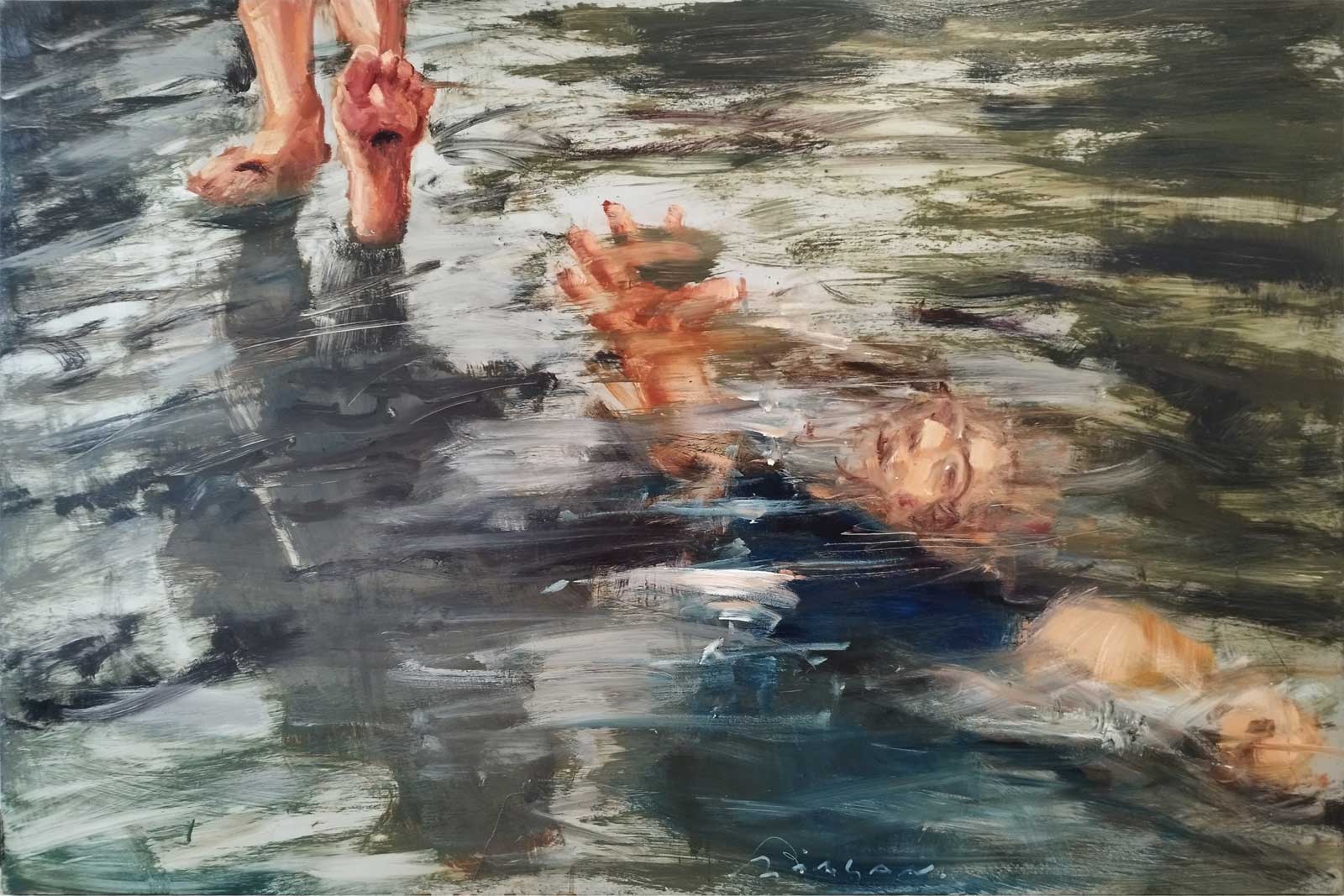
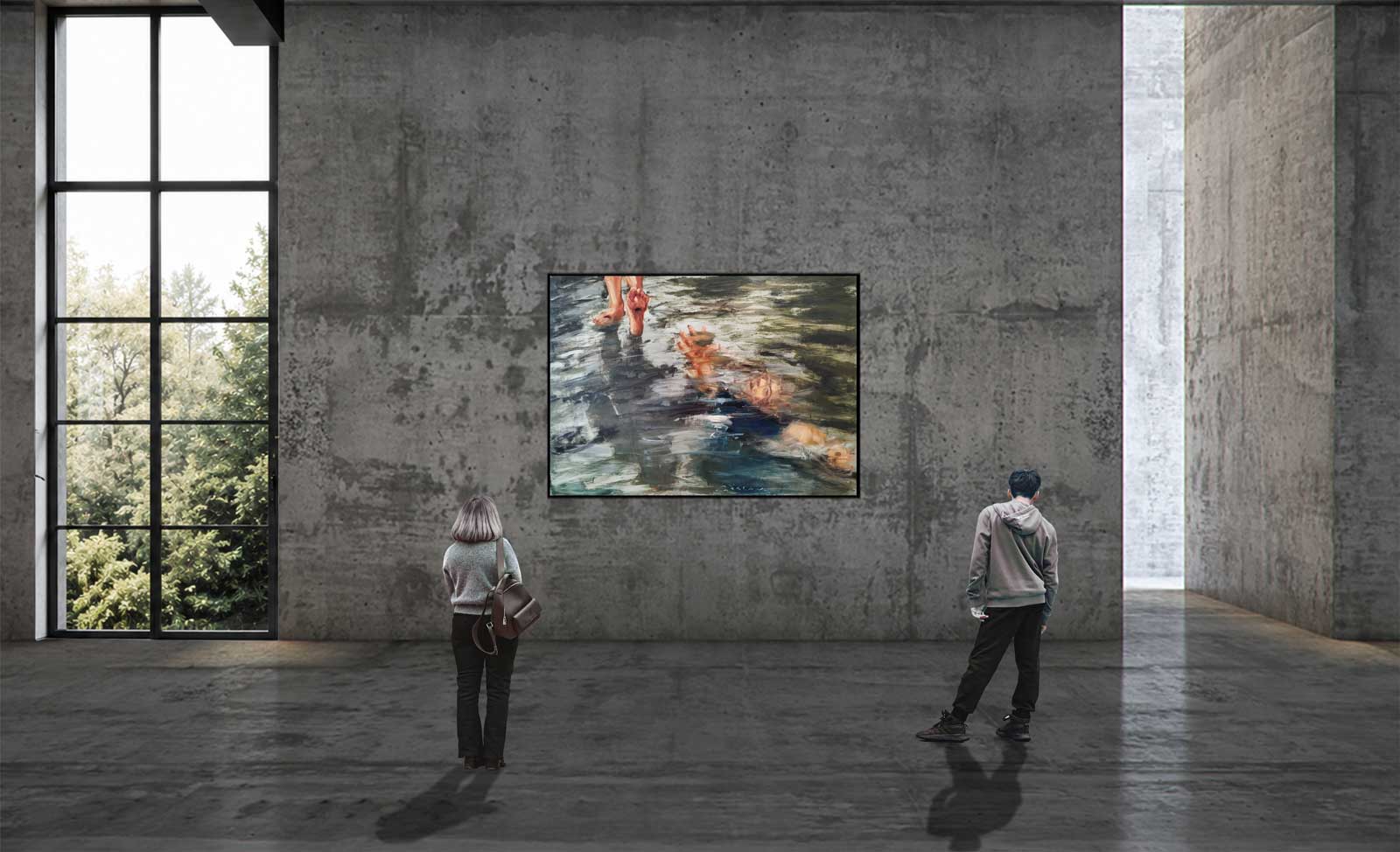
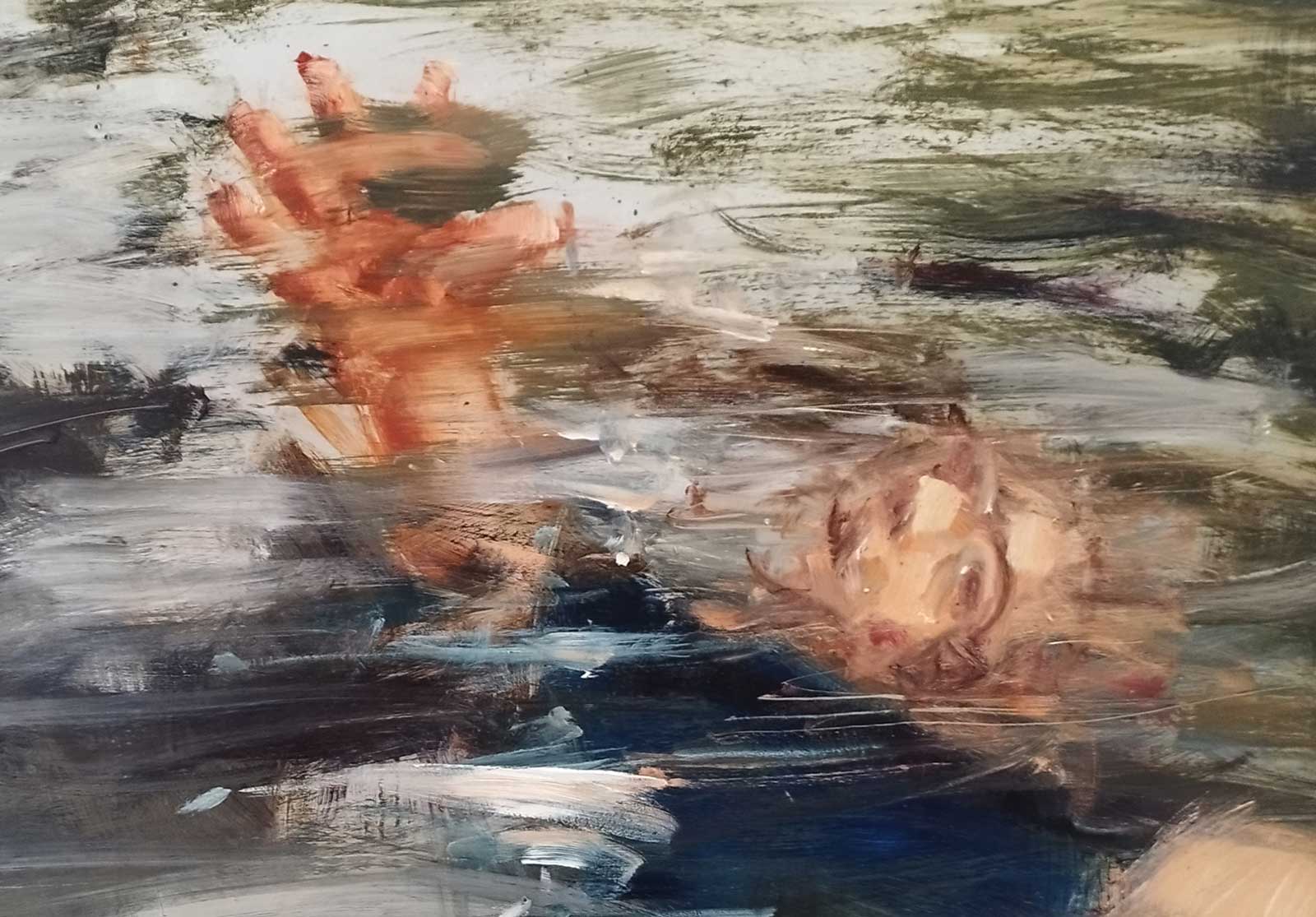
Three months after The Crossing, in July two thousand twenty-four, in the stifling heat of a Parisian summer that was breaking all temperature records, at fifty-nine years old now, I painted Providence, and this painting was something very different from everything I had painted before, something that touched on questions I had long avoided, questions about God, about providence, about the meaning or absence of meaning of all this, about this fundamental question: is someone watching us? does someone care about us? is there a providence, a divine plan, a reason for our sufferings? or are we alone, abandoned, delivered to chance, to chaos, to cosmic indifference? and Providence tried to visualize this question, to make it visible, palpable, to create an image that would show this terrible, tragic moment, when one wonders: where is God? where is providence? why have we been abandoned?
The painting showed a human figure—me again, always me, my endless self-portraits—in a position of waiting, of supplication perhaps, of questioning in any case, the figure raised its eyes toward the sky, toward the heights, seeking something, someone, God perhaps, providence, an answer, a sign, anything that would say « you are not alone, you are not abandoned, someone sees you, someone cares about you, your suffering has meaning, your exile has a reason, your twenty years of invisibility are not absurd, » but the sky in my painting did not respond, it remained empty, indifferent, mute, I had painted an immense sky, crushing, that occupied most of the painting, a sky that could be magnificent—deep blues, clouds gilded by light—or that could be terrible in its indifference, in its absence of response, in its silence facing human questions, and the human figure below, small, diminished, looked upward with this mute question: where are you? why don’t you answer? why have you abandoned me?
And this question— »where is providence? »—had become more and more pressing for me after twenty years of exile, twenty years of efforts, twenty years of faith maintained despite the total absence of visible results, twenty years during which I had continued to create, to paint, to have faith in something—in painting, in art, in God perhaps—without ever receiving confirmation that this faith was justified, without ever seeing results, without ever being rewarded, recognized, seen, and after twenty years one begins to wonder: does all this have meaning? is there a plan? is someone watching? or am I just crazy, obstinate in a pathetic way, clinging to an illusion, a faith without object, a hope without foundation, creating in the void for no one, for nothing, just through inability to accept that all this is absurd, that my life is absurd, that my twenty years of exile are absurd, that there is no providence, no plan, no God, just chaos, chance, cosmic indifference?
July two thousand twenty-four. Fifty-nine years old. The crushing heat. And I was painting this question: where is providence?—without really having an answer, or rather with a terrible, ambiguous answer, which was: perhaps there is no providence, perhaps God does not watch us, or perhaps he watches us but with indifference, perhaps we do not matter to him, perhaps our sufferings do not interest him, perhaps he has other things to do, other galaxies to manage, other universes to create, and we, poor humans on our little planet, with our little lives, our little sufferings, our little exiles, we do not really matter, we are insignificant, negligible, and our faith in providence is perhaps just a comforting illusion that we tell ourselves to bear the unbearable, to continue living despite the absurdity of existence, to maintain hope despite twenty years of contrary evidence.
This was the essential ambiguity of the painting: I continued anyway to paint this figure that raises its eyes toward the sky, that seeks providence despite everything, that refuses to completely accept that we are alone, abandoned, delivered to chance, and this obstinacy to continue seeking, hoping, having faith despite the absence of response, was perhaps that the true providence, not a miraculous divine intervention that would resolve all our problems, but this extraordinary human capacity to continue hoping, seeking, creating, living, despite the absence of confirmation, despite the absence of reward, despite the absence of God perhaps, we continue anyway, we create anyway, we exist anyway, and this was perhaps the miracle, not that God intervenes and changes our situation, but that we continue despite his absence, despite his silence, despite his indifference perhaps, we continue, and this obstinate, absurd, magnificent continuation, was perhaps the only providence that truly existed, human providence, our capacity to save ourselves through our obstinacy, our faith without object, our hope without foundation but maintained anyway, always, despite everything, to the very end.
Providence. July two thousand twenty-four. Fifty-nine years old. The figure that raises its eyes toward the sky. The sky that does not respond. The question without answer. The absence of divine providence. But the presence of human providence: our obstinacy to continue despite everything, to hope despite the absence of reasons to hope, to create despite the absence of an audience, to live despite the absurdity of existence, and me painting this painting accepting that perhaps there was no divine providence, perhaps God was not watching me, perhaps my twenty years of exile had no divine meaning, but I was creating anyway this human providence, this capacity to continue despite the absence of God, despite the absence of meaning, despite the absence of recognition, I continued, I created, I existed, and this was perhaps the true miracle, not that God exists and saves me, but that I exist and save myself through my obstinacy, my absurd faith, my human providence, despite everything, always, to the very end.