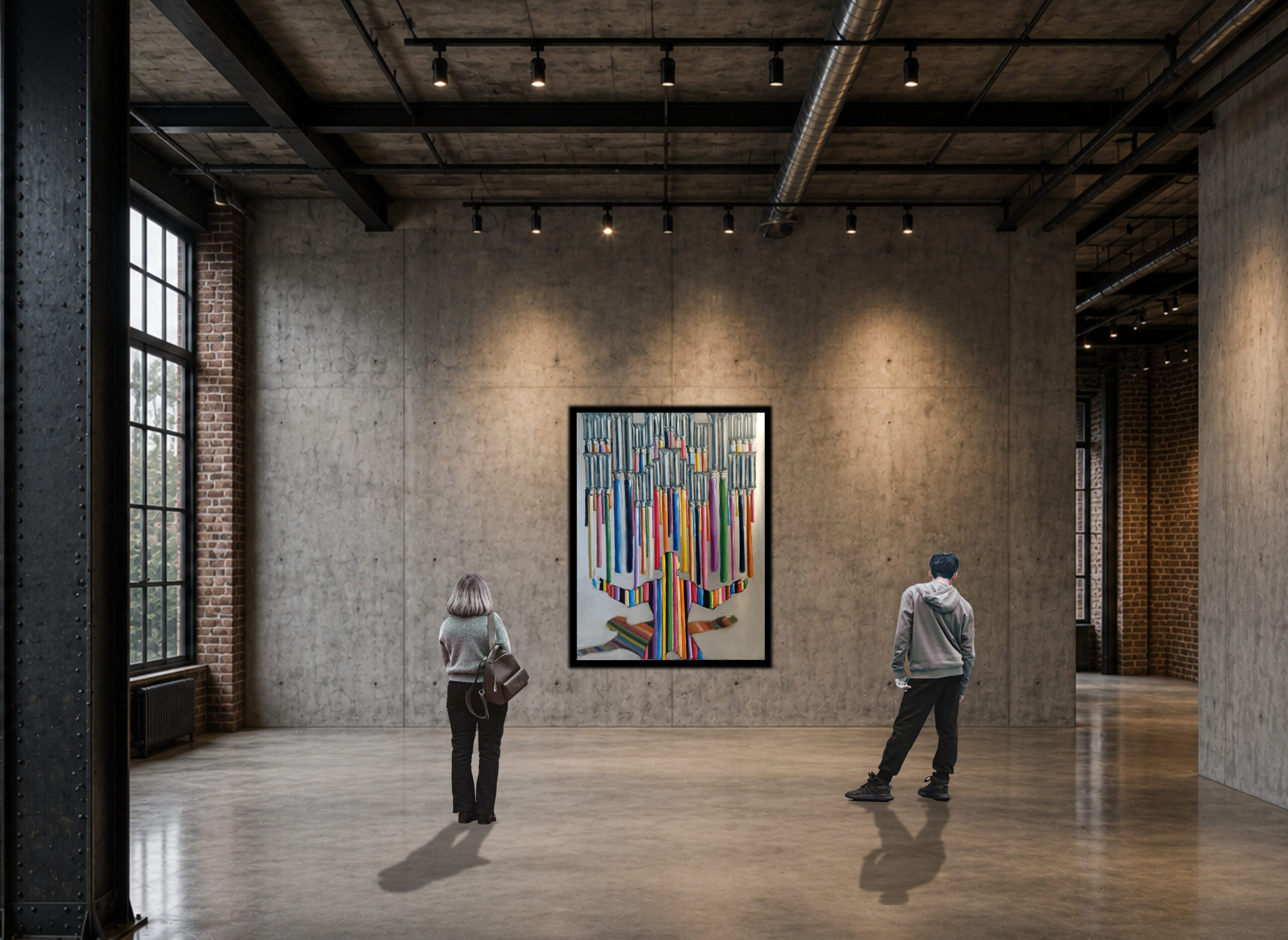
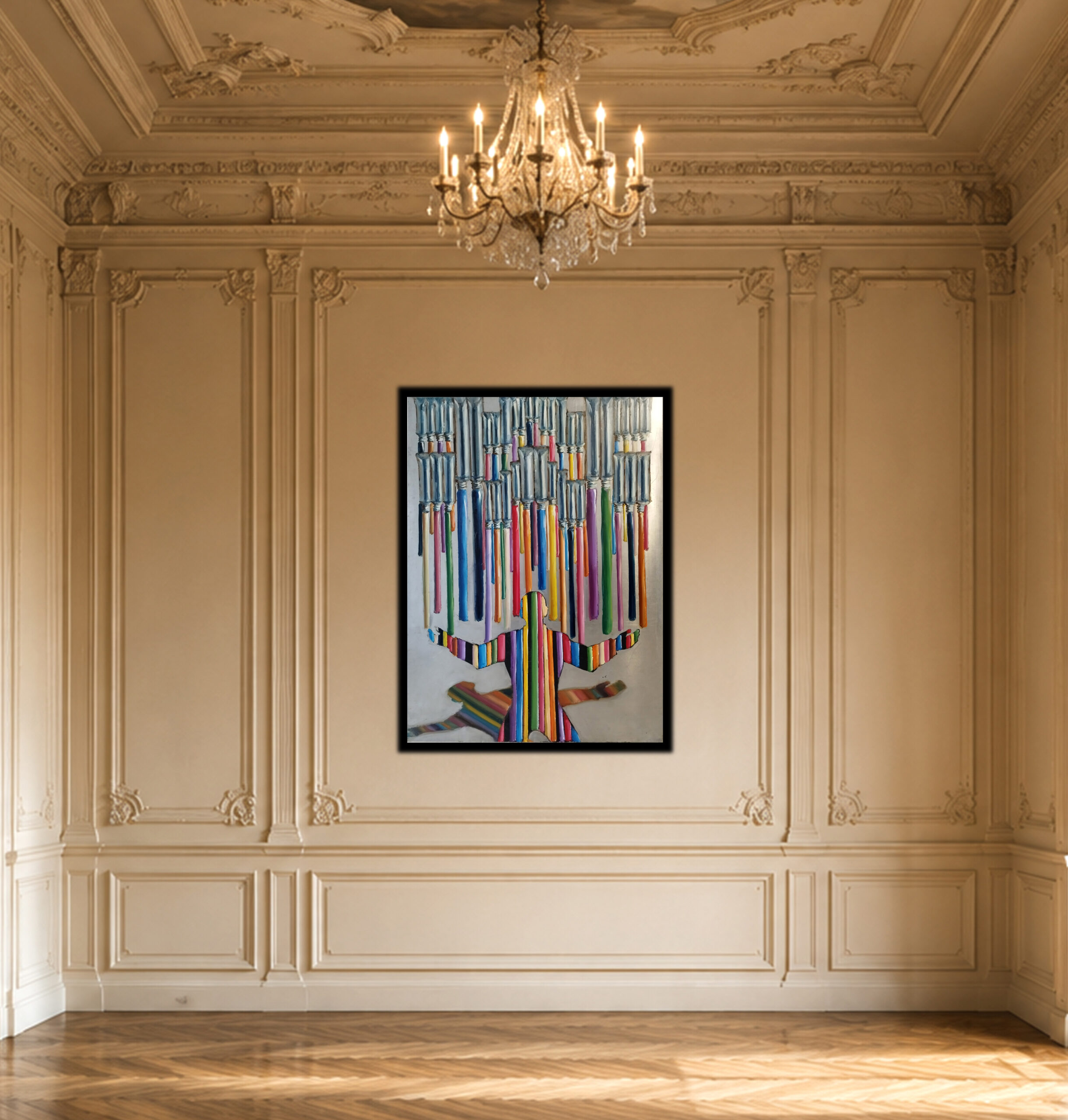
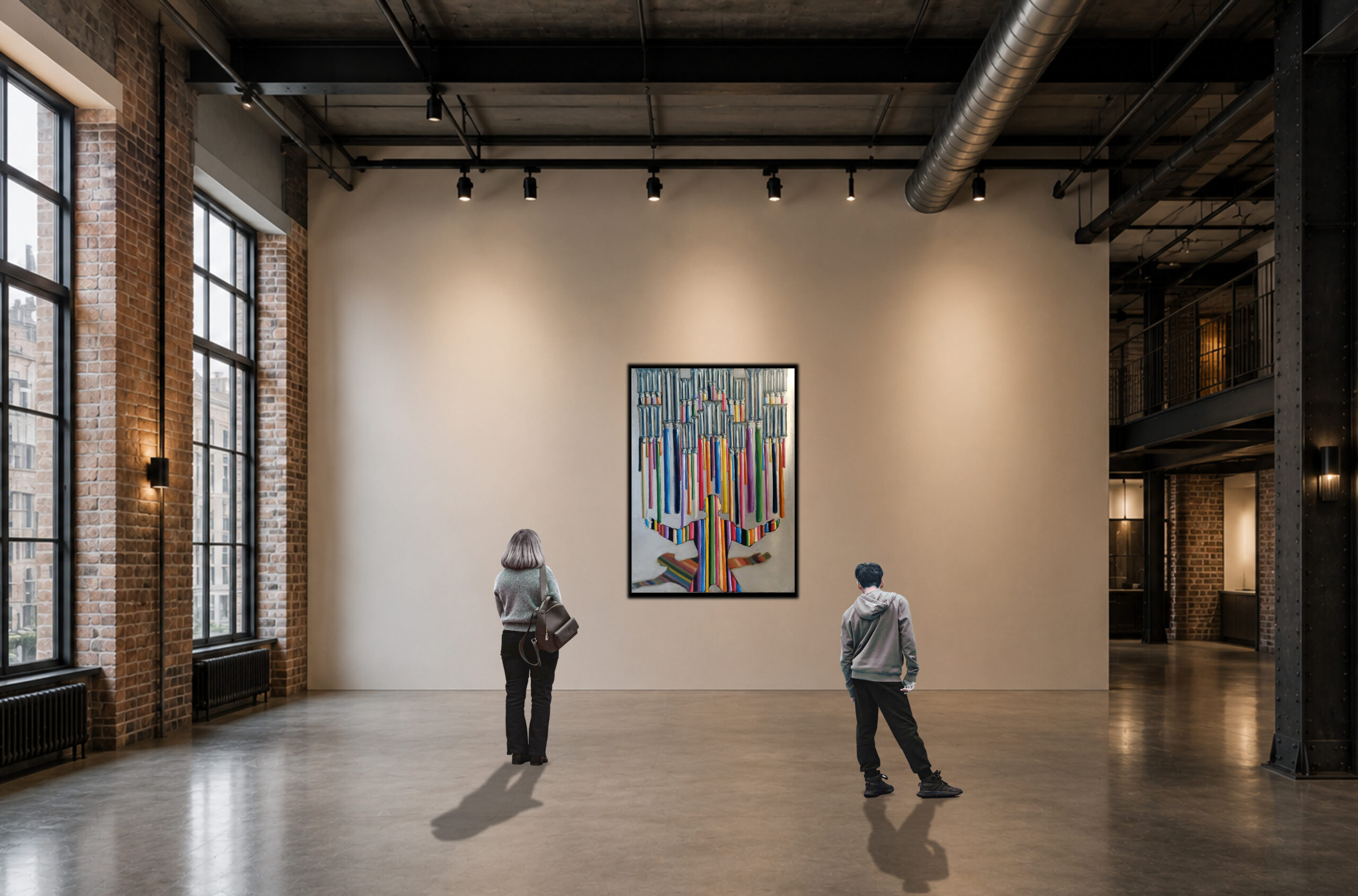
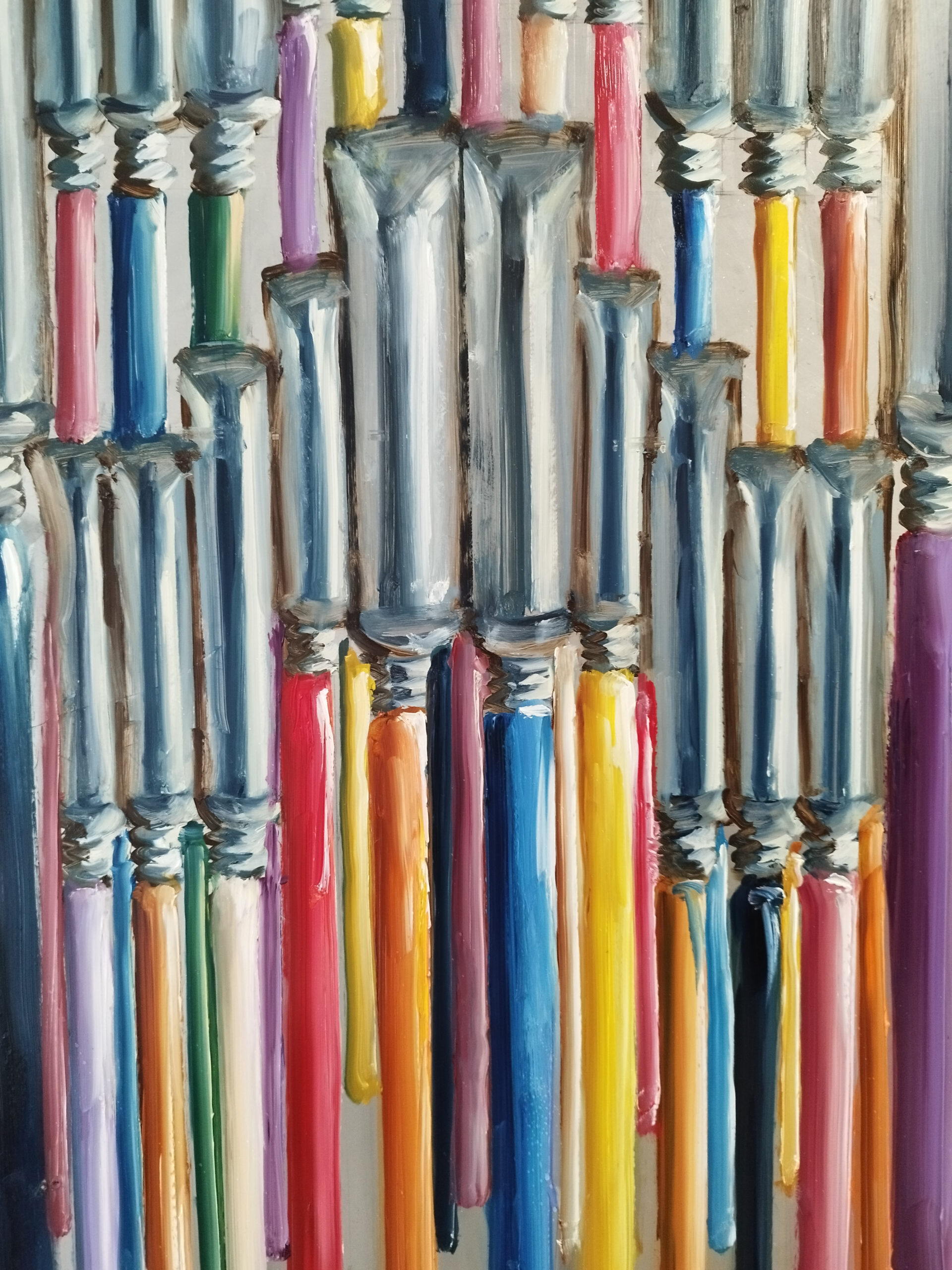
Description
PASSACAGLIA – COMPOSITION
January 2024, Paris
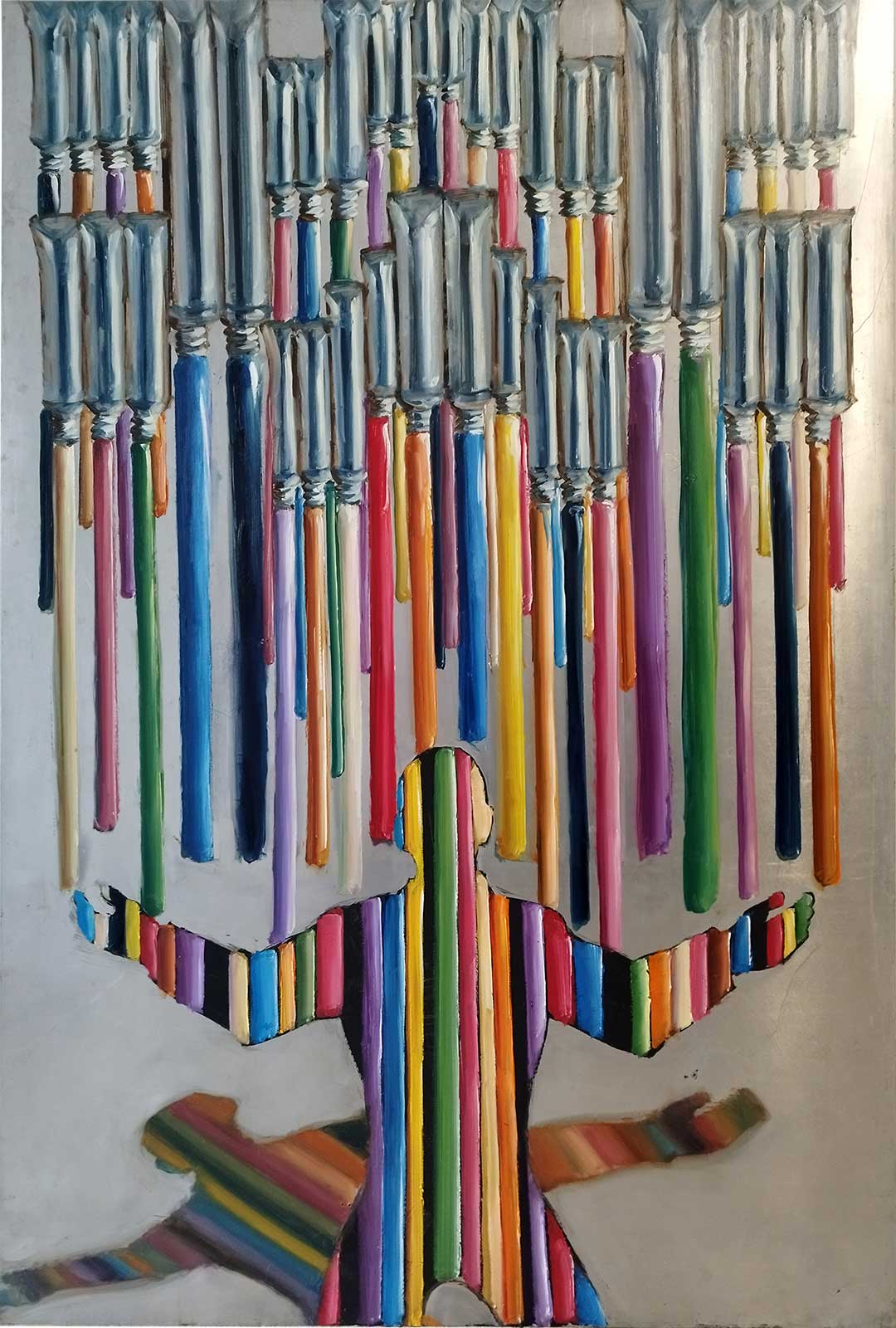
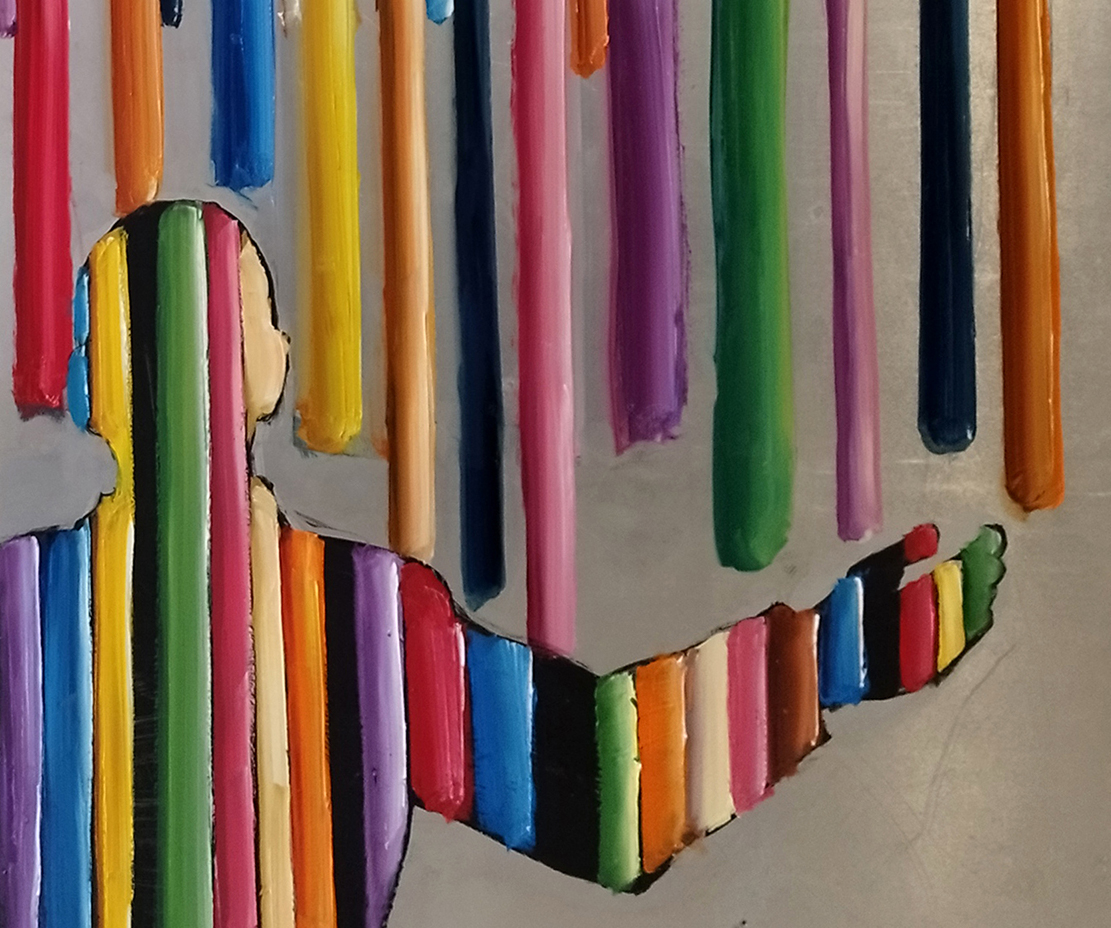
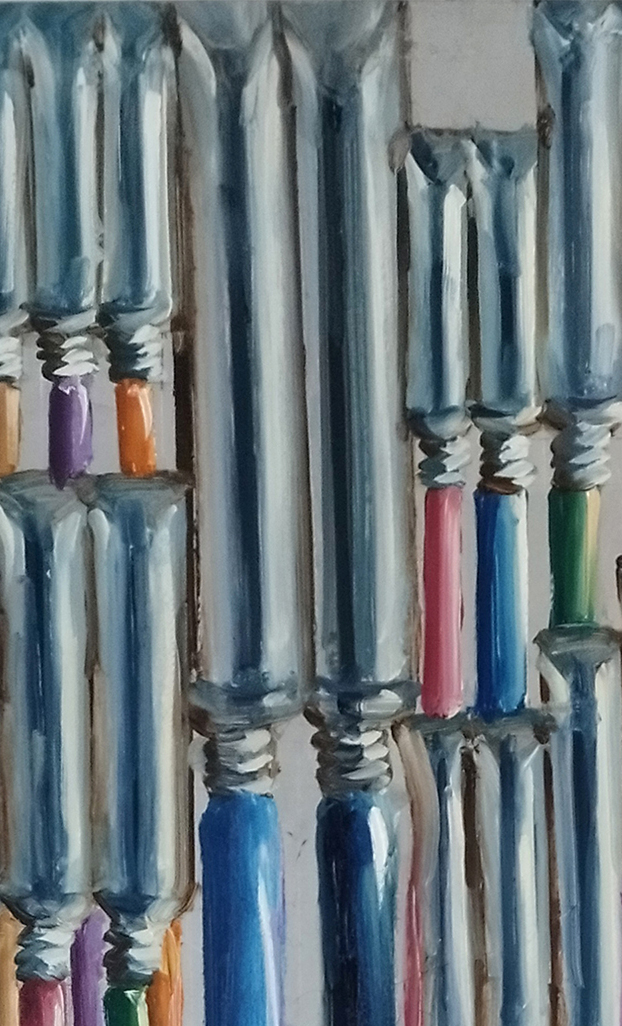
The same month, January two thousand twenty-four, a few days or a few weeks after Underground, in the same glacial cold, in the same studio rue Ricaut that was simultaneously my refuge and my prison, I painted another version of Passacaglia, not the one with paint tubes transformed into cathedral organ that I had painted a few years earlier, no, a different composition, complementary perhaps, that explored the same theme — creation as liturgy, studio as cathedral, painting as sacred act — but from another angle, with another approach, and this Passacaglia of January two thousand twenty-four showed not the paint tubes themselves but the result of their use, not the instrument but the music, not the organ but the composition that emerged from it, an abstract composition, rhythmic, repetitive like a musical passacaglia, with motifs that returned, that varied, that developed, creating a complex visual architecture, powerful, that was my way of visualizing what it meant to paint for forty years, repeat the same gesture, squeeze the tubes, apply the colors, create images, again and again, obstinately, like a ground bass that never stops, that continues, that varies but remains fundamentally the same, that creates through this very repetition a structure, an architecture, a meaning that did not exist at the beginning but that emerges slowly, progressively, through decades of repetition, variation, development.
This Passacaglia was therefore more abstract than the one with paint tubes, it was a composition of forms, colors, rhythms, repetitions, I had created horizontal bands that crossed the tableau from left to right, lines of colors that repeated with variations, creating a rhythmic pattern, almost musical, each band was slightly different from the previous one but all shared the same fundamental structure, the same basic theme, exactly as in a musical passacaglia where a theme repeats with infinite variations, creating unity in diversity, coherence in change, and these bands of colors perhaps represented my forty years of painting, each band a tableau, a year, a period, all different but all sharing the same fundamental obsession, the same faith in painting, the same necessity to create, and seen together, these bands created an architecture, a structure, a whole that made sense, that told a story, that testified to a life dedicated to creation despite everything, despite invisibility, despite precarity, despite rejections.
The colors I had used in this Passacaglia were rich, varied, generous, reds, blues, yellows, greens, the entire palette, all chromatic possibilities, because forty years of painting was that, all colors, all emotions, all experiences, joy and pain, hope and despair, faith and doubt, all mixed, all present, all important, and these colors I had applied with those generous impastos I loved so much, that gave the tableau’s surface a physical presence, tactile, palpable, the paint was thick, rich, abundant, generous, exactly as a life dedicated to creation should be, not miserly, not minimal, not conceptual and disembodied, no, generous, carnal, material, physically present in the world despite its social invisibility.
And the title — Passacaglia — took on its full meaning here, not just as reference to the baroque musical form, but as exact description of what my artist’s life meant for forty years, a passacaglia, an obstinate repetition of the same creative gesture, day after day, year after year, decade after decade, squeeze the tubes, apply the colors, create images, again and again, without apparent success, without recognition, without audience, just this obstinate repetition that slowly, progressively created an architecture, a structure, a corpus, forty years of tableaux stacked in my studio, invisible but existing, mute testimonies of this passacaglia I had played all my life, this ground bass that had never stopped, that would not stop as long as I lived, as long as my hands could hold a brush, as long as my eyes could see colors.
January two thousand twenty-four. Twenty years and a few days of exile. Fifty-eight years old. And I painted this Passacaglia understanding that my entire life was this repetitive composition, varied, obstinate, that each tableau was a variation on the same fundamental theme — create, exist, affirm my humanity through art despite invisibility, despite everything —, that seen together, all my tableaux formed a gigantic passacaglia, an architecture built repetition after repetition, variation after variation, tableau after tableau, for forty years, and this architecture had meaning even if no one saw it, it existed even if it was invisible, it testified to something important even if this something was recognized by no one — a human life totally dedicated to creation, to beauty, to art, despite the total absence of external reward, social recognition, material success, just this obstinate fidelity to vocation, this infinite repetition of the creative gesture, this passacaglia played in silence and solitude but played nonetheless, until the end, until death would finally prevent me from continuing, and even then perhaps the tableaux would continue to exist, this passacaglia would continue to resonate silently in my studio, mute but real testimony of a life lived in creation, in faith, in obstinacy, Passacaglia, repetition becomes architecture, obstinacy becomes work, life becomes art, despite everything, always, until the end.