Description
Groenland — The Cosmic Dream
Conceptual photographic research January 2025 | Variable dimensions
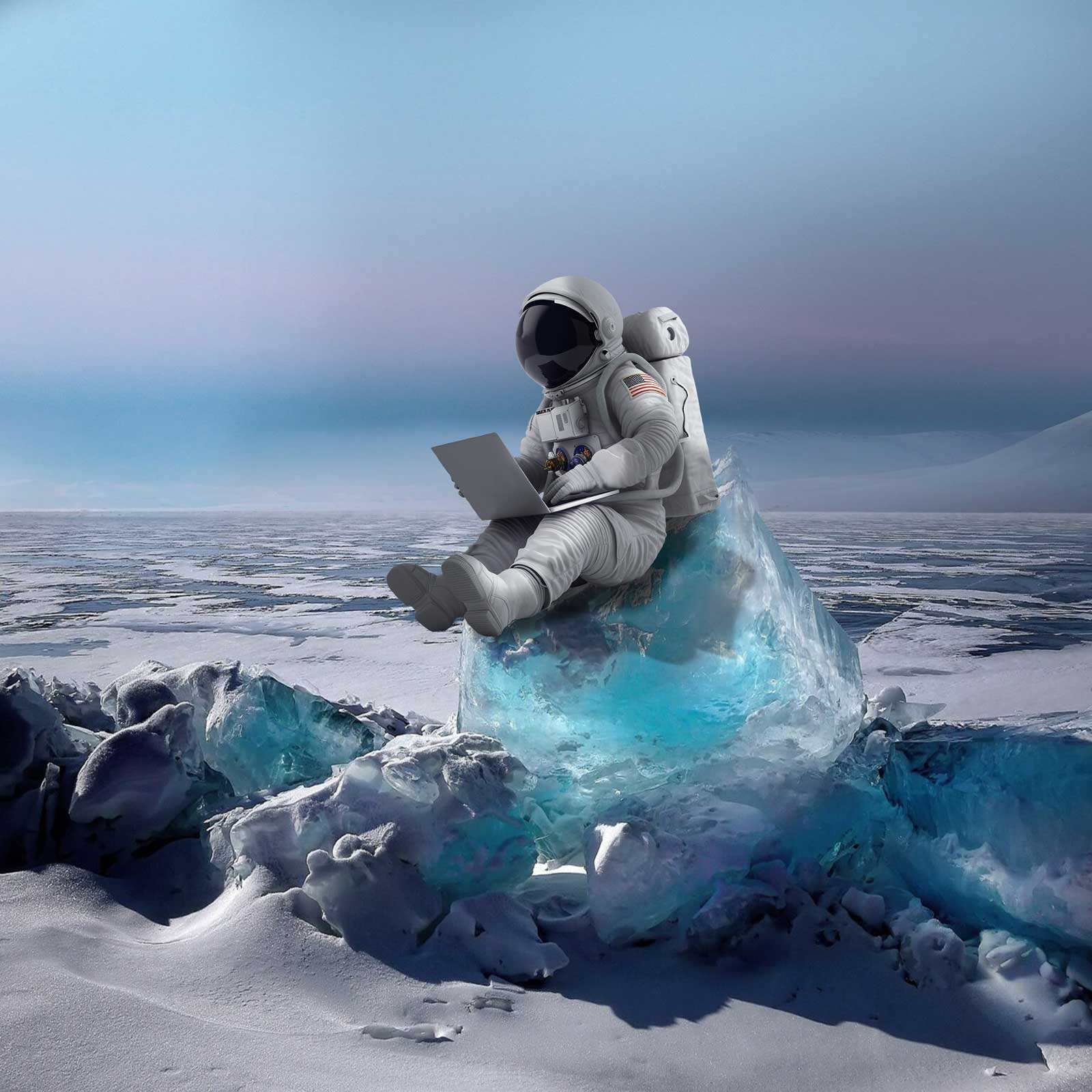
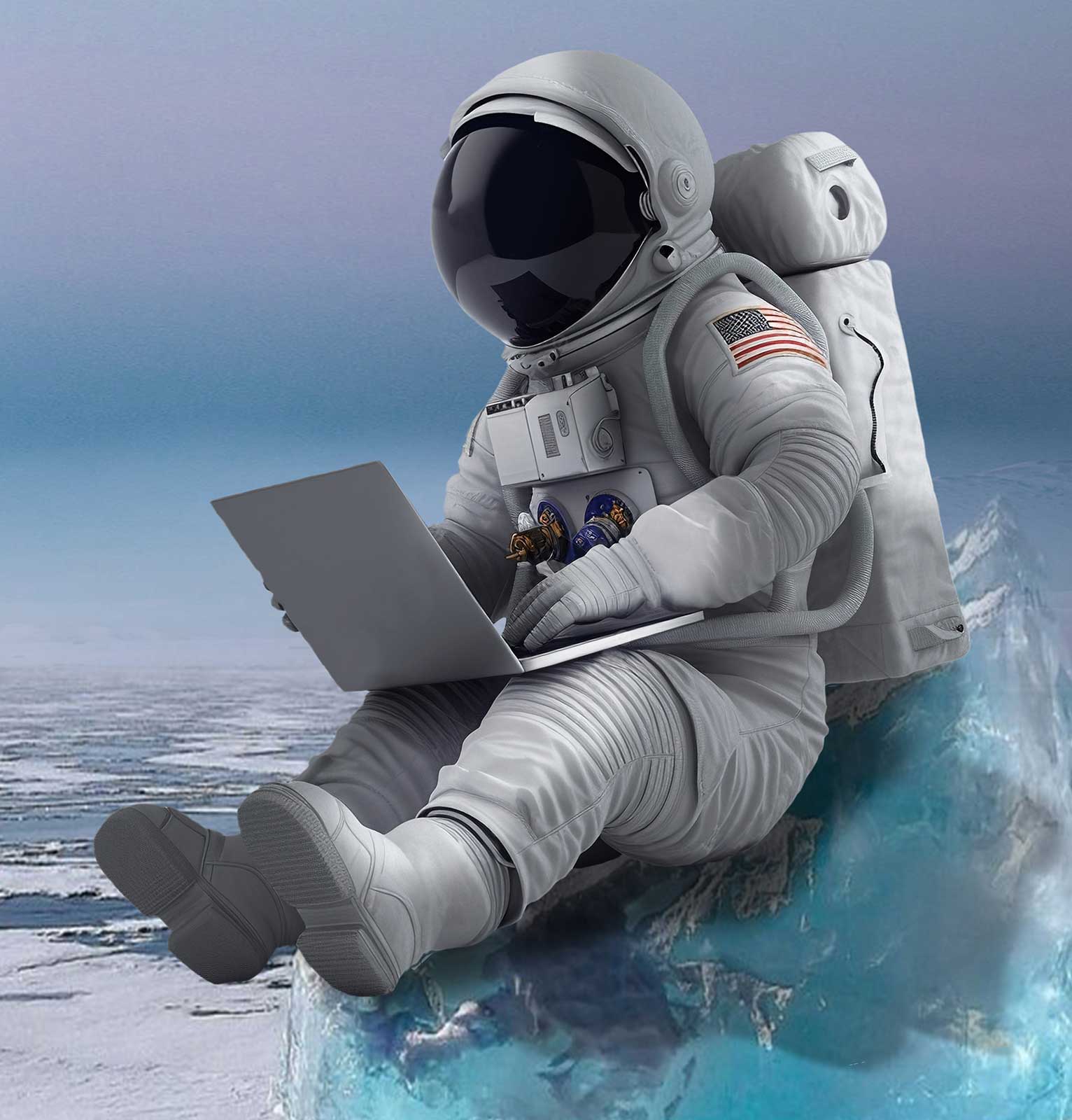
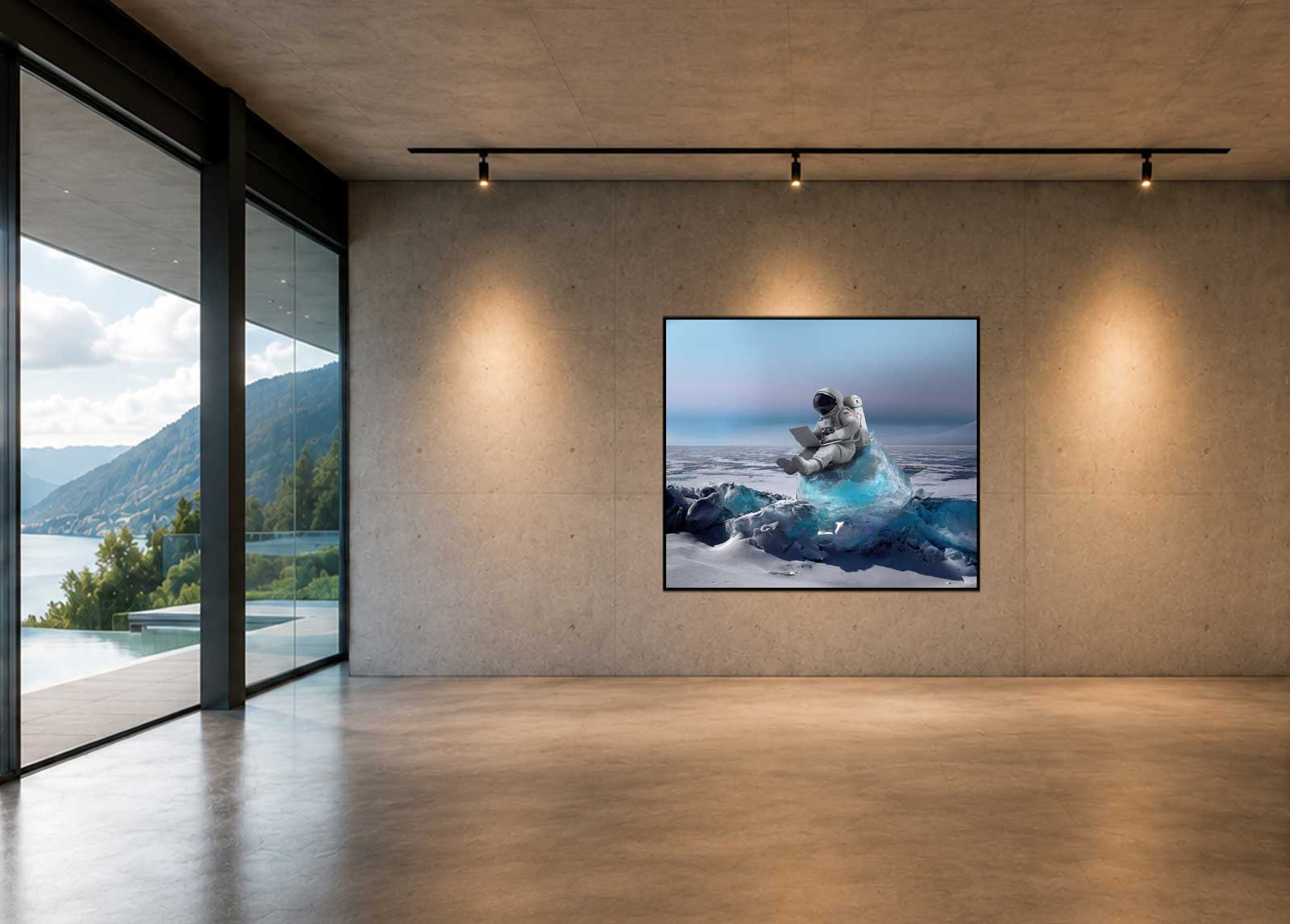
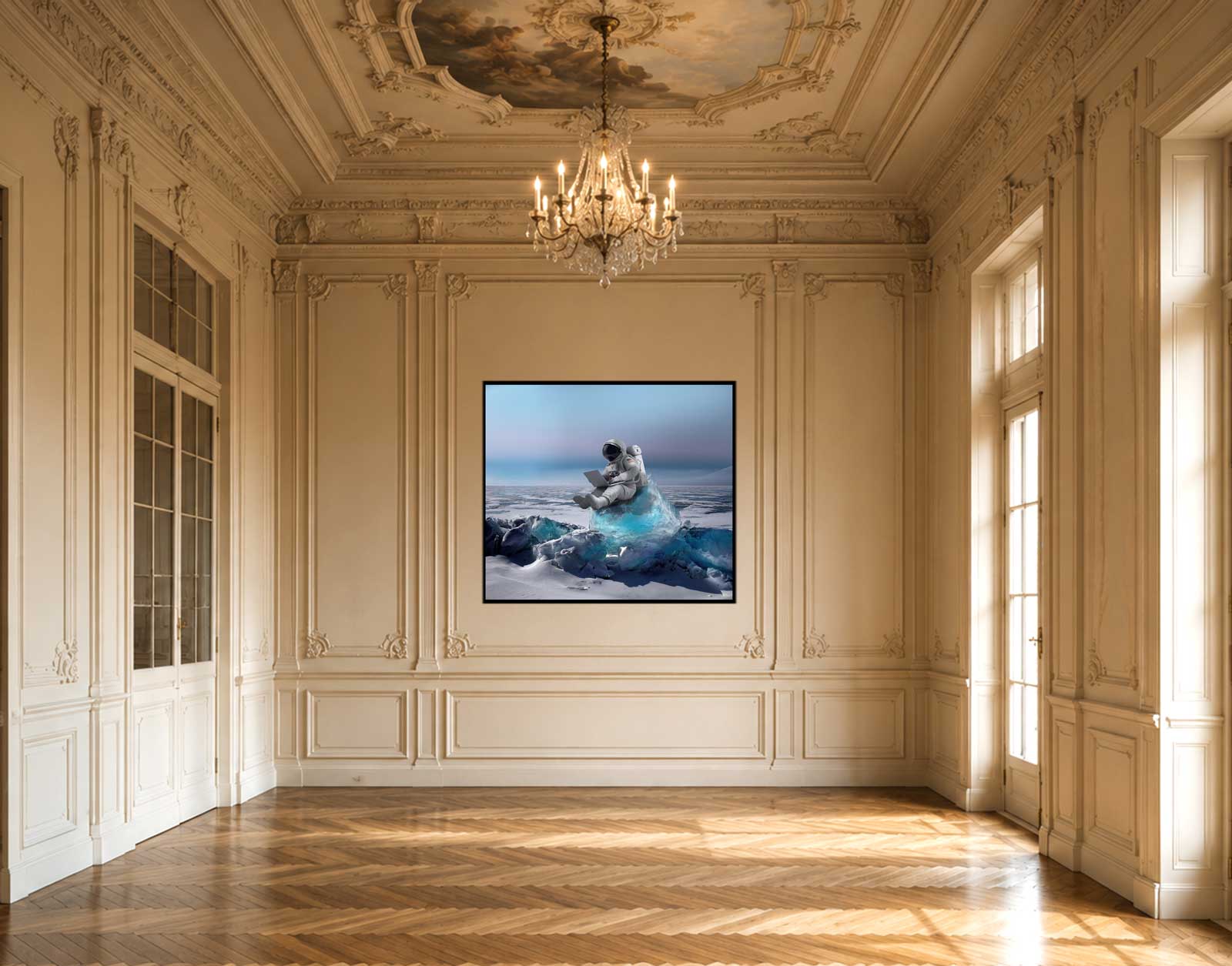
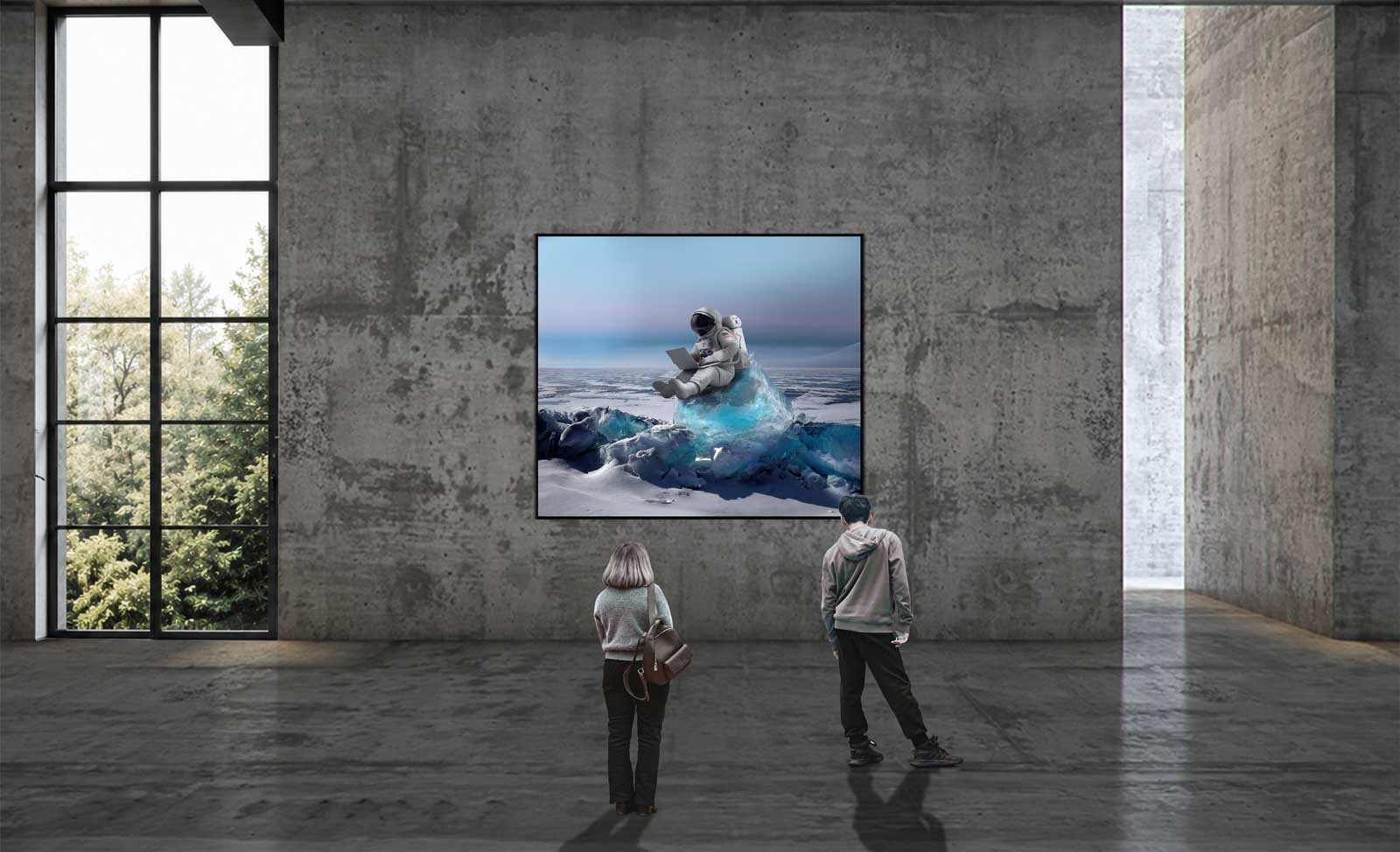
The WiFi signal was surprisingly strong on that drifting iceberg — three bars out of five, enough to send emails, check stock prices, scroll through Twitter now called X — and the astronaut typed on his laptop sitting cross-legged on the turquoise ice melting beneath his buttocks insulated by layers of spatial textile, a NASA suit designed for minus two hundred and seventy degrees of outer space now deployed for the minus ten degrees of a Greenland in the process of becoming temperate, absurd overequipment for a planet warming so rapidly that soon we would need anti-heat suits rather than anti-cold ones.
Elon Musk tweeted that morning — forgive me, posted on X — that he would send one million humans to Mars by two thousand and fifty, autonomous colony, underground city beneath domes, grandiose cosmic dream while Greenland was losing two hundred and eighty billion tonnes of ice per year, an abstract figure impossible to visualize, so I visualized it — iceberg after iceberg breaking from the millennial ice sheet, sliding toward the Arctic Ocean, melting slowly, inexorably — and this astronaut seated on one of them was documenting the catastrophe live for his followers who would like, share, then scroll toward the next cat video.
January two thousand and twenty-five, sixty-two years old, twenty-three years in France, and the news gave this image a particular resonance because Donald Trump had just retaken the American presidency and was again speaking of buying Greenland, that strange obsession he had already expressed in two thousand and nineteen, a proposal that Denmark had rejected politely then less politely, but Trump insisted because he saw what few saw — Greenland would become precious once the ice melted completely: rare minerals, rare earth elements, offshore oil, shortened Arctic maritime routes, the geopolitics of climate change in which ecological losers became economic winners.
The astronaut on his iceberg embodied our collective schizophrenia — we dreamed of colonizing Mars while making the Earth uninhabitable, we invested billions in SpaceX and Blue Origin to flee toward other planets instead of investing those same billions to save this one, and the twisted logic was fascinating — Mars was a frozen desert without breathable atmosphere, without liquid water, without life, exactly what the Earth would become if we continued our current trajectory, so why not simply stop destroying the Earth instead of seeking to terraform Mars, but apparently colonizing a dead planet was technologically sexier, narratively more exciting than the thankless task of repairing the damage on our native planet.
The space suit bore the American flag on the shoulder, and that presence screamed the ultimate irony because the United States had the largest carbon footprint per capita in the world, gigantic cumulative historical emissions, major responsibility in the warming that was melting precisely this Greenland that Trump wanted to buy — a perfect vicious circle in which one destroyed a territory then wanted to buy it after having destroyed it in order to exploit the resources revealed by the destruction one had caused, apocalyptic capitalism that transformed every catastrophe into an investment opportunity.
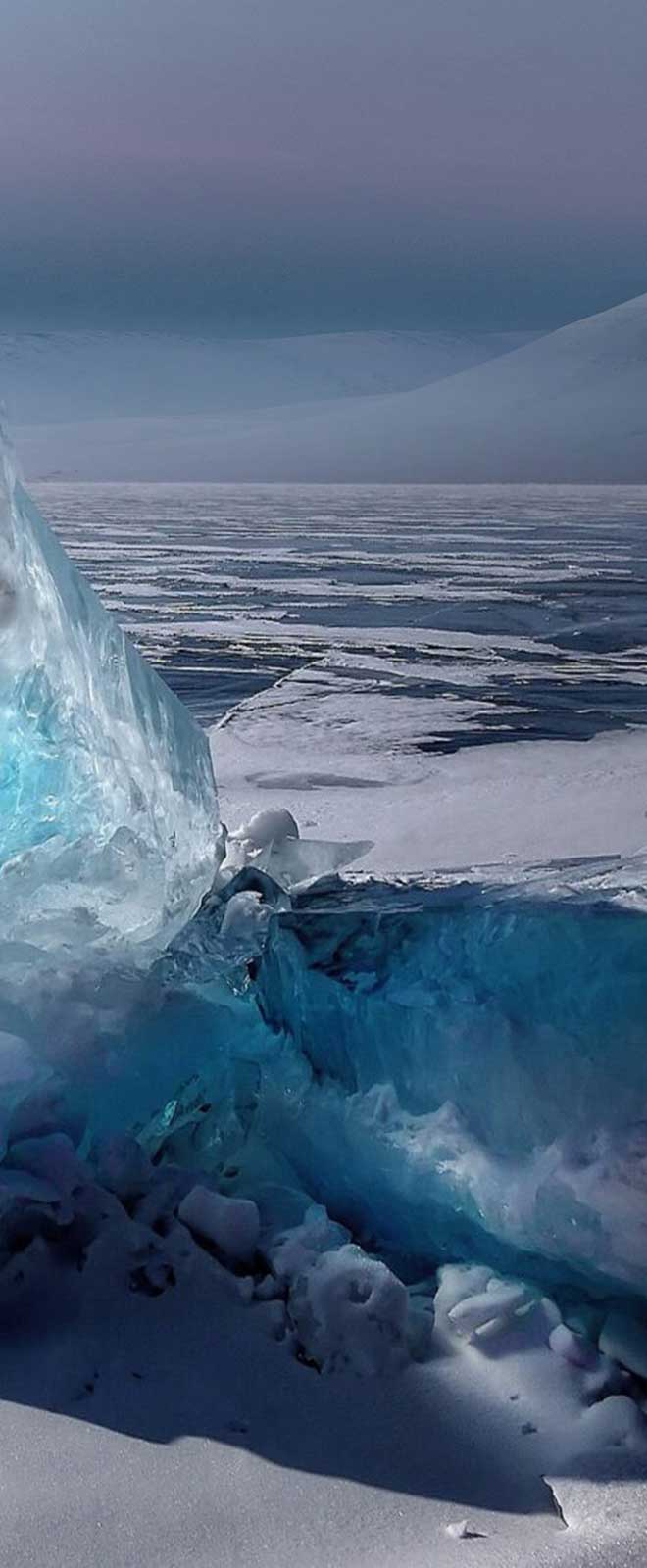
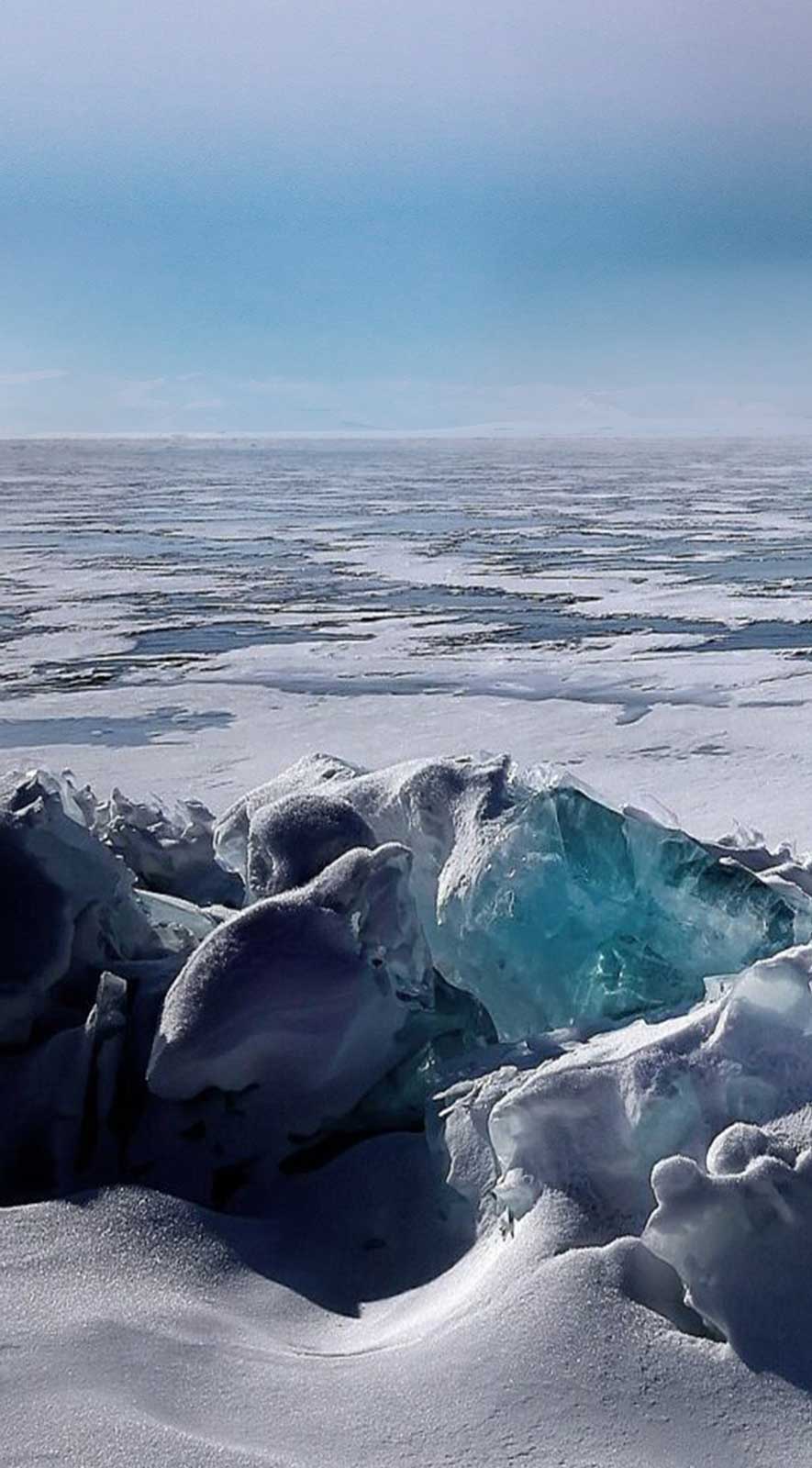
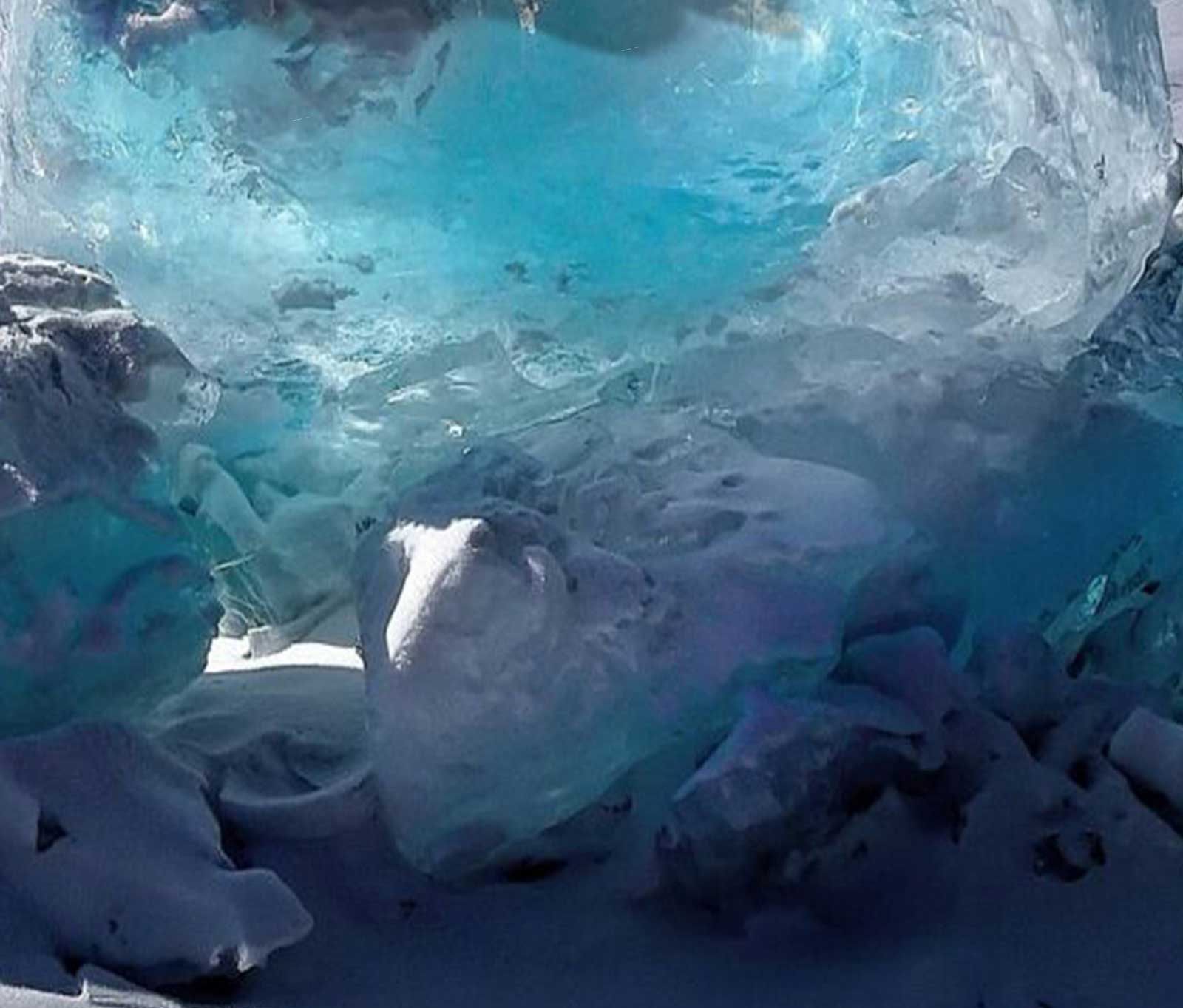
The magnificent turquoise iceberg beneath the astronaut — how many years old, a thousand years, ten thousand years, perhaps more — ice formed layer by layer winter after winter since before the pyramids, before writing, before civilization, a millennial climatic archive containing in its imprisoned air bubbles the atmosphere of bygone epochs, and scientists drilled these ice cores to read the history of the Earth’s climate, but now this archive was melting faster than it could be studied, a glacial Library of Alexandria burning — forgive me, melting — carrying away with it irreplaceable data on the planet’s climatic past.
What exactly was the laptop on the astronaut’s knees displaying — a scientific report on accelerated melting, or rather a PowerPoint presentation for investors explaining the commercial opportunities of a deglaciated Greenland: Arctic tourism, mining, intensive fishing, agriculture made possible when temperatures rose a few more degrees, a business plan for the apocalypse, and Wall Street loved it, hedge funds betting on warming, buying coastal land in Greenland in anticipation of its future appreciation when it became habitable, arable, exploitable.
The blue-grey twilight sky above the scene carried that particular Arctic light photographers chased for hours, the perfect blue hour where day and night balanced each other, and this sublime beauty made the image even more terrible because it aestheticized the catastrophe, transformed the melting of the ice into a visual spectacle consumable on Instagram, and we were all complicit in this — we posted photographs of sublime landscapes in the process of disappearing, we harvested the likes, then moved on to something else, aesthetic anaesthesia preventing us from truly feeling the horror of what was happening.
The cosmic dream — title in English, language of the American empire, language of tech, language of Musk and his rockets — and this dream spoke of our desire to escape the Earth rather than save it, adolescent fantasy of starting over elsewhere on a blank page, but space was not a blank page, it was the deadly absolute void, and Mars was not a promised land but a frozen hell where every breath, every sip of water, every calorie of food would have to be produced artificially at great energetic cost in sealed habitats, perpetual technological prison compared to the Earth that gave us everything freely — air, water, food, beauty — and which we were destroying out of pure stupidity, greed, short-termism.
January two thousand and twenty-five, and climatologists were giving us perhaps five more years to avoid the worst scenarios, after which it would be too late — runaway feedback loops irreversible, Greenland’s melting slowing the Gulf Stream, altering ocean currents, disrupting monsoons, triggering famines, igniting wars over remaining resources, a cascade of catastrophes already begun, already underway, and meanwhile the astronaut on his iceberg checked his emails, scheduled his Zoom meetings, posted his Instagram stories, business as usual until the end — we would work on our laptops until the last iceberg, until the last drop of drinking water, until the last breath of breathable air.
The absurdity of the scene screamed without screaming — why an astronaut, why a space suit, why in Greenland, and the answer struck: because we were already treating the Earth as a hostile alien planet where we had to wear special equipment to survive, anti-radiation, anti-pollution, anti-heat, anti-cold suits, the progressive transformation of our native planet into an extraterrestrial environment requiring constant technological mediation, and soon perhaps we would indeed be wearing space suits daily not to go to Mars but simply to leave our homes on an Earth that had become as inhospitable as Mars.
Greenland — The Cosmic Dream, January two thousand and twenty-five, and the astronaut kept typing on his laptop seated on his drifting, melting, disappearing iceberg, and we kept dreaming of Mars while Greenland melted, and Musk kept building his rockets while the Earth burned, and Trump kept wanting to buy territories while they disappeared beneath the waters, and all of us kept scrolling, liking, sharing while our only known cosmic home slowly, surely transformed into an uninhabitable desert — cosmic dream becoming cosmic nightmare, spatial fantasy concealing terrestrial nightmare, and the magnificent turquoise iceberg kept melting beneath the insulated buttocks of the astronaut who typed and typed his reports, his emails, his posts into the Arctic void where no one truly listened anymore because we were all too busy dreaming of elsewhere rather than saving here. Greenland, January two thousand and twenty-five. Forever.