Description
God Give Us Our Daily Bread
Conceptual photographic research
April 2016 | Variable dimensions
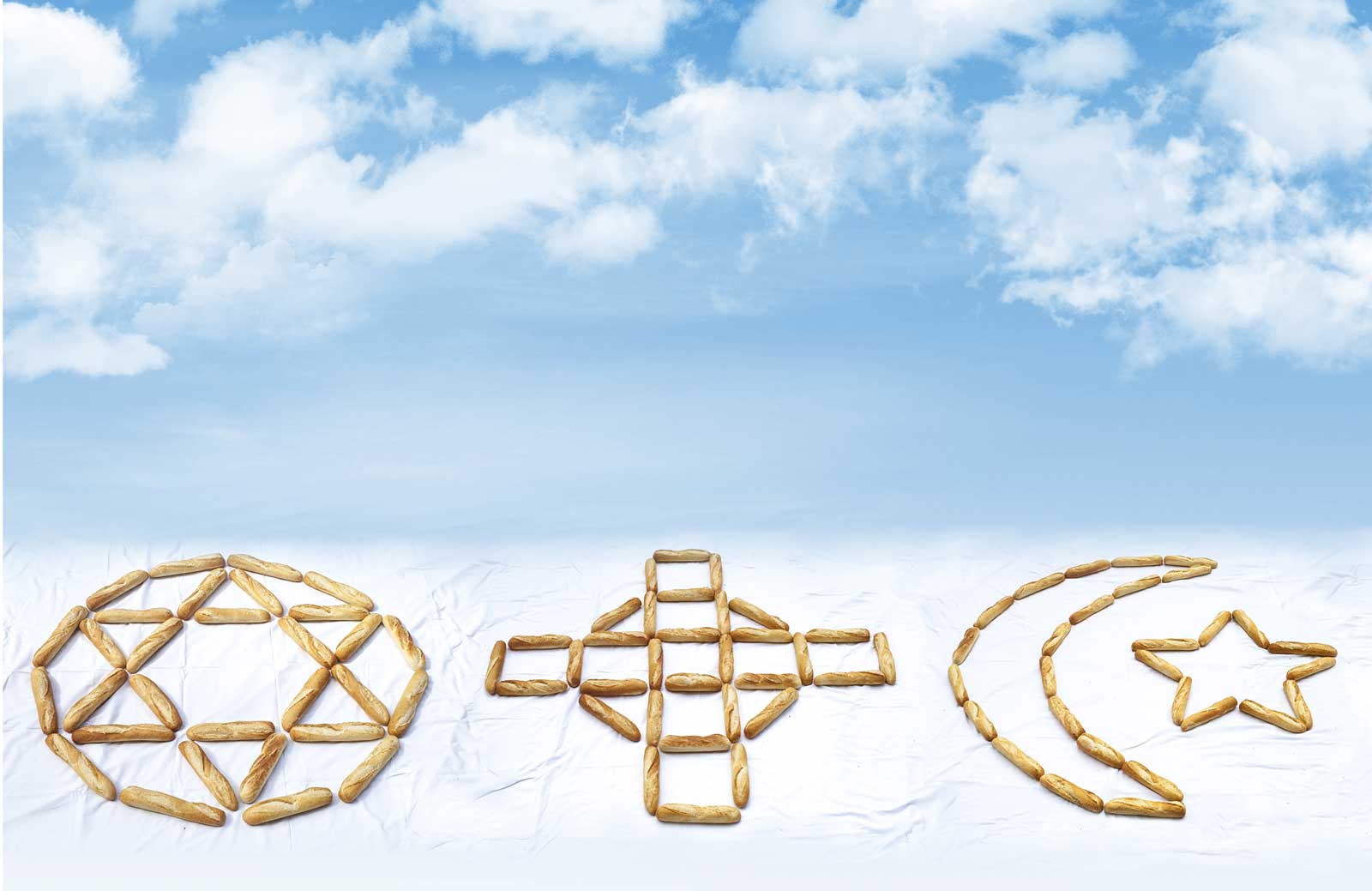
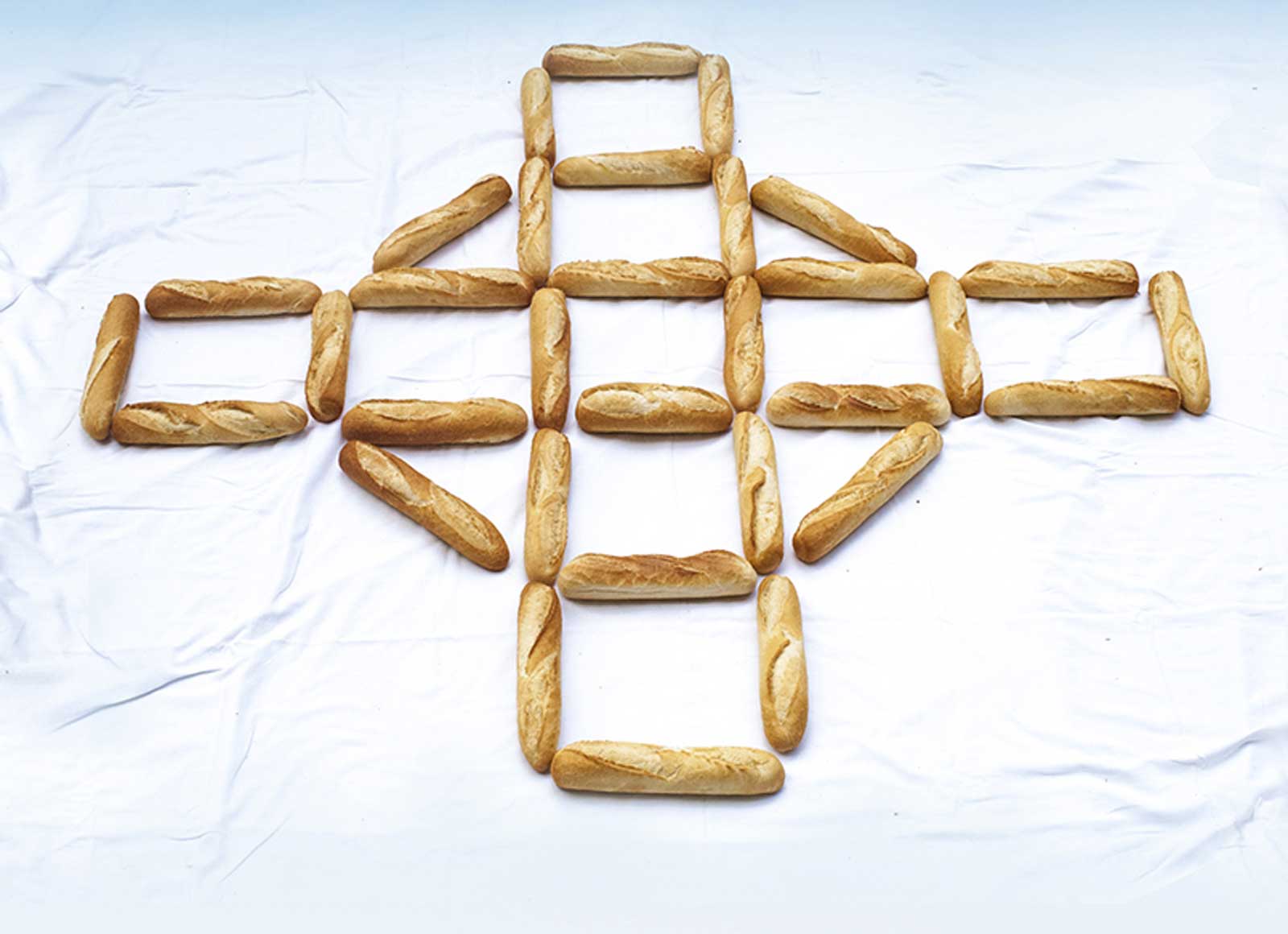
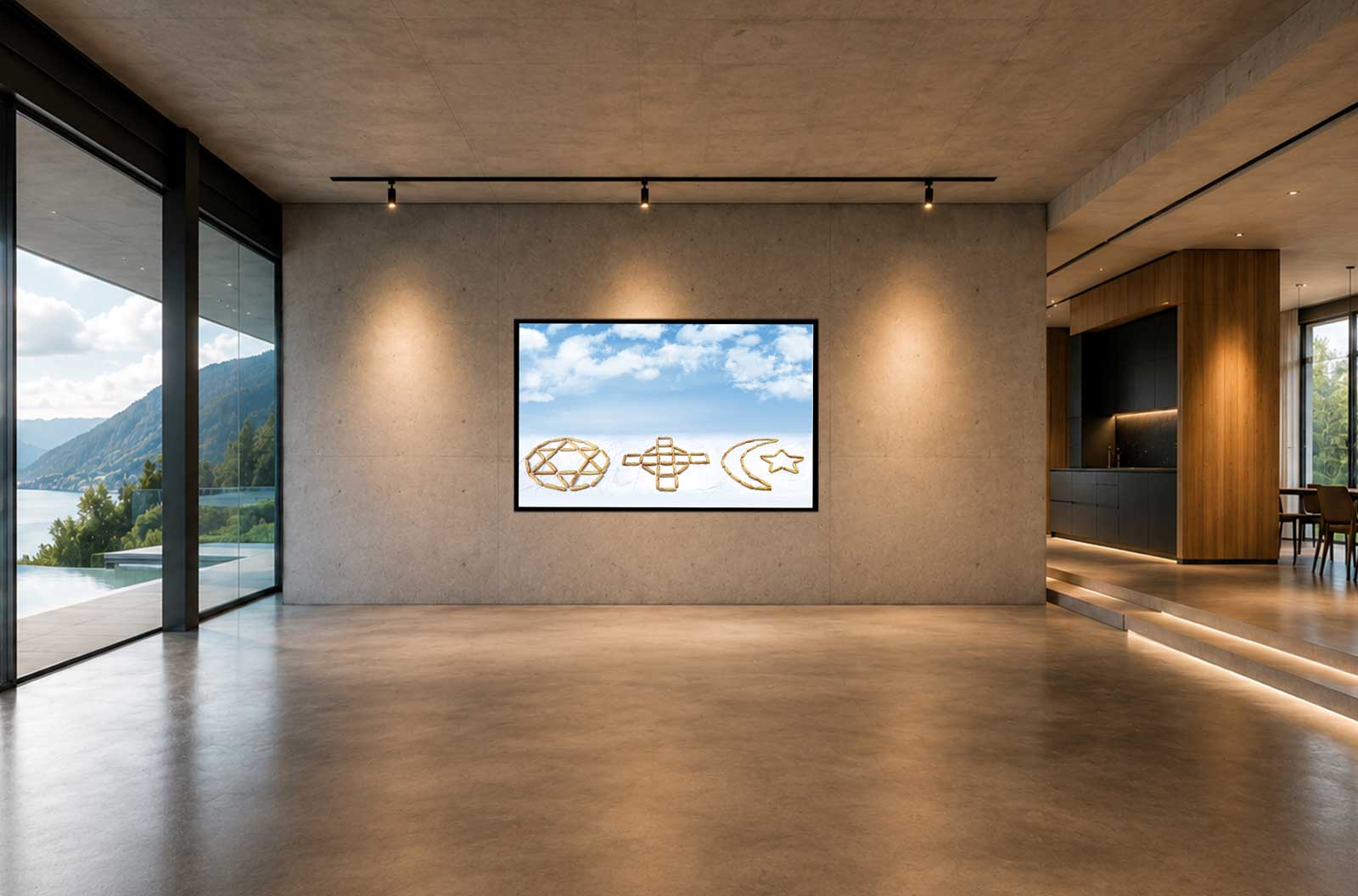
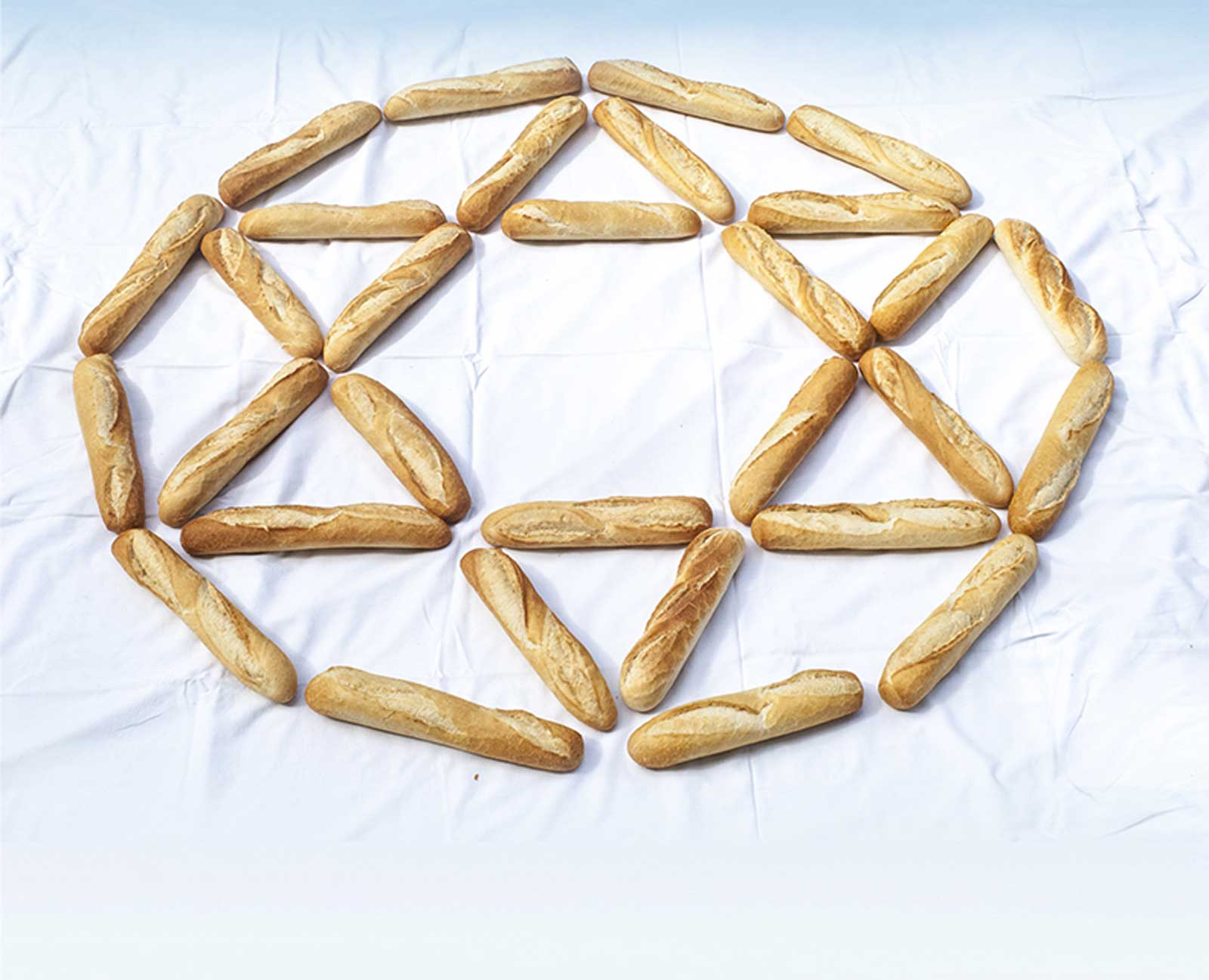
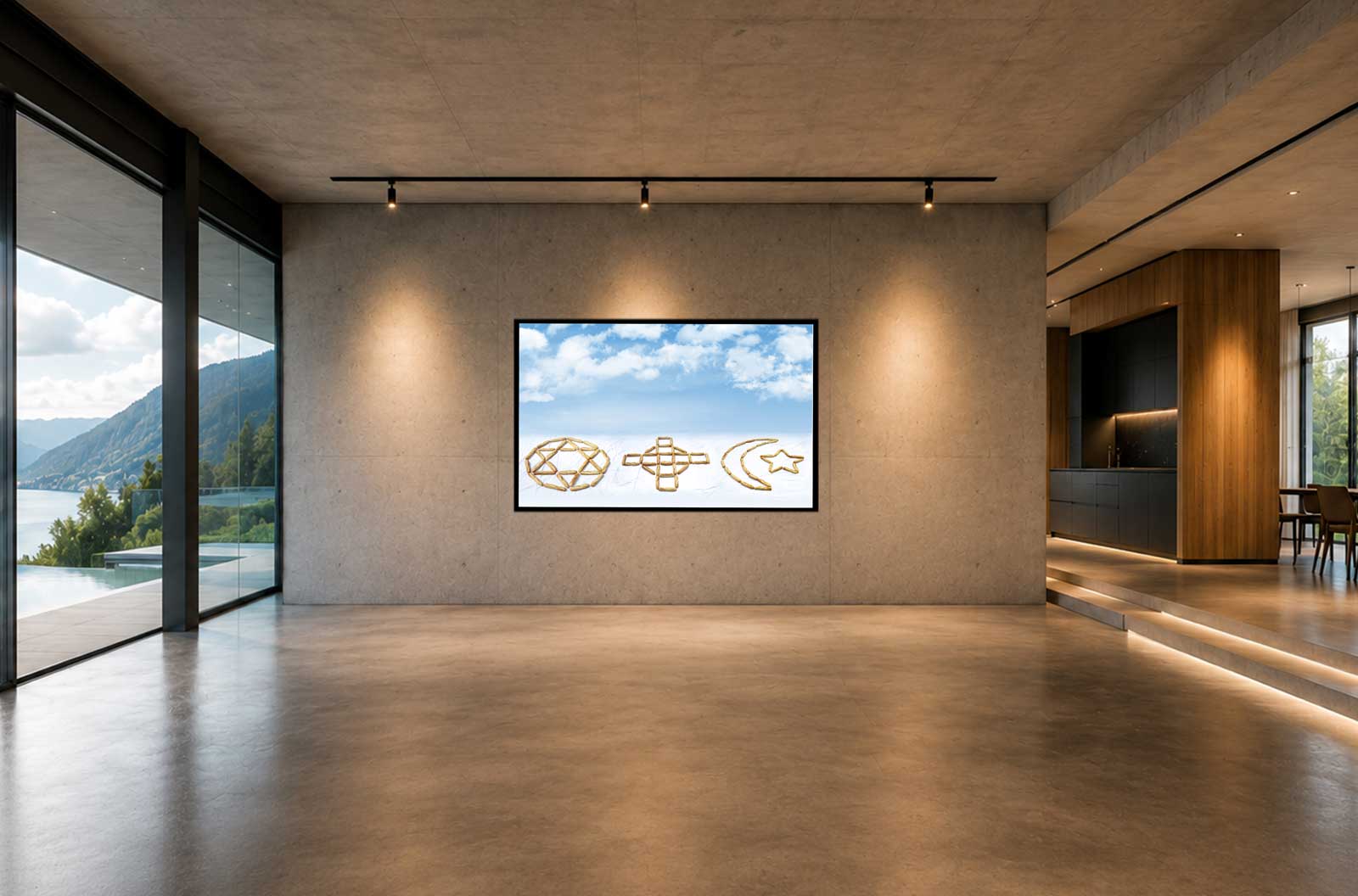
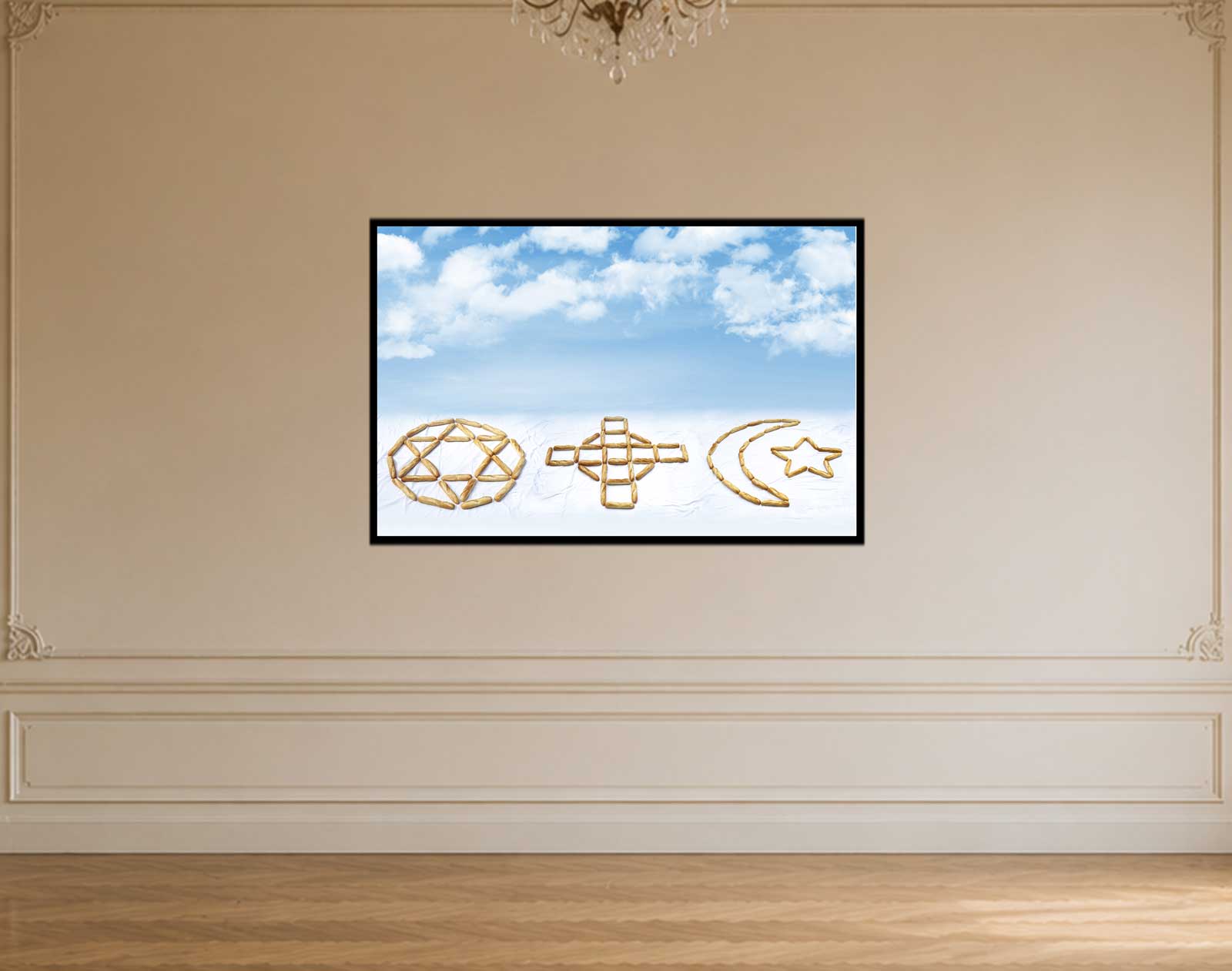
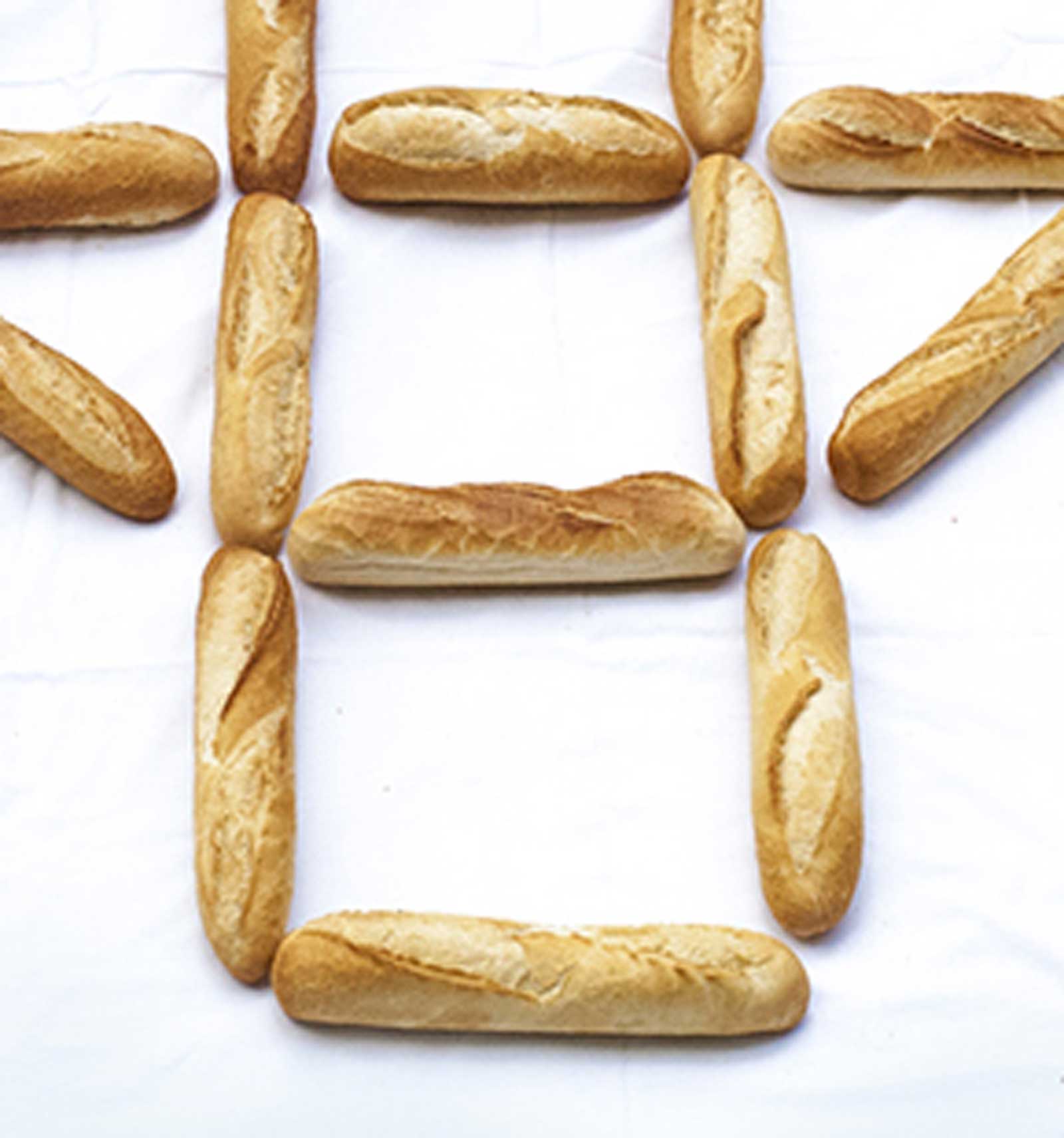
Three religions, one bread. On the left the Star of David inscribed in a perfect circle, this symbol of Judaism that had existed for millennia, six branches radiating from the center like a geometric flower, and all around the circle that contained this six-pointed perfection. In the center the Christian cross, simple and powerful perpendicular, horizontal and vertical crossing, symbol of the sacrifice of Christ but also of the faith that had dominated Europe for two thousand years. On the right the crescent moon and the star, emblems of Islam, this religion that counted one point seven billion faithful throughout the world. And all three made of Parisian baguettes, this golden crispy daily bread that the French bought every morning, all three placed on the same white marble under the same blue sky scattered with white clouds.
April twenty sixteen, fifty-three years, one month after the Brussels bombings where thirty-two people had died at the airport and in the metro, five months after the Bataclan where one hundred thirty had died, fifteen months after Charlie Hebdo where twelve had died. Europe lived in fear of Islamic terrorism, and this fear fed hatred, the terrible amalgamation between the peaceful religion and fanatic violence, the communal tensions that tore at the social fabric, the rise of far-right parties that exploited this fear to promote their xenophobic agenda. Jews Muslims Christians looked at each other with suspicion, antisemitic attacks increased, mosques were vandalized, churches emptied, and me in April twenty sixteen proposed this simple image — look, we all eat the same bread.
The circle appeared everywhere in this composition and this was no accident, it was the central message I was trying to transmit. The circle around the Star of David, obvious, containing the six-pointed perfection. But the circle also in the Islamic crescent, portion of circumference, fragment of moon that was itself a sphere. And the circle implicit in the Christian cross because traditionally the cross inscribed itself in a circle, the four branches touching the four cardinal points of an invisible but present circumference. The circle as perfect geometric form, without beginning or end, symbol of eternity, of completeness, of divinity, of that perfection all religions sought even if they called it by different names.
God Give Us Our Daily Bread — the title came from the Lord’s Prayer, Christian prayer, but the message was universal because all Abrahamic religions shared this recognition that we depended on something greater than ourselves for our daily subsistence. The Jews thanked Adonai for bread, recited the blessing of the motzi before each meal. The Christians asked God for their daily bread in the prayer that Jesus taught them. The Muslims began each meal with bismillah, in the name of Allah the merciful. Three religions, three languages, but the same gratitude, the same humility before the mystery of life that nourished us.
The Parisian baguette as common material showed that these three traditions could coexist on the same ground, that secular France could welcome all these different beliefs, that the Republic was not the enemy of faith but the neutral framework that allowed each to practice their religion without imposing on others. The white marble below represented this neutrality, this secular public space where all traditions met as equals, without hierarchy, without one dominating another. The blue sky above perhaps represented the paradise that all three aimed for, this transcendence that took different forms — the Jewish Olam Ha-Ba, the Christian Kingdom of Heaven, the Muslim Jannah — but that expressed the same hope for an existence after death, of divine justice, of ultimate meaning to our mortal lives.
April twenty sixteen and the history of the three Abrahamic religions was a history of brotherhood but also of fratricide, of proximity but also of conflict. Abraham was the common father, the Jews descended from Isaac, the Muslims from Ishmael, all blood cousins who should have loved each other like brothers but had been killing each other for centuries. The medieval Crusades, the European pogroms, the Spanish Inquisition, the Holocaust, the creation of Israel and the Israeli-Palestinian conflict lasting sixty-eight years, all this blood spilled in the name of God or Allah or Yahweh who was perhaps the same God under three different names, who perhaps watched these massacres with infinite sadness wondering why his children did not understand that he loved them all equally, that he had given bread to all, that he wanted them to share it rather than fight over who had the exclusive right to eat it.
The three symbols lined side by side proclaimed equality, horizontality, possible peaceful coexistence. No hierarchy, no superiority of one faith over another, Judaism Christianity Islam at the same level, built with the same material, sharing the same perfect circle that appeared in their respective geometries. And this common circular perfection suggested that perhaps fundamentally all three sought the same thing, aimed at the same transcendent truth, tried to touch the same divine absolute even if they used different rituals different prayers different sacred texts.
Bread itself carried particular symbolism in the three traditions — the unleavened bread of Jewish Passover commemorating the exodus from Egypt, the Christian Eucharist where bread literally became the body of Christ, the blessed bread shared during Muslim Ramadan to break the daily fast. Always bread, always this basic fundamental food elevated to the rank of sacrament, of communion, of link between the human and the divine. And me in April twenty sixteen used secular Parisian baguettes to construct these sacred symbols, showing that the sacred could be expressed through the everyday, that God also dwelt in ordinary bread bought from the corner bakery.
White clouds in the blue sky floated freely above this earthly scene, and perhaps they represented the Spirit that circulated between the three religions, this mystical dimension common to all three traditions where the prophets the saints the Sufis touched the divine directly without institutional mediation. Abraham Moses David for the Jews, Jesus and the saints for the Christians, Muhammad and the Sufis for the Muslims, all had experienced this direct contact with the sacred that transcended dogmas and rituals and institutions, all had touched this perfect circle of divine truth that contained all particular truths without reducing one to another.
God Give Us Our Daily Bread in April twenty sixteen, and fifty-three years of life had taught me that humans invented differences to separate ourselves even though we were fundamentally identical, that we shared the same needs — bread water shelter love meaning — and that our three Abrahamic religions shared infinitely more than they differed, Abraham common father, God unique even if named differently, similar moral commandments, hope for a better world, so why did we kill each other over these minor variations instead of celebrating our Abrahamic brotherhood, why did descendants of Isaac and Ishmael continue to fight instead of embracing like the brothers they were, and the perfect circle that appeared in the three symbols reminded us of this fundamental unity, this divine perfection that contained us all, Jews Christians Muslims atheists agnostics, all nourished by the same daily bread that God or nature or human labor gave us generously each day, for us now to break it together around common tables recognizing our kinship our humanity our fragility our mutual need for love and bread and meaning in this difficult world where hatred seemed always easier than love but where love remained the only worthy answer to these three traditions that all preached compassion charity justice even if their faithful too often forgot these fundamental teachings in favor of fear and tribalism and violence that led nowhere but toward more blood and more tears and more divisions in a humanity that desperately needed to gather around shared bread under the single sky that also covered all children of Abraham.
Cornel Barsan
April 2016