
Description
EKG City
Conceptual photographic research
March 2018 | Variable dimensions
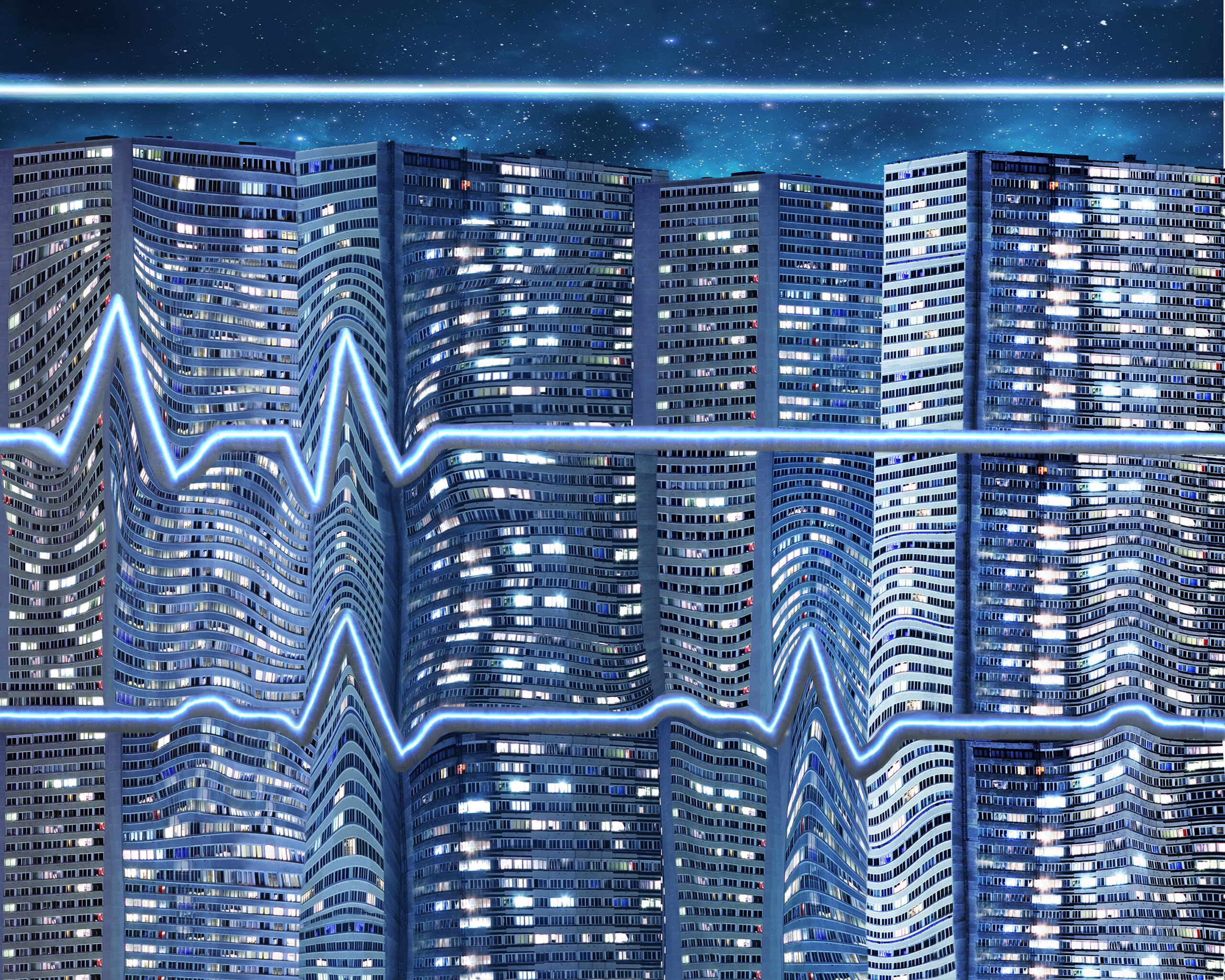
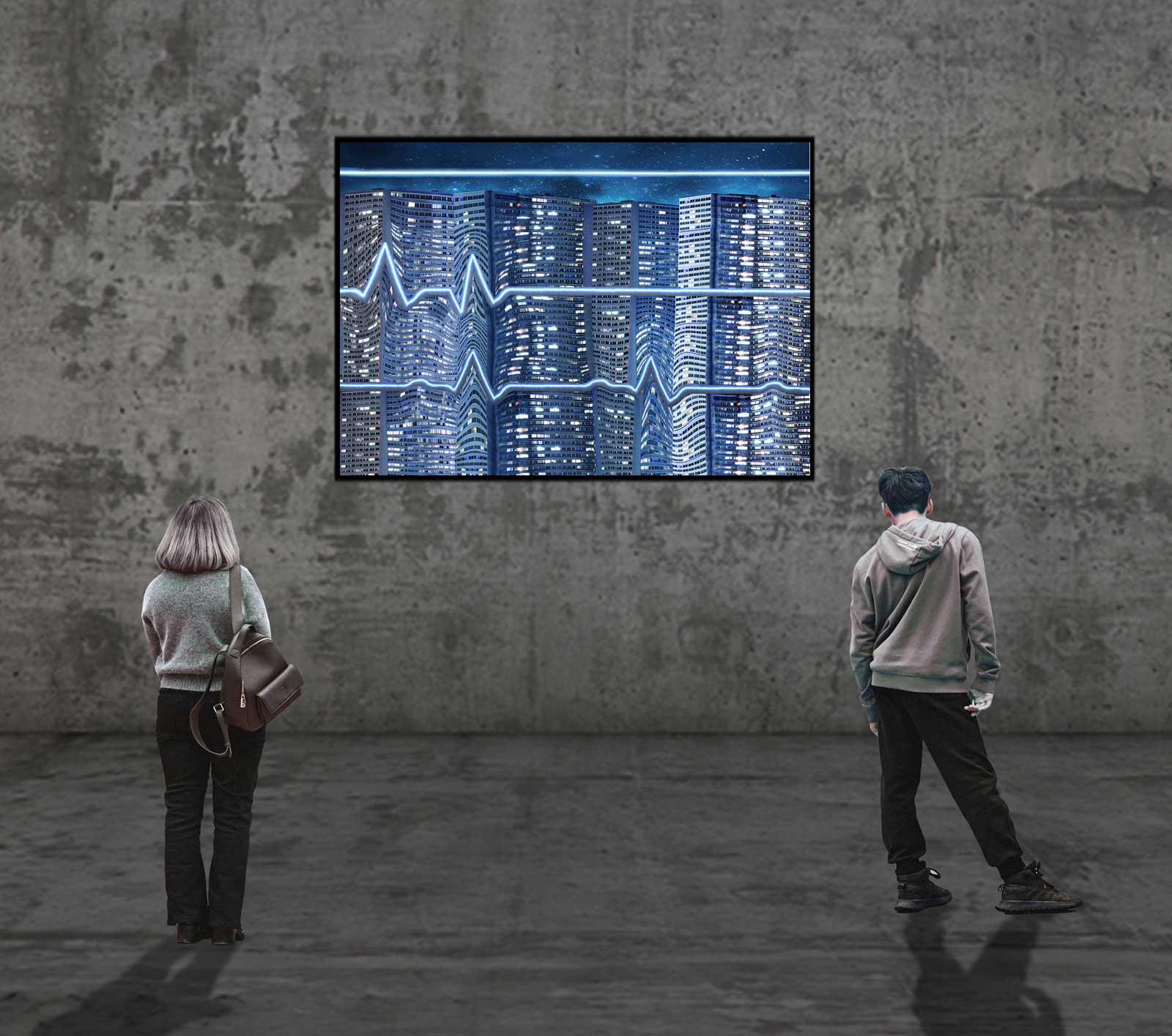
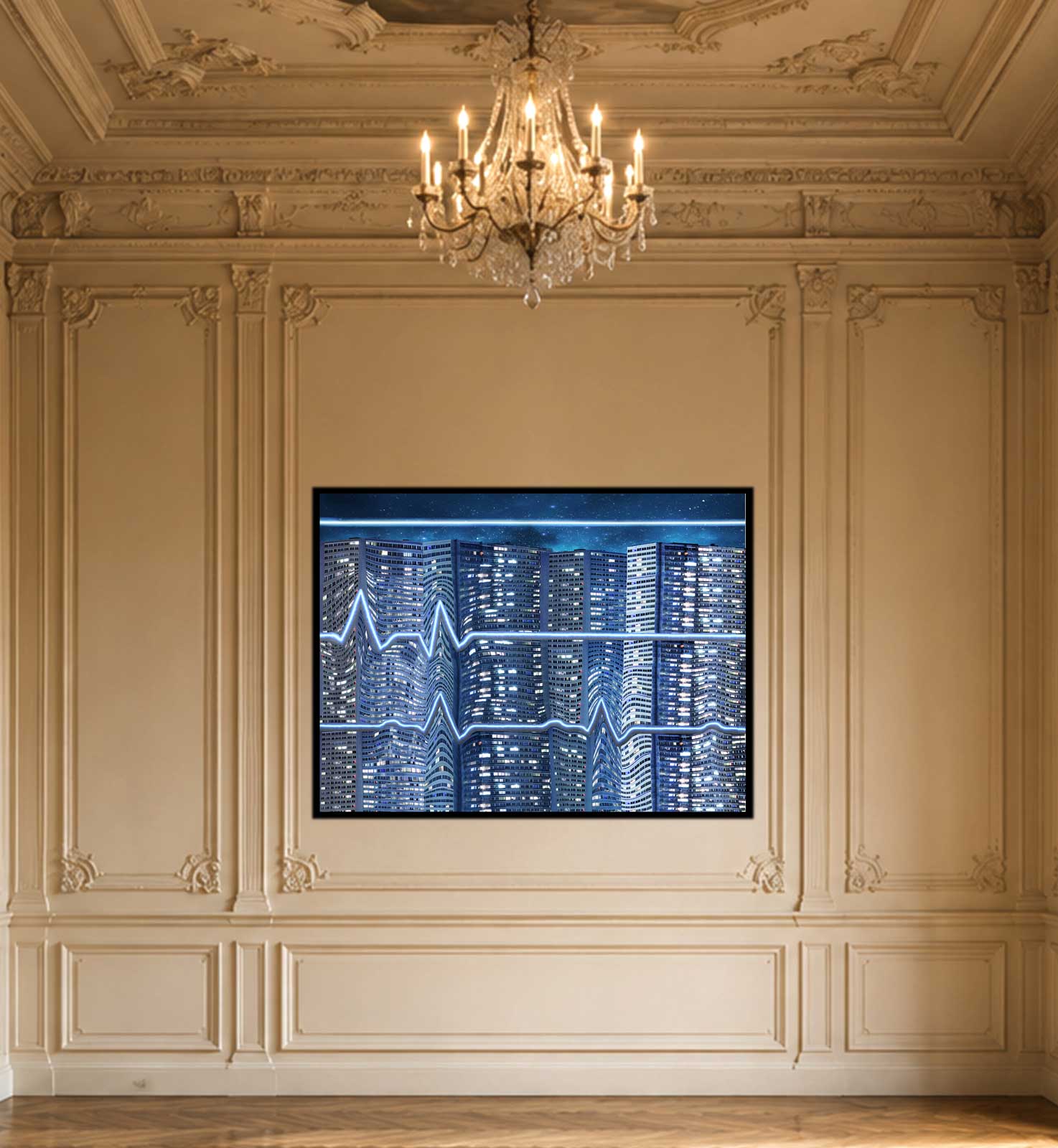
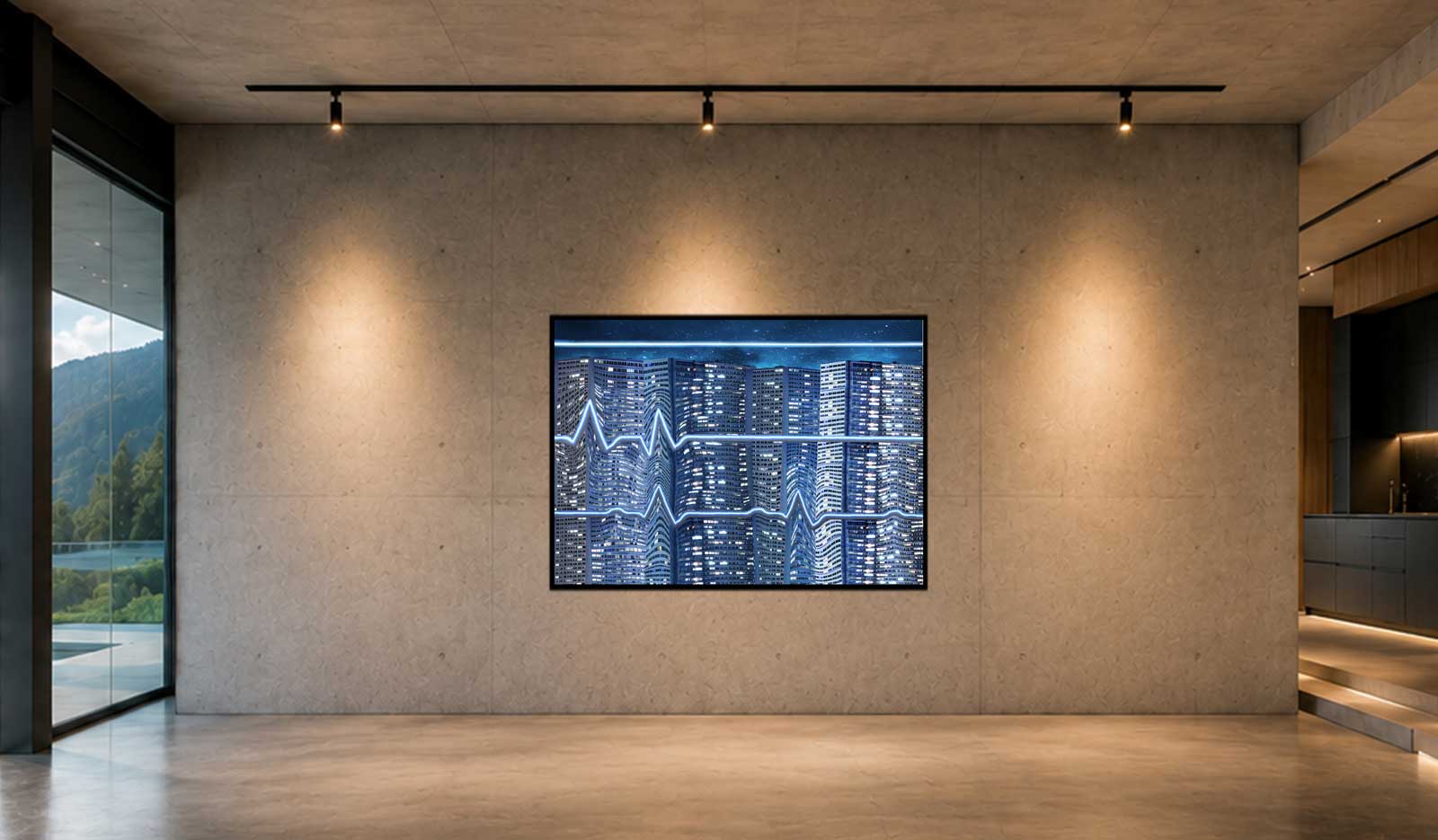
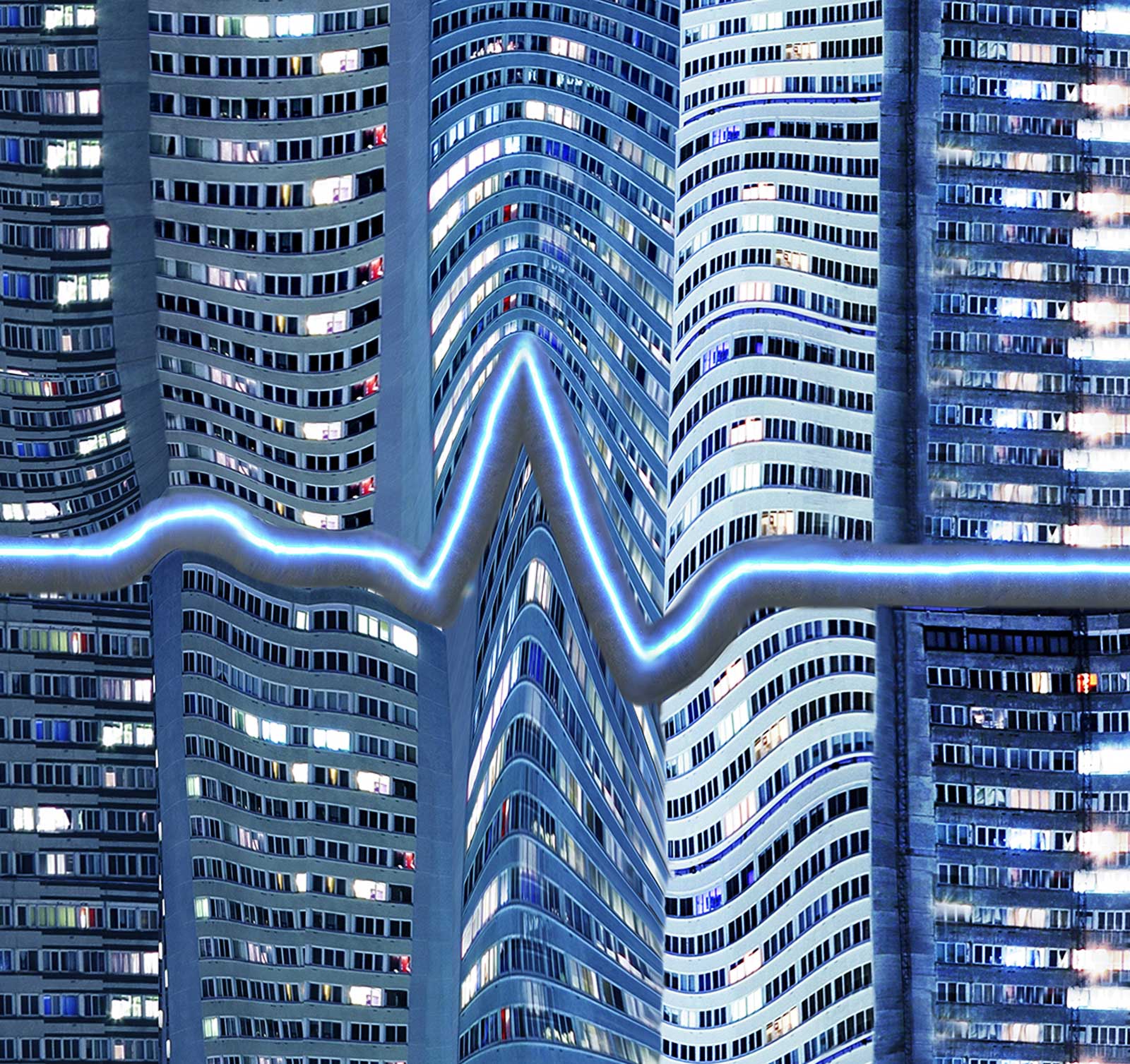
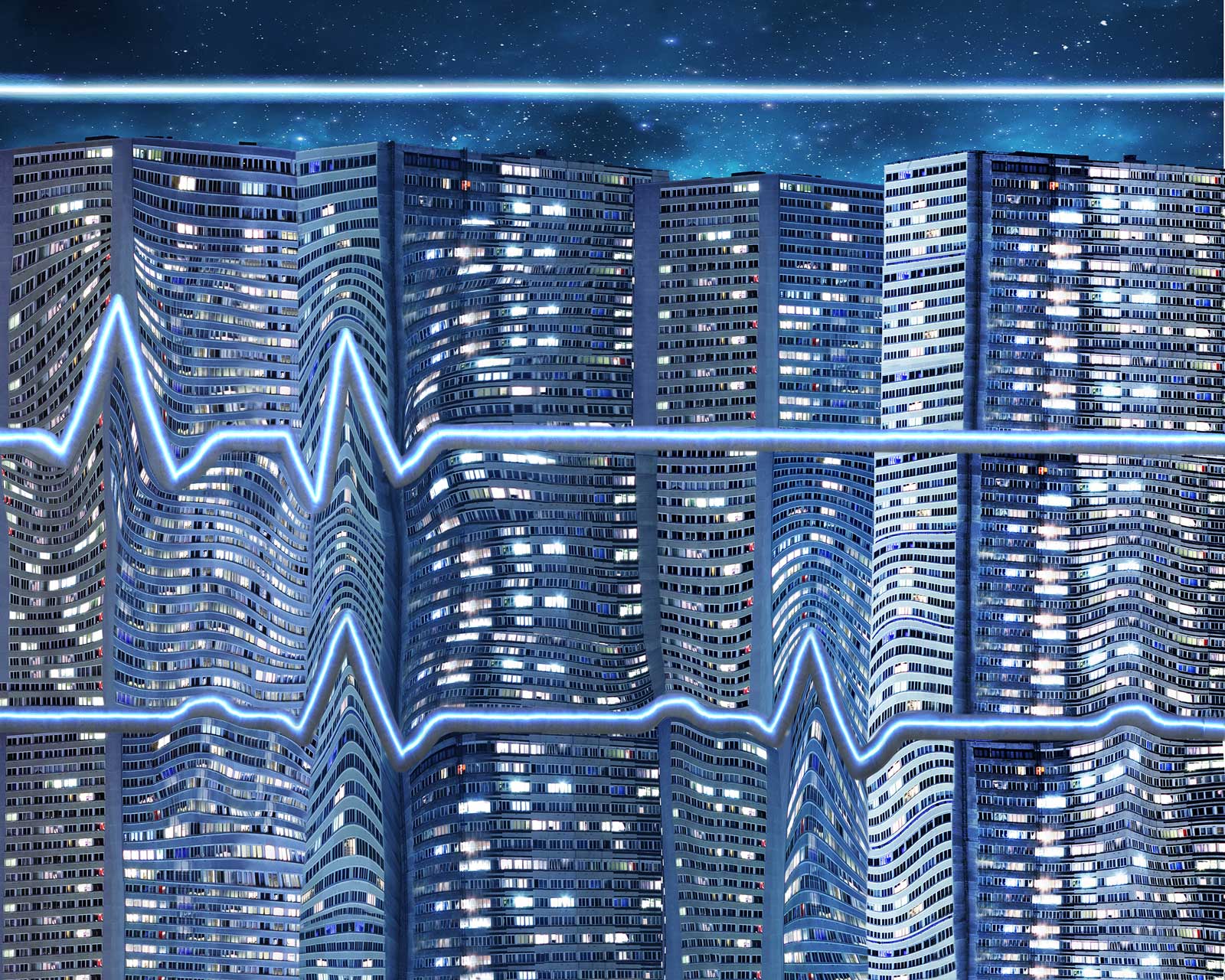
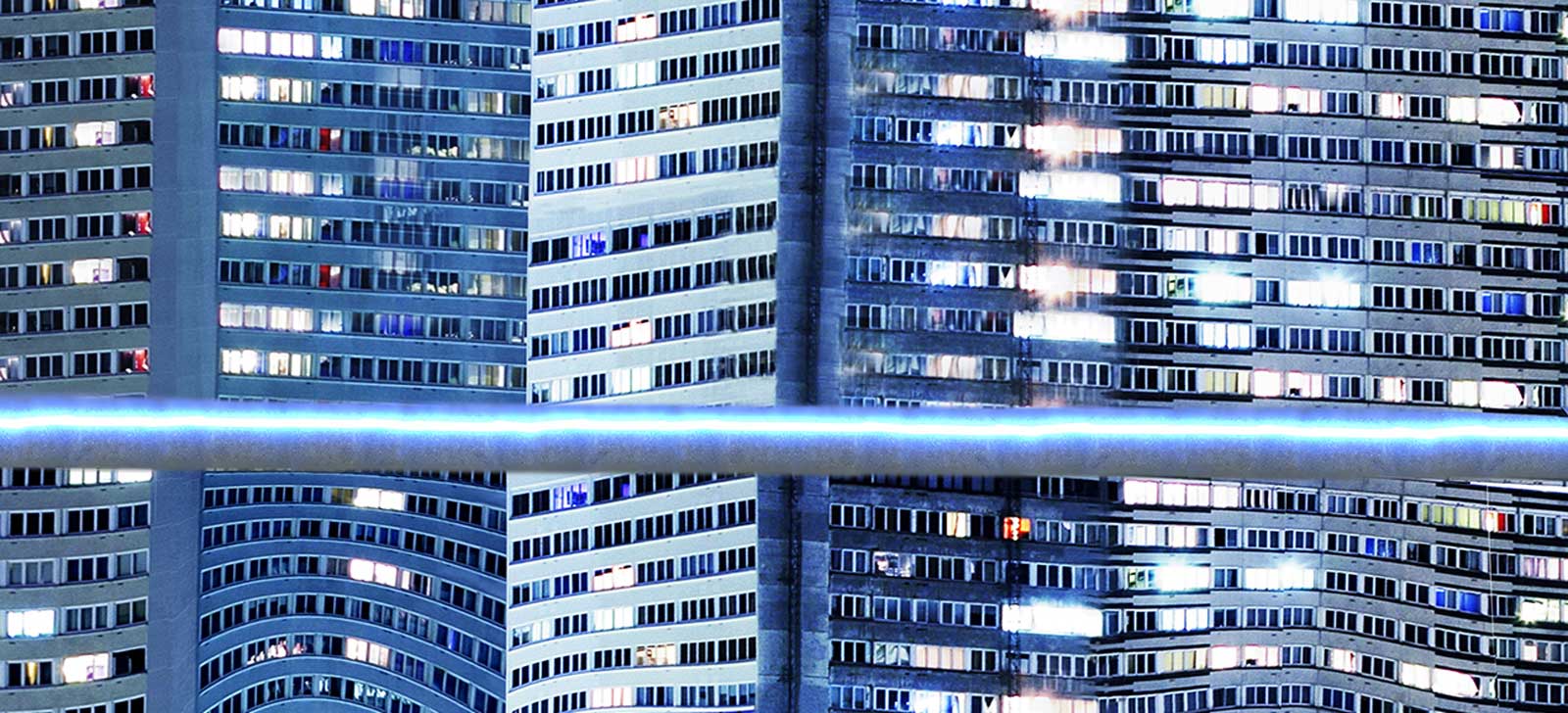
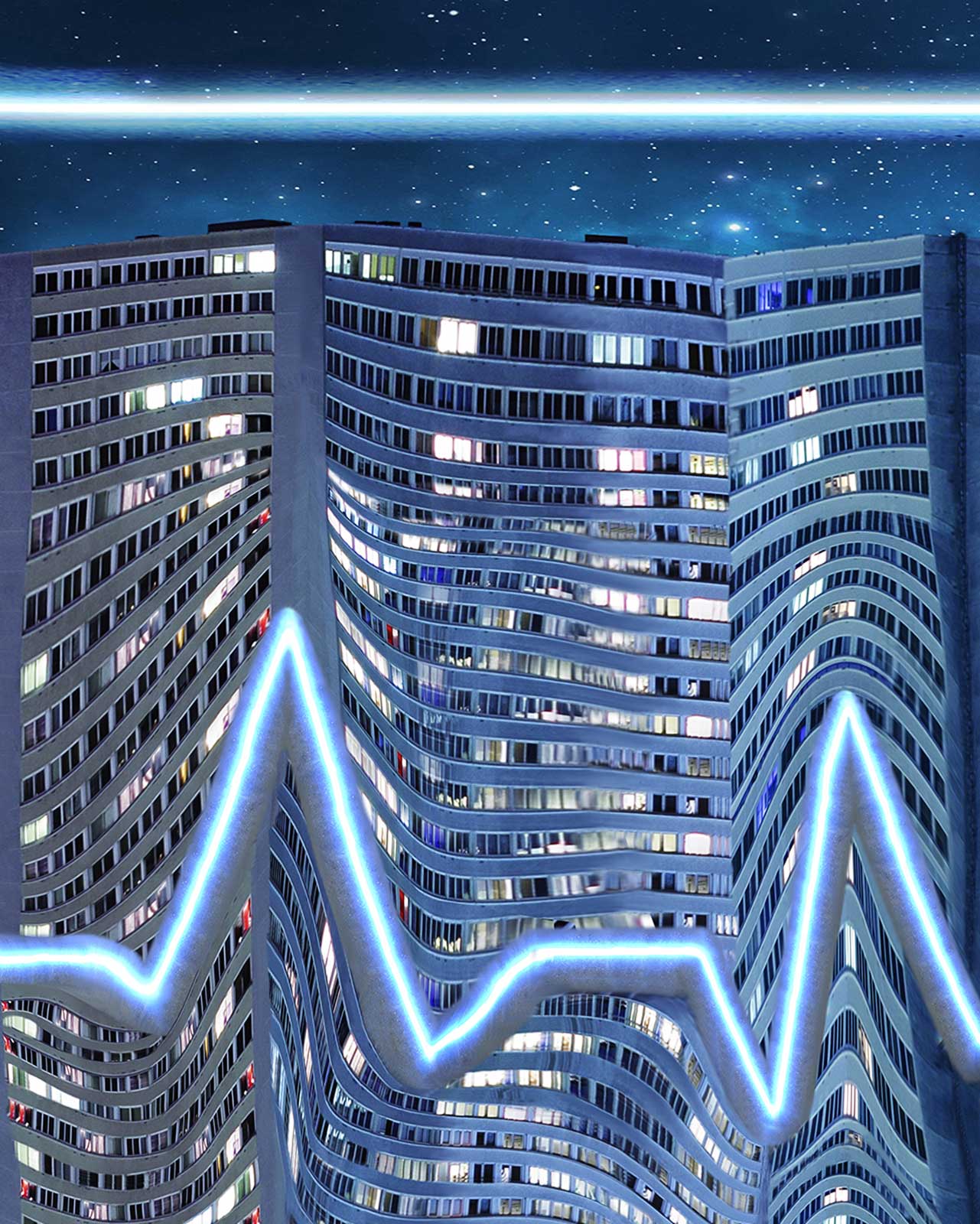
Seventy-two beats per minute, normal pulse for a human at rest, but what about a city, what is the normal heart rate of a metropolis, and how does one diagnose the health of an urban organism of several million inhabitants that breathes consumes produces rejects twenty-four hours a day without ever stopping. Doctors attach electrodes to the patient’s chest and the electrocardiogram traces its lines on the screen, P wave QRS complex T wave, each peak each trough telling the electrical story of the heart, and me in March two thousand eighteen I attached the electrodes to the buildings, I transformed the urban skyline into an EKG trace, the towers undulated according to the heart rate of the city, living architecture that pulsed to the rhythm of metropolitan activity.
The lit windows like living cells, some shone intensely others remained dark, urban respiration visible from space, and if you accelerated time you would see the city inhale in the morning when people wake up turn on their lights, exhale in the evening when they fall asleep and the windows go out progressively, collective circadian cycle synchronized by work schedules social rhythms shared habits. March two thousand eighteen, fifty-five and a half years old, sixteen years in France, and this image posed the fundamental medical question – is the city healthy, does its heart beat regularly or does it show dangerous arrhythmias, metropolitan tachycardias where everything accelerates becomes frenzied unbearable, or urban bradycardias where activity slows dangerously and the city dies economically socially culturally.
The bright electric blue trace that crossed the image horizontally looked exactly like the medical charts you see in hospitals, monitors at the patient’s bedside that beep regularly as long as the heart beats, and when the line goes flat you know it’s over, brain death cardiac death, and some cities did indeed die, Detroit abandoned by the automobile industry, mining towns in the north of France where the pits had closed and the population had fled, urban organisms in cardiac arrest whose EKG showed a tragic flat line, no more beats no more life no more hope.
But in my image the trace was vigorous, sharp peaks that rose and fell, healthy rhythm of a city in full activity, perhaps Paris perhaps New York perhaps Tokyo, megacities that never really slept, whose heart beat constantly day and night fed by the ceaseless flows of people goods information money energies that circulated in the urban arteries like blood in vessels, subway buses trains cars trucks, complex circulatory system that had to work perfectly otherwise it was embolism thrombosis urban infarction, paralyzing traffic jams transport strikes that blocked everything.
The buildings undulated literally according to the EKG trace, architecture that ceased to be rigid fixed dead to become organic fluid alive, and this deformation visualized what we all felt instinctively – that cities were living beings that had their moods their rhythms their diseases their healings. We even spoke of urban fabric as we spoke of organic tissue, of green lungs for the parks, of arteries for the big avenues, of veins for the small streets, biological vocabulary applied to urban planning because the metaphor was right, the city was indeed a super-individual organism composed of millions of human cells that together formed a being of a higher order.
March two thousand eighteen and smart cities promised to monitor in real time all the vital urban parameters, sensors everywhere measuring traffic pollution electrical consumption trash fill, big data that would allow diagnosing problems before they became critical, preventive medicine applied to urban planning, and my EKG City image anticipated this transformation, showed that soon we would indeed have continuous urban electrocardiograms, dashboards that would display the health of our metropolises like hospital monitors displayed patient health.
The starry sky behind the buildings created this impression of infinite cosmic night, the city small fragile against the sidereal immensity, and yet this city beat lived resisted the indifference of the universe, island of organized complex conscious life in spatial void, and its EKG proclaimed this victory against entropy, this refusal to dissolve into chaos, this collective will to maintain order structure civilization despite all forces pushing toward disintegration.
The regular peaks of the trace looked like roller coasters at an amusement park, and living in a city was indeed that, emotional roller coasters where you went from euphoria to depression in a few hours, constant stimulations that kept the heart rate elevated, permanent urban adrenaline, stress that slowly killed but that also made us feel alive intensely present, and this ambivalence was readable in the EKG, rapid beats that could mean excitement or anxiety health or sickness impossible to tell without knowing the context.
And me fifty-five and a half years old in March two thousand eighteen, sixteen years in France fifteen of them in Paris, I knew this urban rhythm intimately, I had synchronized my own heart with the city’s heart, my individual beats had tuned to collective beats, and sometimes I wondered if I could still survive elsewhere, if my organism too used to the metropolitan pulse could adapt to the slow provincial rural rhythm, or if like those deep-sea fish that explode when brought to the surface I would die of boredom of under-stimulation if I left the constant pressure of the big city.
EKG City March two thousand eighteen, visual diagnosis of an urban civilization that had transformed the entire planet into a network of connected metropolises, megacities that beat in unison now thanks to Internet and global flows, unique planetary heart composed of hundreds of urban ventricles pumping together, and the question remained open – was this global super-organism healthy or did it show signs of cardiac distress, climate arrhythmias systemic pollution inequalities that obstructed the arteries, and if a cosmic cardiologist analyzed our collective EKG what would he diagnose, would he give us much longer to live or would he prescribe us urgent radical changes on pain of massive civilizational infarction that no one would recover from.
Cornel Barsan
March 2018