Description
Our Lady of the Hospital
Conceptual photographic research
May 2018 | Variable dimensions
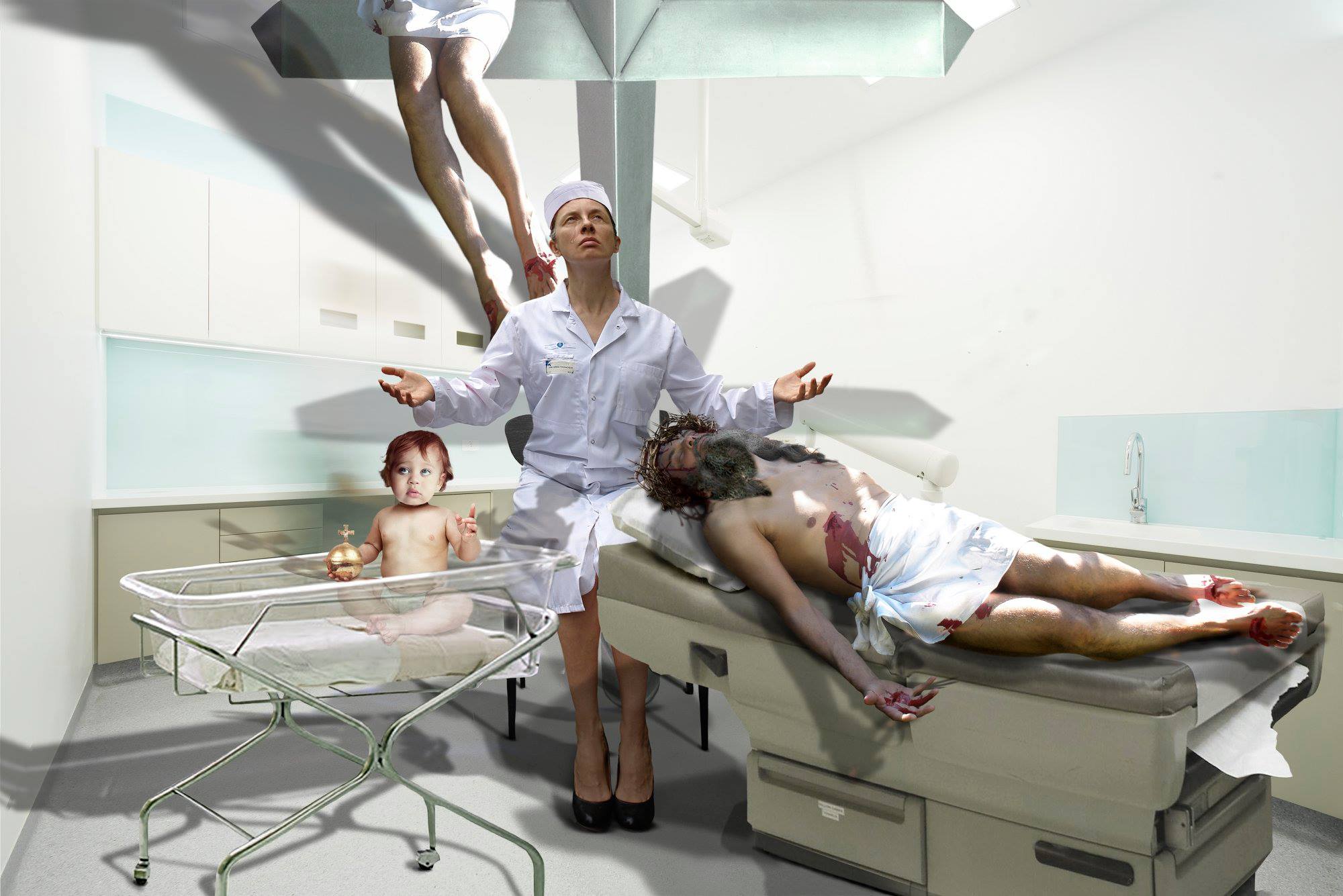
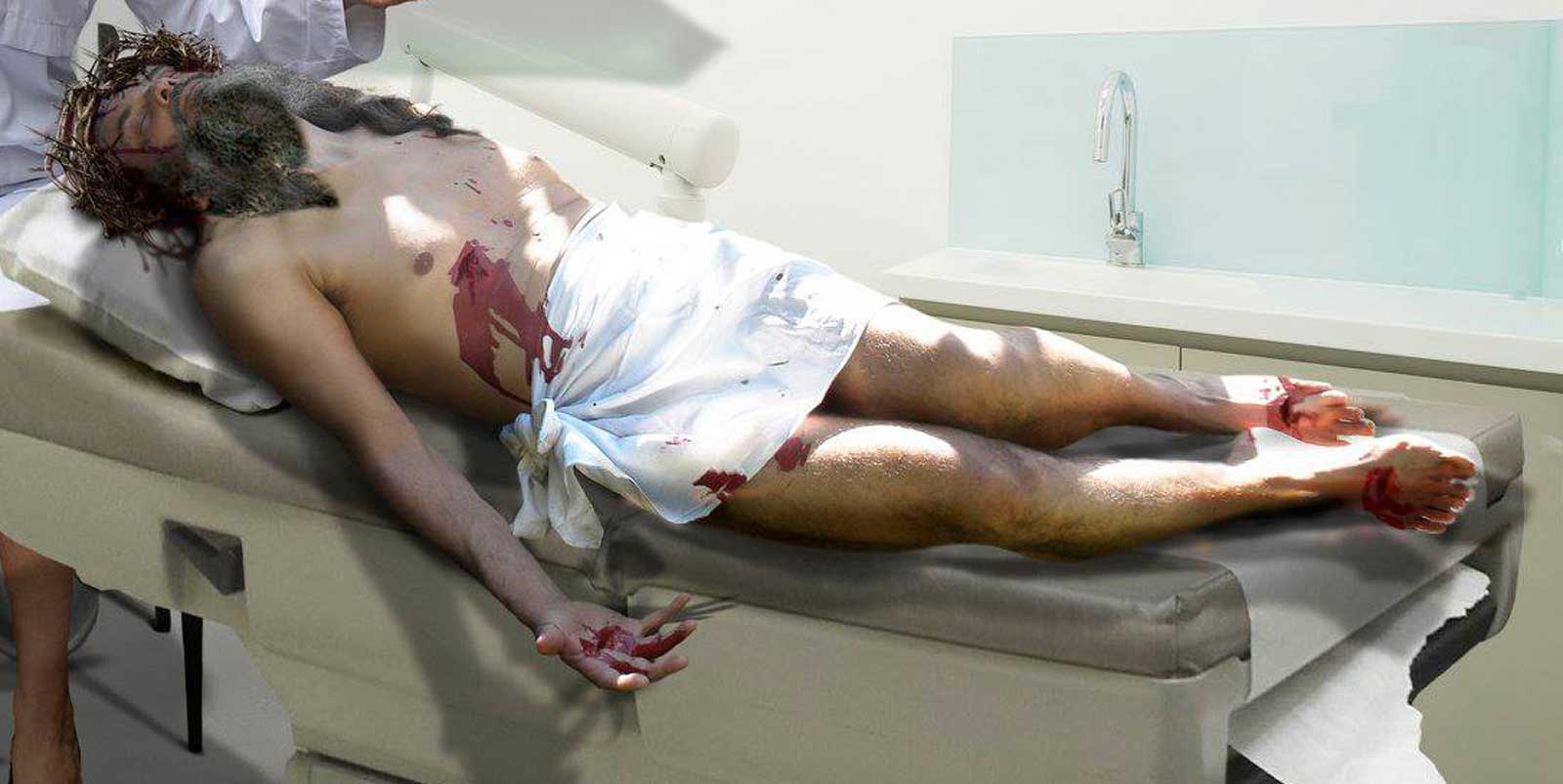
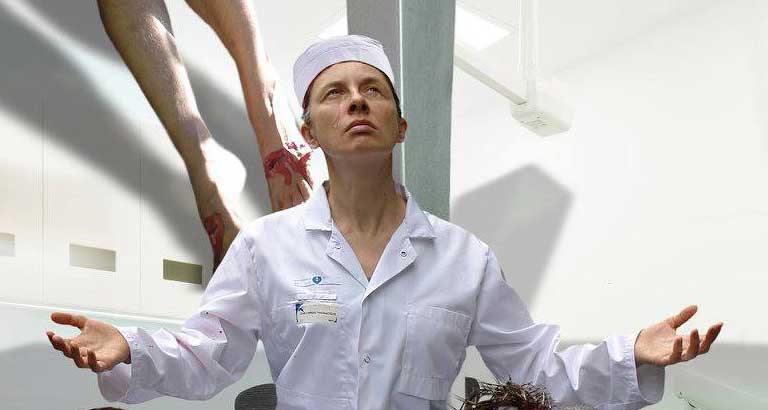
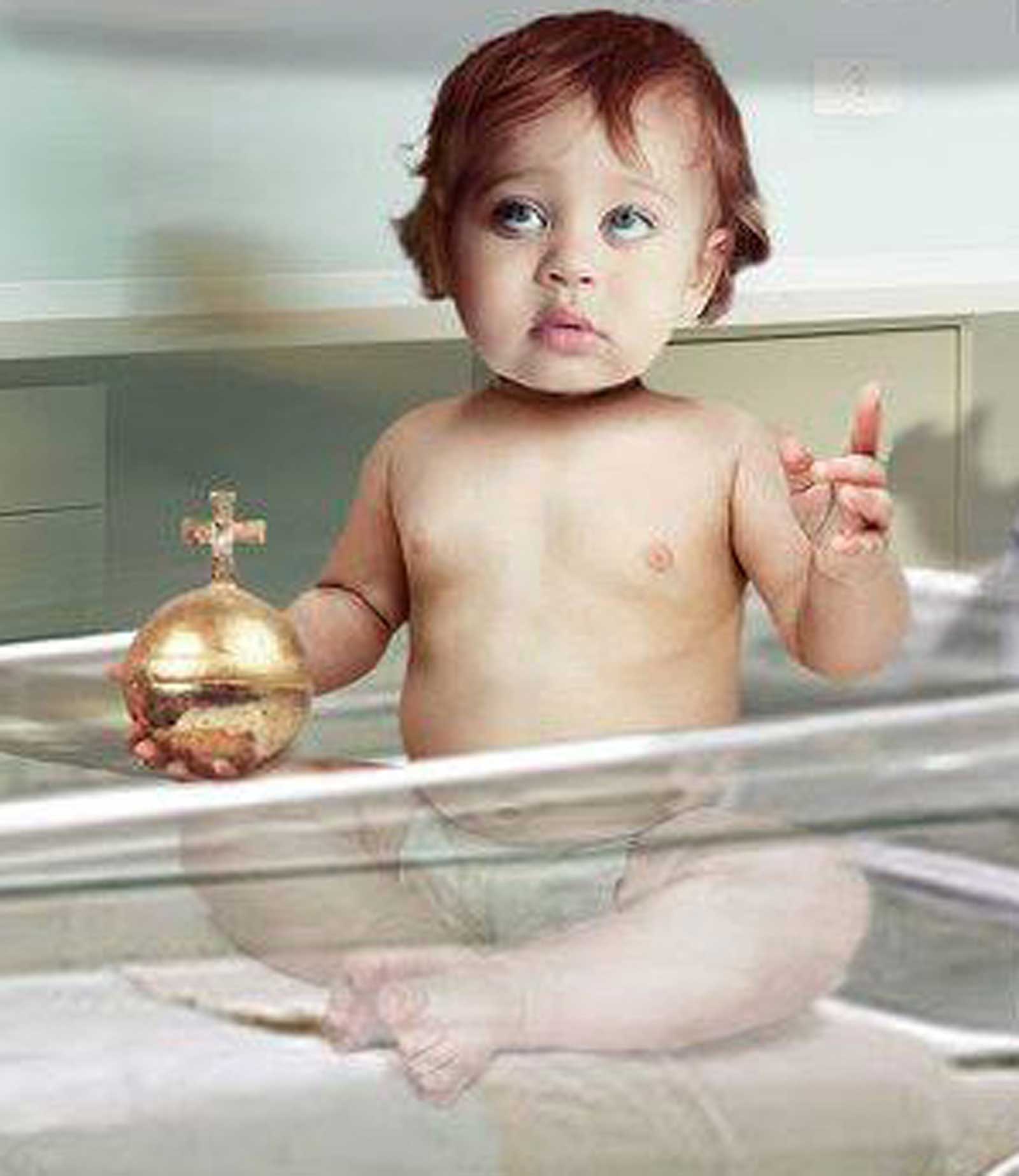
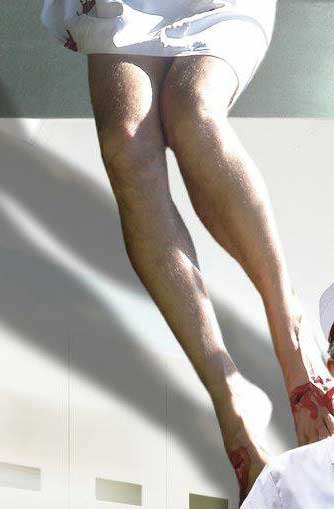
The nurse stood with arms spread like the Virgin of the Pietà, immaculate white coat cap on her head, and on her lap the dead Christ crowned with thorns bloodied body ashen skin, and to her left in the transparent crib of neonatology a red-haired baby sucking his thumb innocent perfect, and above his head legs hanging someone who had hung himself or been crucified upside down like Saint Peter, complete cycle of human life concentrated in this pale green hospital room where birth and death coexisted in the same aseptic air-conditioned space under fluorescent neons that replaced the divine light of gothic stained glass windows.
Our Lady of the Hospital – the Virgin Mary transposed to the twenty-first century was no longer a young Jewish woman of Nazareth but a licensed healthcare professional unionized overworked chaining twelve-hour shifts in a hospital system in permanent crisis, insufficient budget missing staff outdated equipment, and she accomplished miracles anyway daily, saved lives calmed suffering accompanied the dying, new lay saint whose compassion came no longer from religious faith but from humanist commitment toward all suffering bodies who arrived at emergency regardless of origin religion ability to pay.
May two thousand eighteen, fifty-six years old, sixteen and a half years in France, and this image visualized what we all knew confusedly – that the hospital had become our new cathedral, sacred place where the ultimate dramas of human existence played out, where one was born and died, where one hoped for resurrections in the form of miraculous healings, where doctors and nurses exercised a technological priesthood that had replaced religious priesthood, white coats instead of black cassocks, stethoscopes instead of crucifixes, MRI scanners instead of miraculous relics, faith in medical science that had replaced faith in God even if at bottom it was the same thing, desperate belief that there existed a higher power capable of saving us from disease and death.
The baby in its transparent plastic crib represented modern medicalized birth, no more home births as for millennia, now everyone was born in the hospital monitors everywhere epidurals cesareans standardized protocols, total medicalization of the most natural process there is, and this red-haired innocent baby sucking his thumb had no idea he had just entered a world where he would return regularly to hospitals for vaccines for illnesses for accidents for surgeries and finally to die probably in a room like this one, complete cycle of life spent under medical supervision from first breath to last gasp.
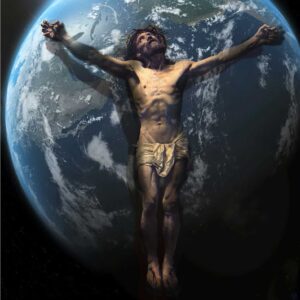
The dead Christ on the nurse’s lap transformed Michelangelo’s Pietà into hospital Pietà, Mary holding her son taken down from the cross replaced by the nurse holding her patient dead despite all resuscitation efforts, defibrillator used in vain, cardiac massage ineffective, flat line on the cardiac monitor beeping that continuous terrible sound signifying the final failure of medicine facing death that always ended up winning, and the nurse lived this daily, lost patients she had nursed for days weeks, became attached despite herself then had to let them go, repeated professional grief that wore her psychologically but that she managed with a force that was divine.
The legs hanging above visualized suicide perhaps, this death one gave oneself when suffering became unbearable, and the psychiatric services of hospitals welcomed these attempted suicides thankfully failed, stomach pumping after overdoses stitched wrists after self-harm plaster limbs after defenestrations, medicine that repaired what despair had broken, and then referral to psychiatrists social workers aid structures, care system that tried to heal not just bodies but also souls even if officially secular medicine did not believe in souls, just neurotransmitters chemical brain imbalances treatable by medications.
May two thousand eighteen and French hospitals were on strike regularly, exhausted staff protesting for more resources, emergency services overwhelmed where patients waited hours on stretchers in hallways, shortage of beds of doctors of nurses, hospital management applying private sector methods to a public service that could not function according to profit logic, profitability required for care that by definition cost a lot without making money, and Our Lady of the Hospital continued anyway to work despite degraded conditions, vocation that resisted administrative dehumanization, compassion that survived budget reforms.
The modern aseptic green and white room contrasted absolutely with dark gothic cathedrals full of shadows and mysteries, here everything was visible transparent hygienic, cold light of neons that hid nothing, no dark corner to hide in, total exposure of sick bodies under medical spotlights, forced nudity before caregivers who palpated auscultated pricked without hesitation because the body was no longer sacred modest but medical object to examine repair, complete desacralization in service of therapeutic efficiency, and yet paradoxically this desacralized medicine accomplished the sacred, maintained life transformed suffering prolonged existence.
Our Lady with arms spread in cross too, crucified by her demanding devouring profession, daily sacrifice of her mental physical health to save others, epidemic burnout among caregivers who gave too much exhausted cracked, and society applauded them at windows during the Covid pandemic a few years later in twenty twenty then forgot them immediately after, temporary heroes exploited return to normal that is underpaid overworked unrecognized, but Our Lady of the Hospital continued anyway because it was her nature her calling her vocation, she could not stop even if she wanted to, condemned to heal as others were condemned to create.
The triptych birth-life-death condensed in a single image showed that the hospital was the place where humanity faced its ultimate truths, where illusions fell away and where only the essential mattered, not money or status or possessions but just bare fragile precious life that could extinguish at any moment, and facing this fragility Our Lady of the Hospital kept watch, modern guardian of the threshold between existence and nothingness, lay replacement of all the Virgins who had interceded for centuries for the sick and dying, but now intercession passed through antibiotics surgery chemotherapy, scientific miracles that worked sometimes and failed often but that represented our only collective hope facing disease and death that lurked for all of us, May two thousand eighteen Our Lady of the Hospital forever watching over the baby beginning his life and over Christ ending his in this green and white room where the eternal drama of human condition played out daily under the fluorescent neons of modern medicine that had replaced God but not suffering, that prolonged existence but not meaning, that saved bodies but left souls to fend for themselves in this disenchanted world where Our Lady of the Hospital perhaps represented the last vestige of institutionalized compassion, last place where one truly cared for humans just because they were human and they suffered.
Cornel Barsan
May 2018