Description
The Feelings Machine
Conceptual photographic research
December 2015 | Variable dimensions
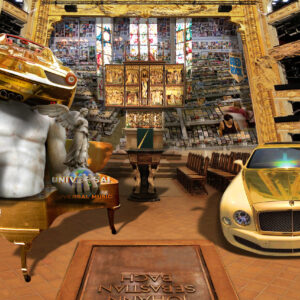
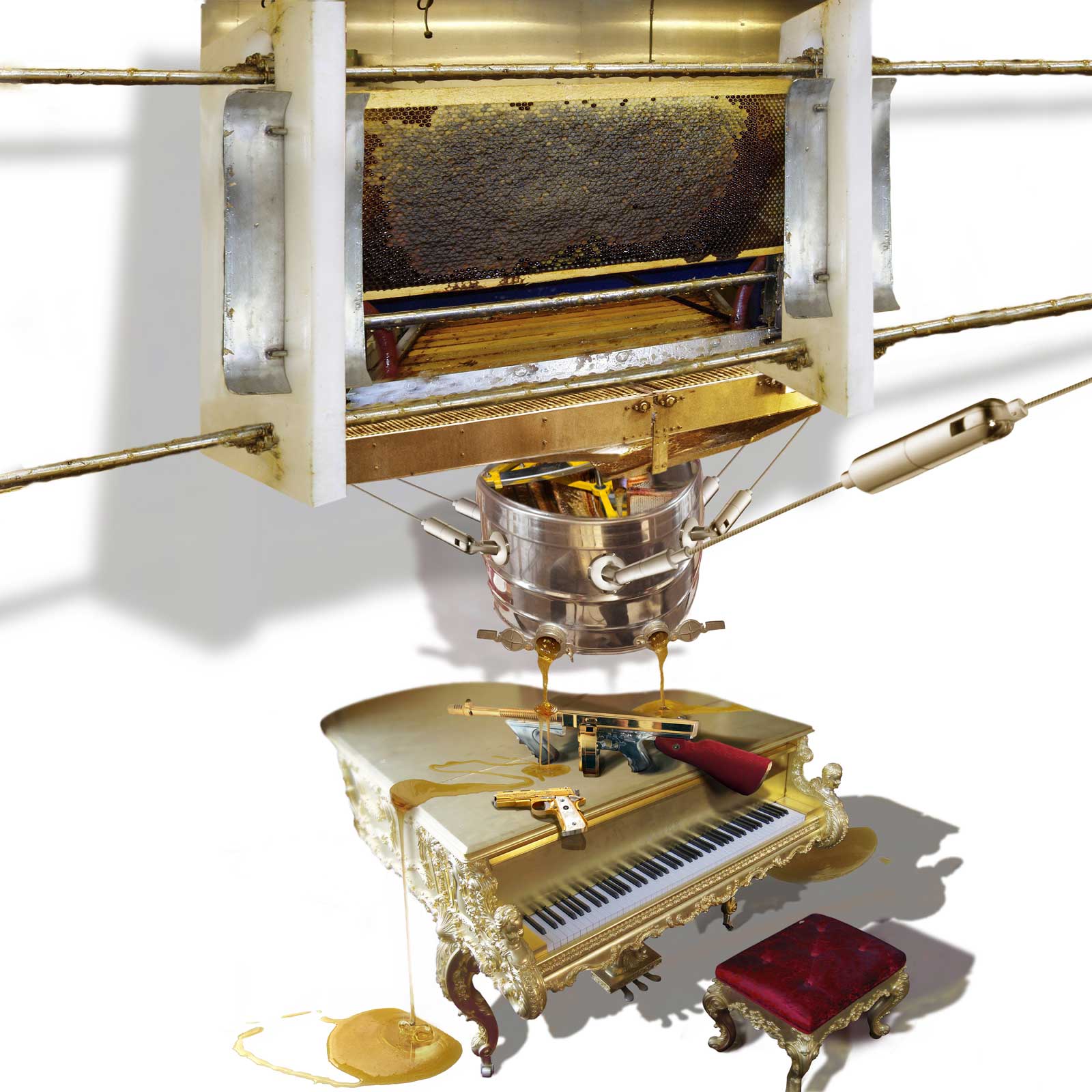
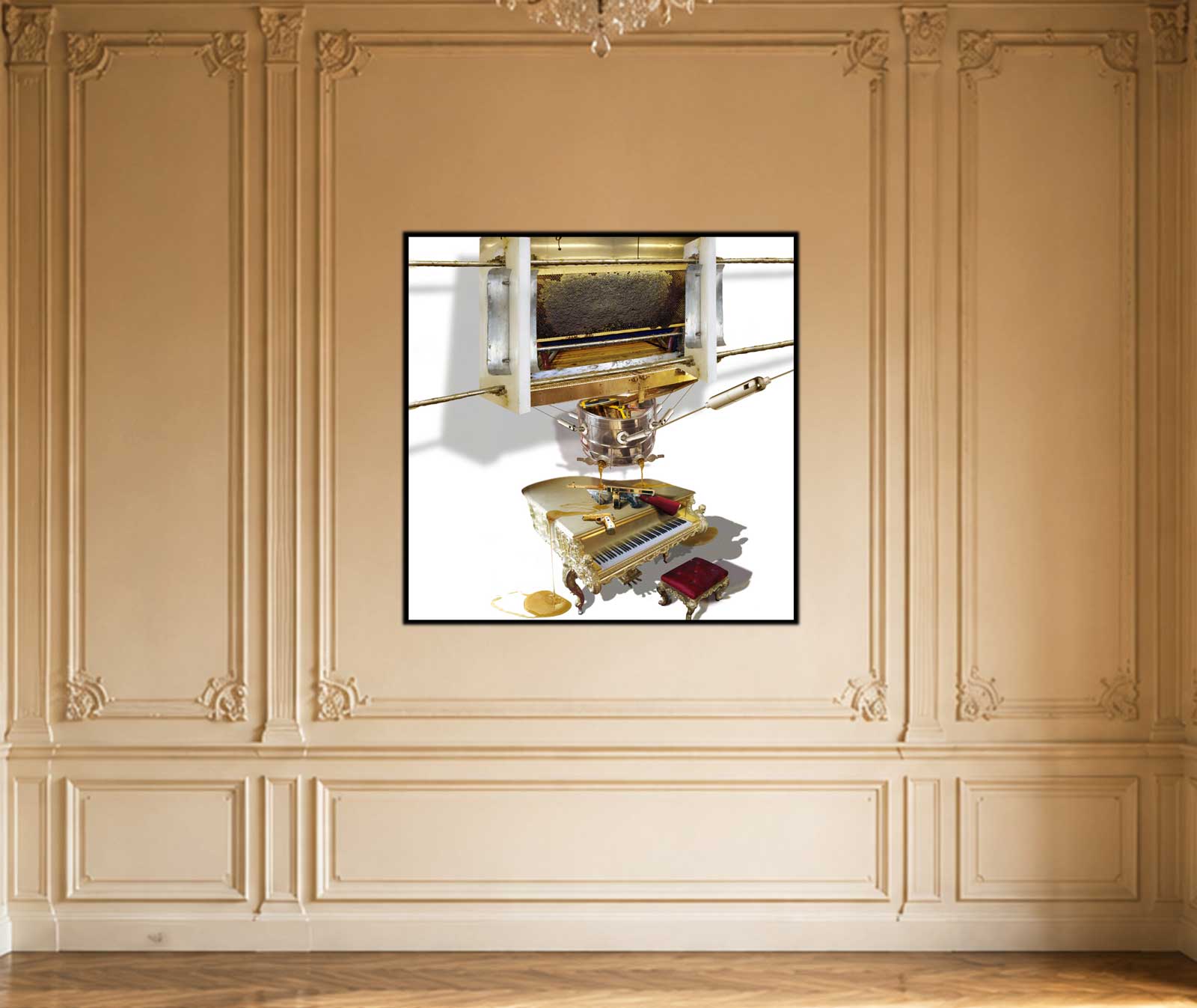
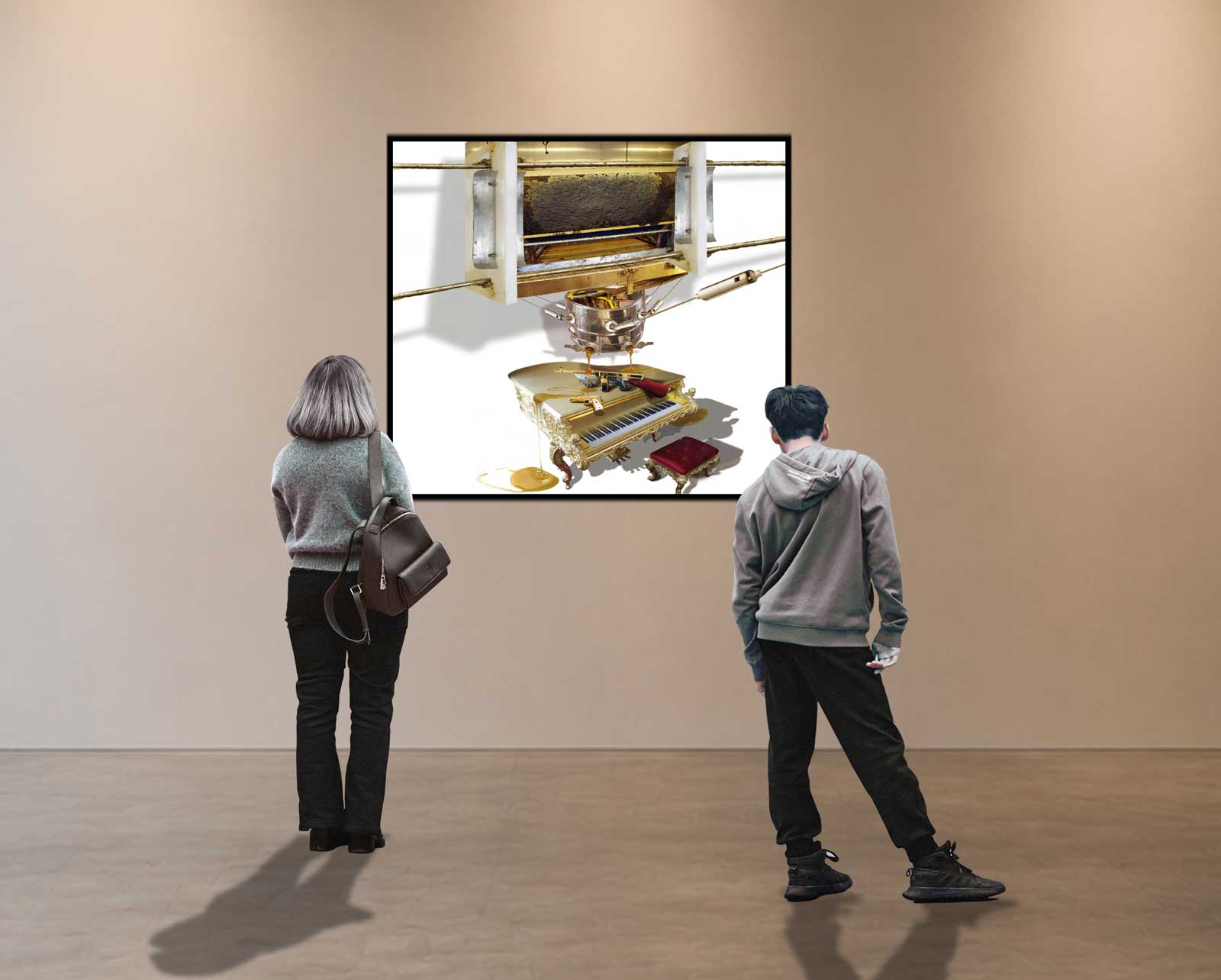
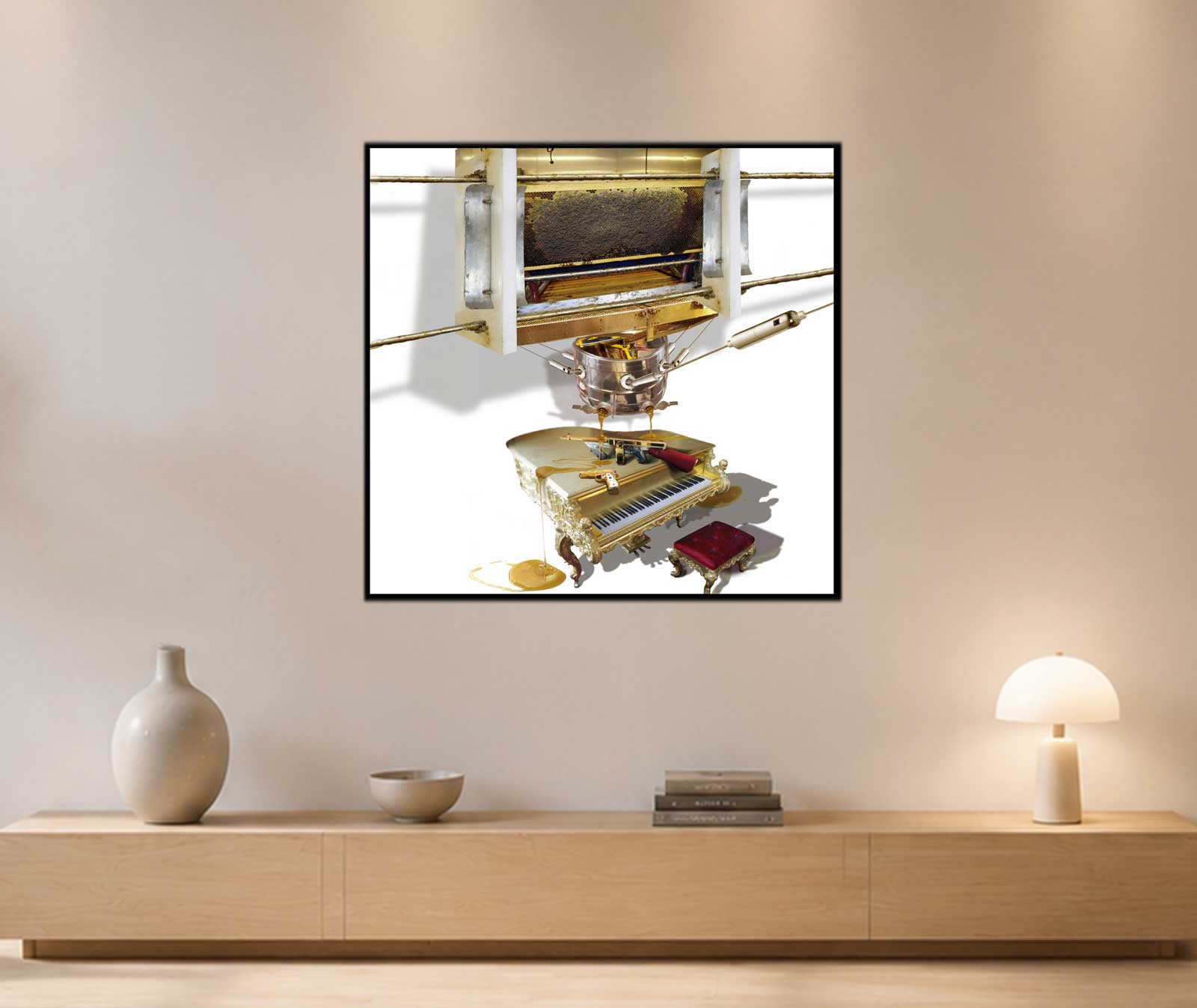
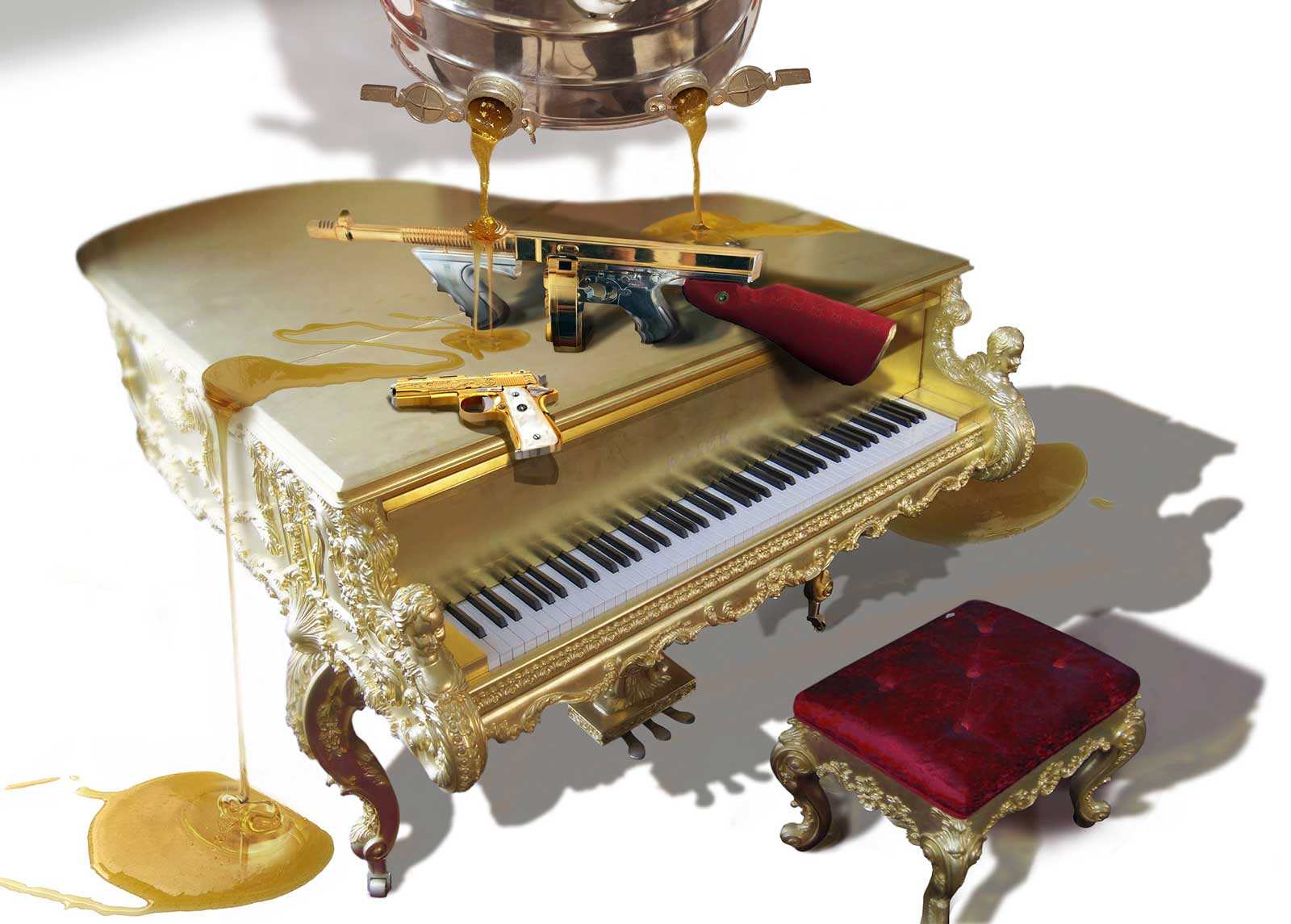
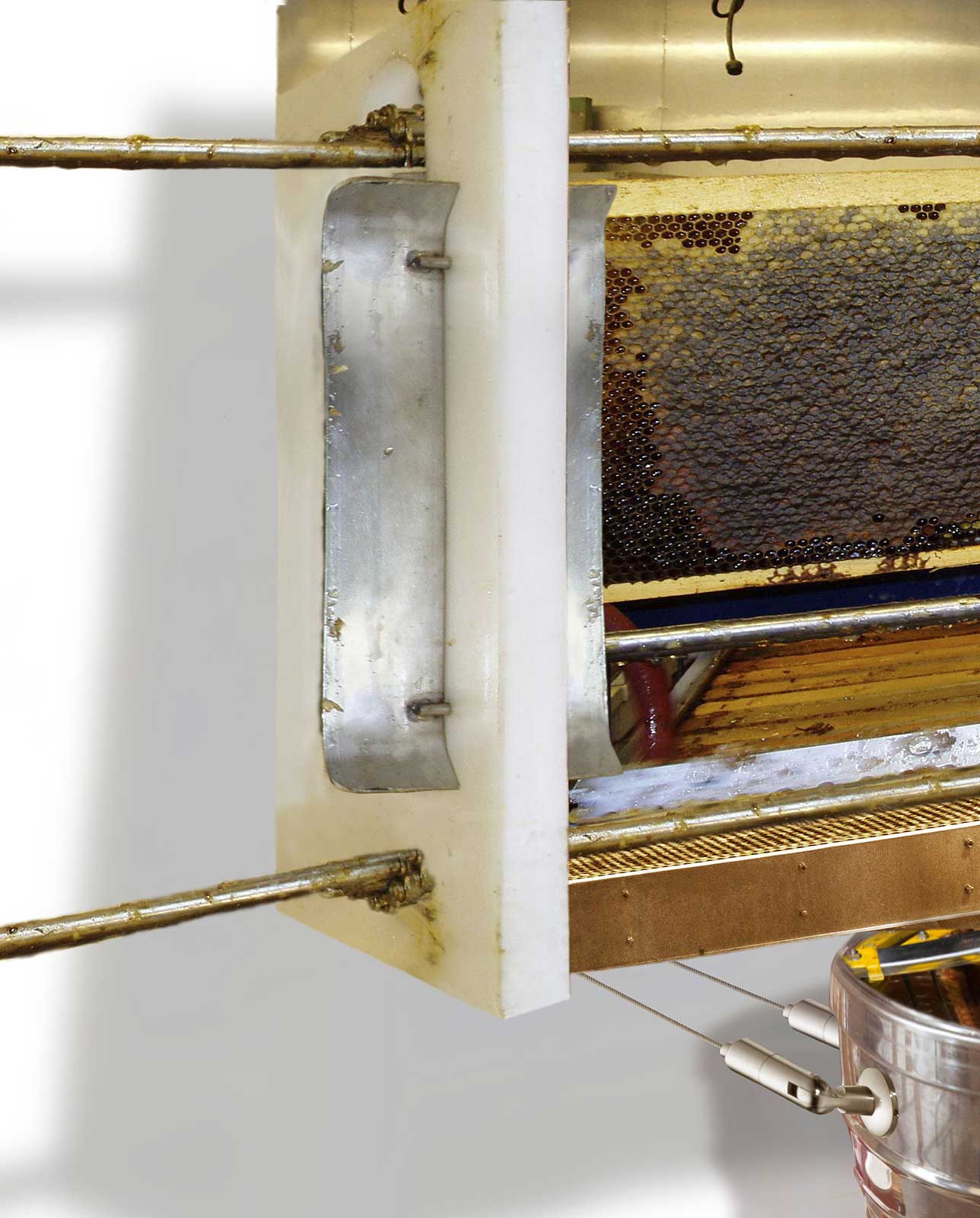
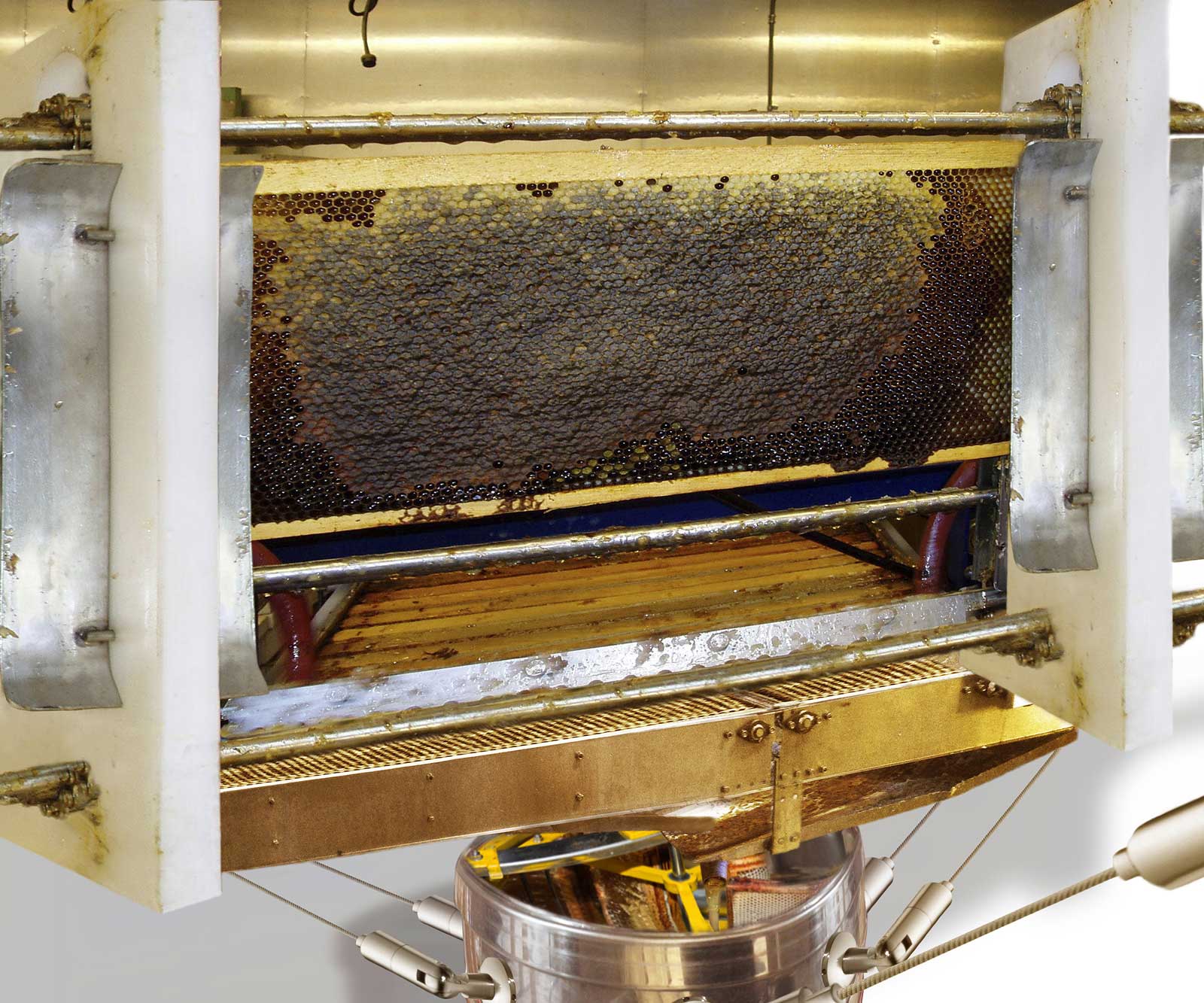
A vertical machine, alchemical, impossible, rose from floor to ceiling like an emotional Tower of Babel where each floor transformed raw matter into refined art. At the top the golden beehive with its frames of cells full of honey, that nectar that bees make by collecting pollen from thousands of flowers, patient stubborn collective work that transforms wild nature into consumable sweetness. In the middle a distillation alembic, copper and steel, serpentine tubes, heating vat, all the apparatus of the chemist or perfumer who purifies concentrates refines extracts the quintessence and eliminates impurities. And at the bottom a magnificently golden Baroque piano, rococo curves, red velvet bench, and placed on the lid tools — brushes perhaps, or knives, or ambiguous instruments that could serve to create or destroy, hard to say.
December twenty fifteen, fifty-two years old, one month after the Bataclan, one month after Paris mourned its one hundred thirty dead and all of France found itself in this collective mourning this shared fear this incomprehension before horror. The feelings were raw in December twenty fifteen, chaotic, violent — sadness for the dead, rage against the terrorists, fear it would happen again, diffuse anxiety that made you look around the metro wondering if someone was carrying a bomb, guilt at continuing to live normally when others were dead, all this emotional magma churning in us like panicked bees in an attacked beehive.
And me artist in December twenty fifteen wondered what to do with these raw feelings, how to transform them into something that was not just a cry or a scream or sterile lamentation. The Feelings Machine answered this question, it showed the process of artistic transmutation, the way the artist takes the chaotic emotions of daily life and distills refines transforms them into a work of art, into music that can be heard shared understood by others. The bees collect, the alembic distills, the piano plays — three stages of a creative alchemy that begins in confused multiplicity and arrives at clarified unity, that starts in emotional chaos and ends in artistic harmony.
The beehive represented this collective work of emotion, we all in December twenty fifteen were that beehive, millions of individuals each feeling their fear their sadness their anger but all these individual emotions mixed together to form a national collective sentiment, France-beehive producing that bitter honey made of tears and anguish. And each artist was a particular bee that collected this ambient emotional nectar, that absorbed the feelings of their era, that nourished itself on the collective atmosphere to then transform it into personal work. I invented nothing in December twenty fifteen, I just collected what floated in the Parisian air that month, this mixture of mourning and fear and solidarity and resilience and questioning about what we had become and where we were going.
The alembic in the middle visualized the creative process itself, this distillation where the artist takes raw emotions and heats them boils them evaporates them condenses them, eliminates what is superficial banal repetitive, keeps only the essence the quintessence what is really important really profound. An alembic separates, it does not keep everything, it discards much of the initial liquid to preserve only a few drops of pure alcohol or essential oil, and the artist does the same, receives a thousand impressions a thousand emotions a thousand stimuli but keeps only what truly matters, what deserves to be transformed into art, what can touch universally instead of remaining anecdotal personal insignificant.
And the piano below, golden like the honey of the beehive, golden like the alchemical gold the ancients sought in vain, represented the final work, the result of all this process of collection and distillation. A piano plays, it makes music, sonic beauty that can be shared with others, that transcends the artist’s personal experience to become a universal experience accessible to all who listen. The bitter honey of November twenty fifteen could become a requiem, a lamentation, a threnody, or perhaps something even more complex, music that contained sadness but also hope, mourning but also life continuing, fear but also the courage not to be paralyzed by fear.
The cables connected the three floors of this impossible machine, closed circuit where everything circulated continuously — the honey descended toward the alembic, the distilled alcohol descended toward the piano, and perhaps the music rose back to the beehive to nourish new bees, perpetual cycle of creation where each work nourished the next, where each generation of artists nourished itself on the honey produced by the previous generation. December twenty fifteen and I thought of all the artists who had traversed terrible periods — Guernica by Picasso after the bombing of the Basque town, the Requiem by Mozart composed thinking of his own death, the poems of Celan after the Shoah — all had taken horror and distilled it into beauty, alchemical transmutation that did not deny pain but transformed it into something that helped others bear their own pain.
The tools placed on the piano were ambiguous, some resembled weapons — pistols perhaps — and this ambiguity was intentional because the artist’s tools can wound too, art is not always soft comforting soothing, sometimes it is violent disturbing provocative, sometimes you must wound to heal, open the wound to clean it, hurt to then do good. December twenty fifteen and should art console or awaken, rock or shake, soothe or irritate? Both probably, depending on the moment and need, and the artist must have all these different tools in their palette, know when to caress and when to strike, when to whisper and when to shout.
The Feelings Machine operated day and night, perpetually, because feelings never stopped, life continued to produce its bitter honey, and the artist continued to distill and play, transforming lived experience into created work, modern alchemist who no longer sought to change lead into gold but to change pain into beauty, and perhaps this transmutation was even more precious than that of the ancient alchemists, perhaps transforming human suffering into art that helps other humans live their own suffering was the true opus magnum, the true philosopher’s stone, the true daily miracle we accomplished we artists in our studios our beehives our alembics our golden Baroque pianos where echoed the sounds of everything humanity had felt since it existed and still felt in this December twenty fifteen when Paris tried to heal its wounds by producing new honey from poisoned flowers.
Cornel Barsan
December 2015