Description
The Phone Lovers
Conceptual photographic research
September 2014 | Variable dimensions
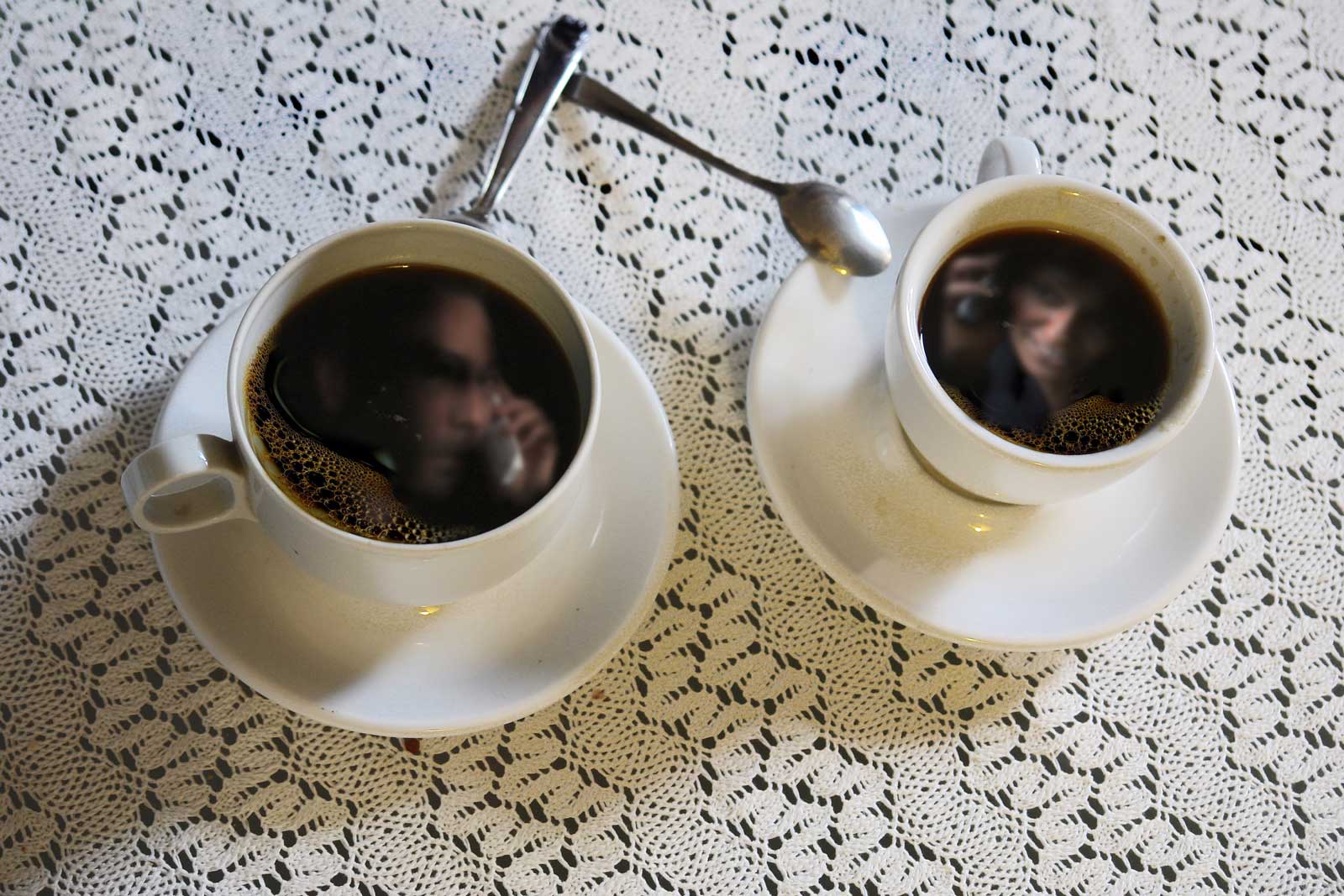
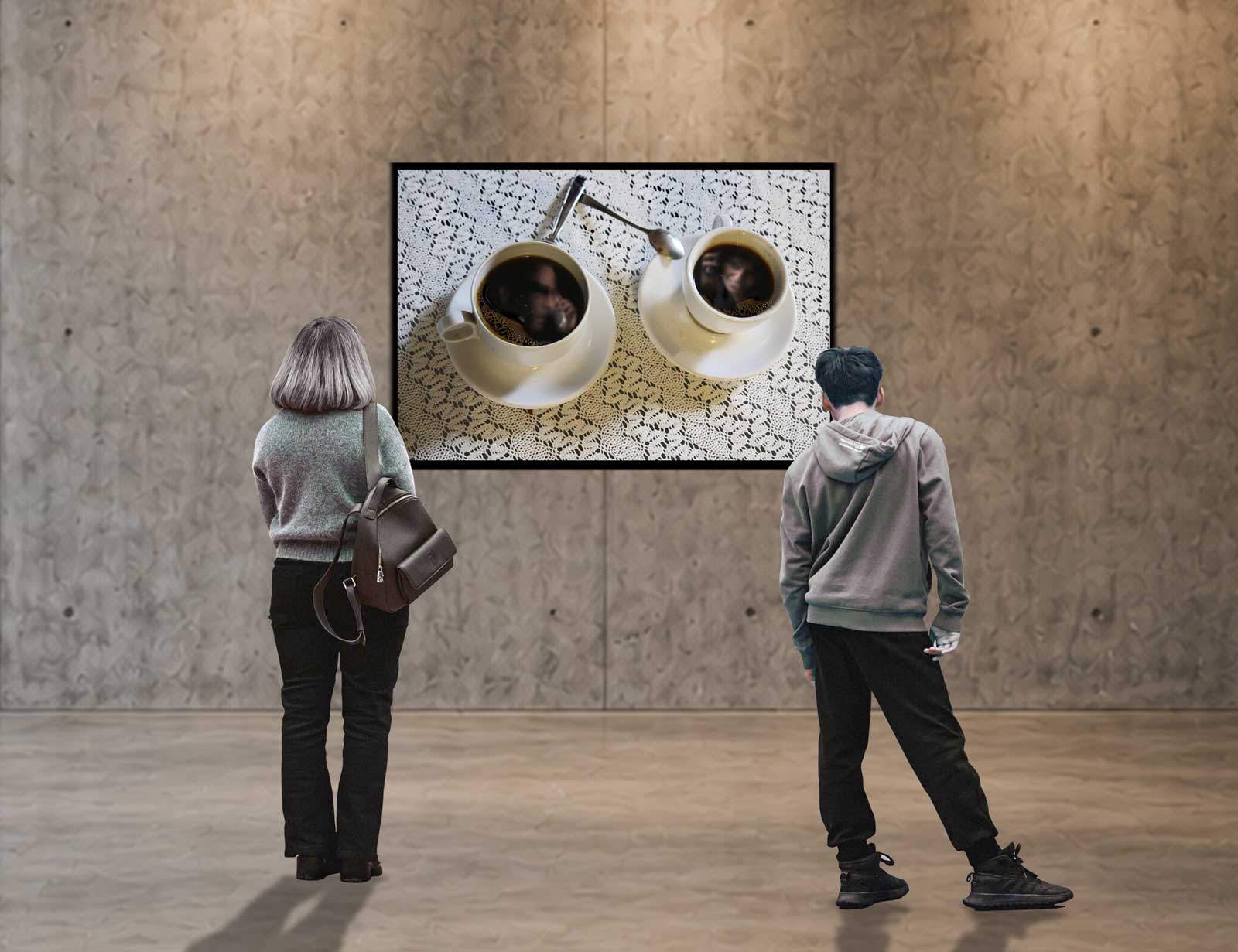
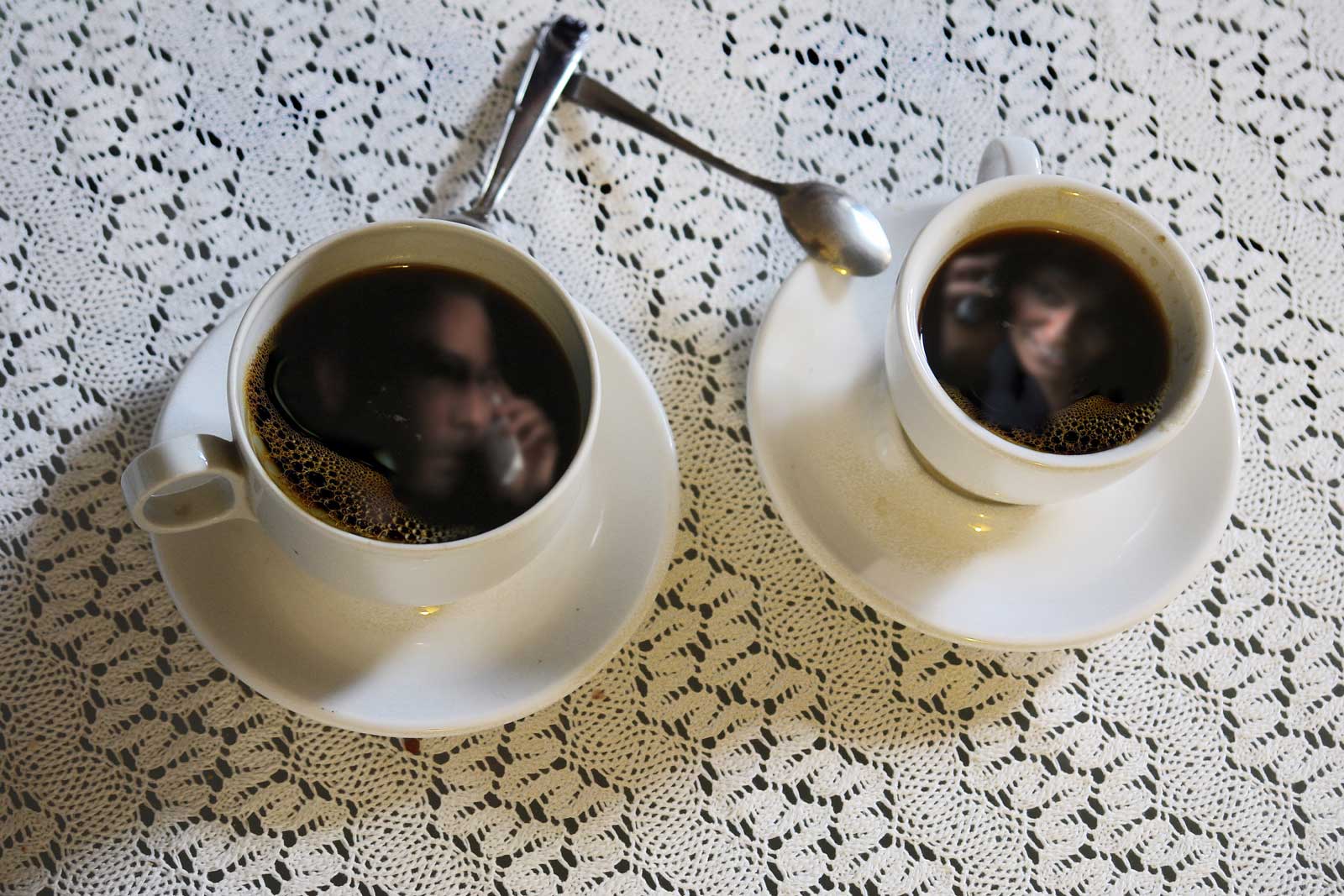
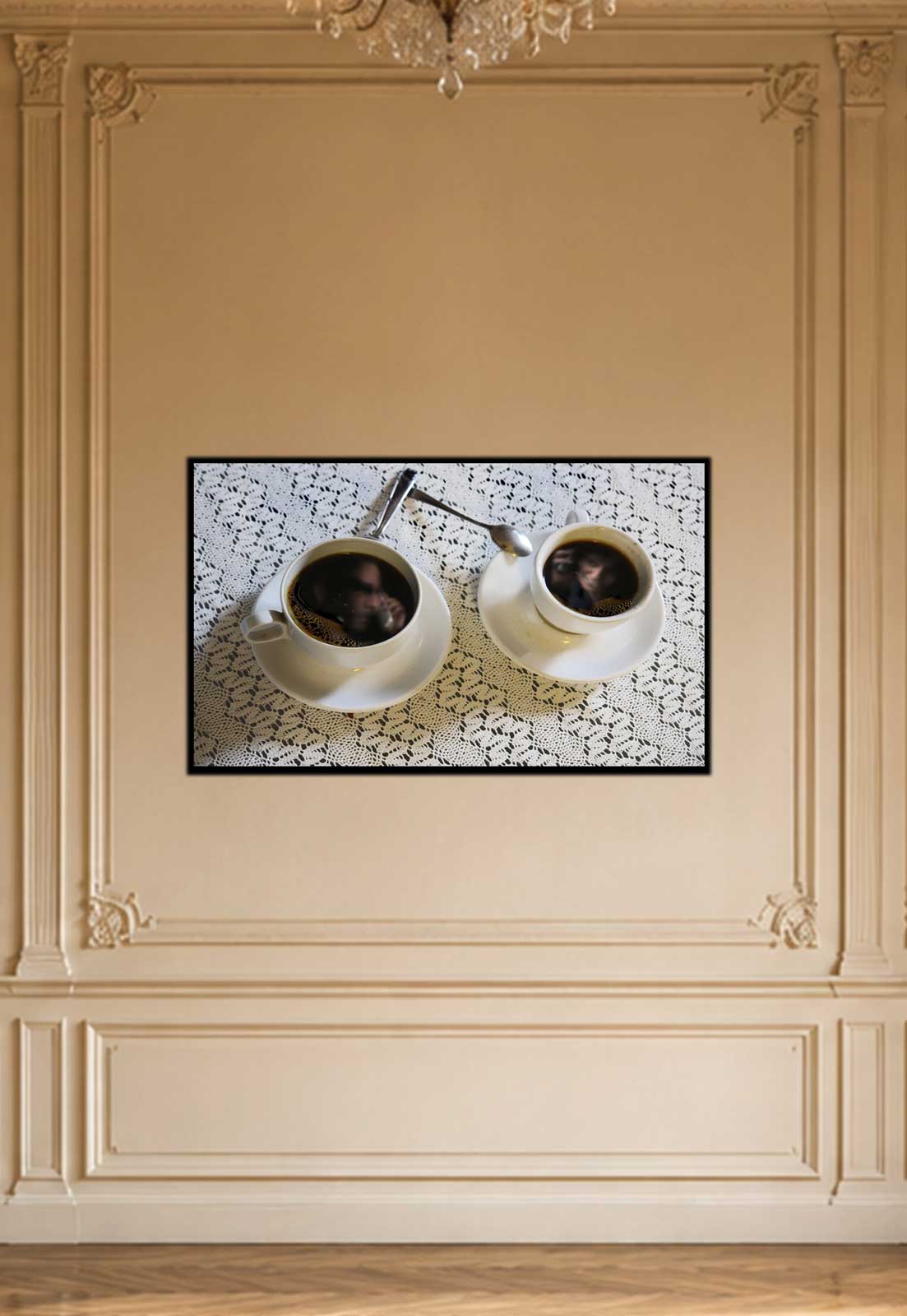
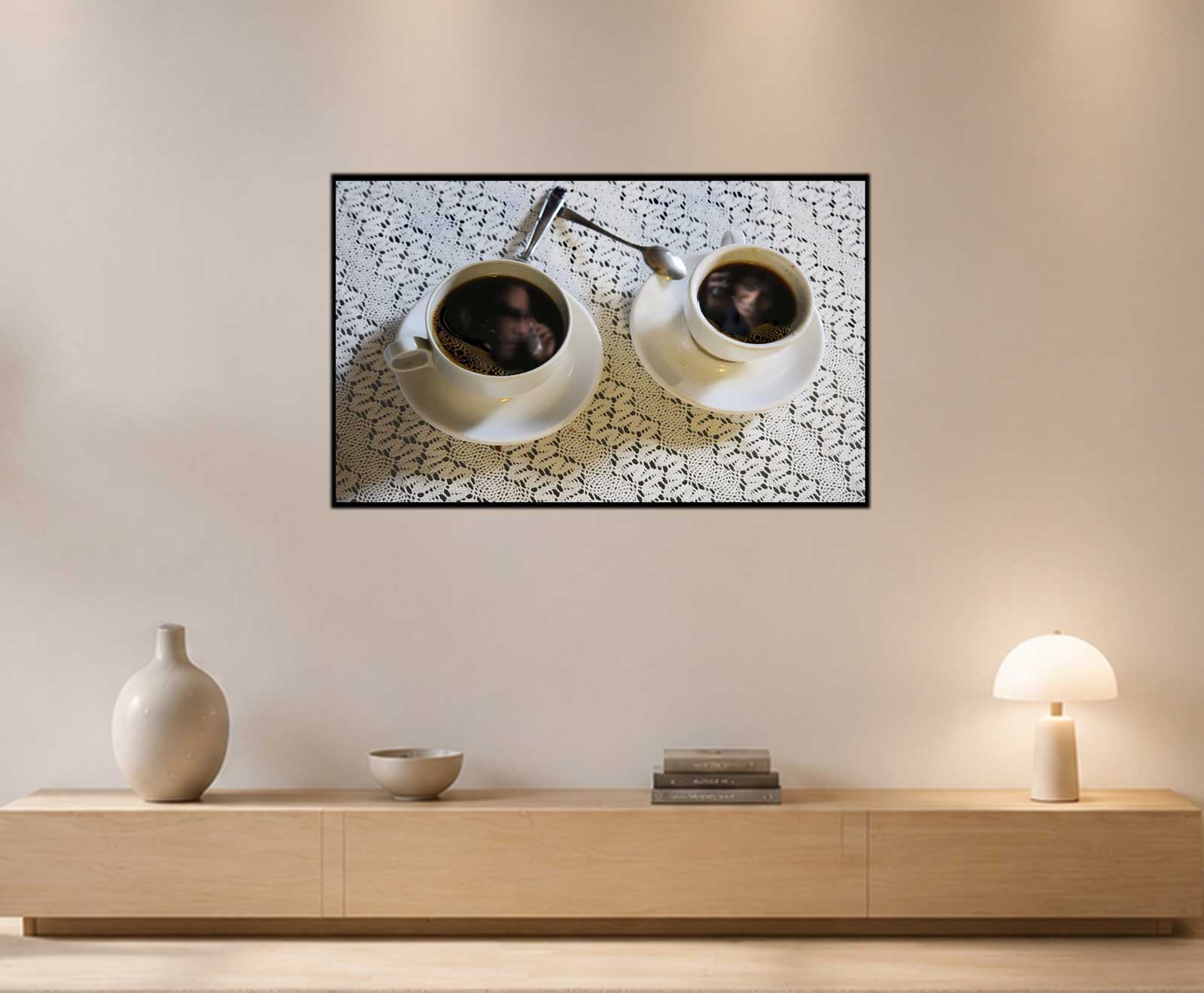
Two cups of coffee placed on a white lace tablecloth, old, delicate, the kind of cloth that our grandmothers embroidered by hand for hours days weeks, each stitch a meditation, each pattern infinite patience. The lace speaks of a time when things were made slowly, when you sat around a table to truly talk, when morning or afternoon coffee was a ritual of presence, of exchanged looks, of conversations that wove from one subject to another without a precise destination, just the pleasure of being together, of sharing that moment of warmth and intimacy that the steaming cup in your hands symbolized.
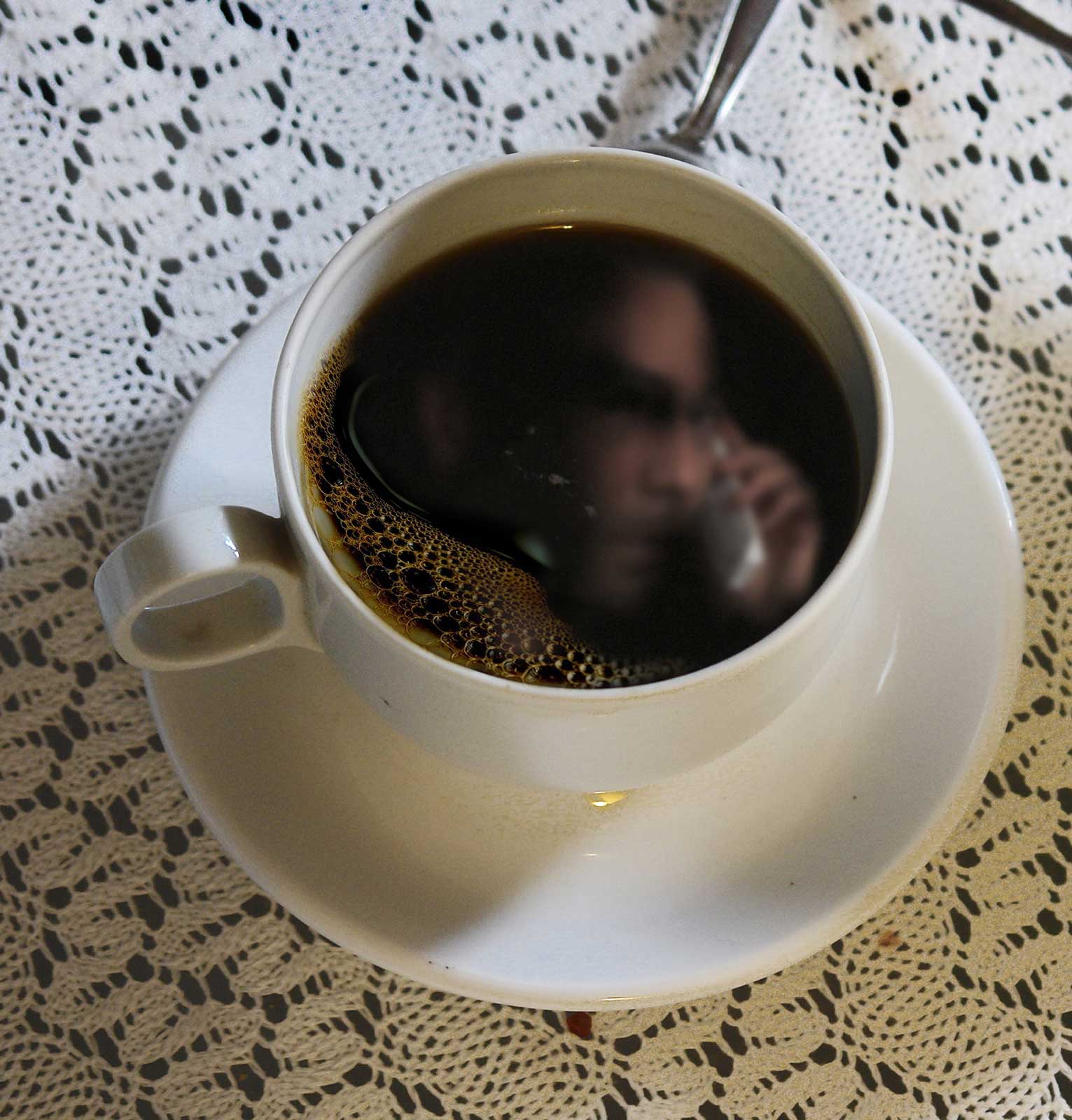
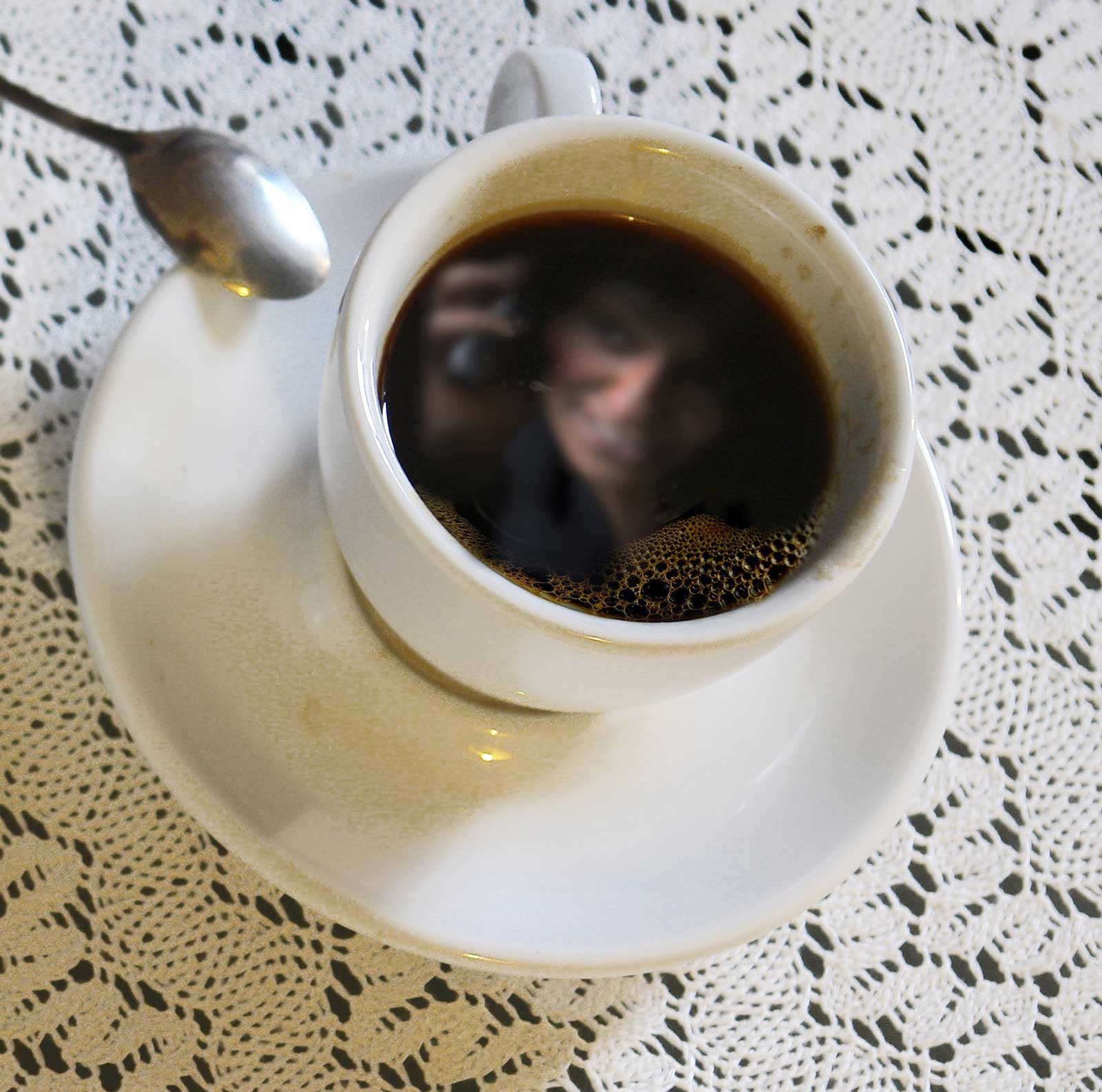
But look at the black surface of the coffee, that liquid mirror reflecting two faces — a man, a woman — and each on the telephone. Together physically, separated mentally. Sitting face to face around this table that should be a place of communion, but their voices address others, elsewhere, invisible, absent. The Phone Lovers — the title plays on ambiguity, they are in love with telephones more than each other, or perhaps they are lovers connected by telephone to their true lovers who are elsewhere, or perhaps simply that the telephone has installed itself as a third person in all our relationships, permanent intruder who interrupts who distracts who steals the attention that should go to the one who is there face to face in flesh and bone.
September twenty fourteen and the iPhone 6 had just been launched that very month, larger screen, six inches, even more comfortable for scrolling for reading for watching videos for everything except talking to the person sharing your table. The word « phubbing » — phone snubbing, snubbing someone with your telephone — was entering the vocabulary, a phenomenon so widespread it needed to be invented a name for. Everywhere in cafés restaurants public transportation you saw it, people together but alone, silent couples their telephones raised like walls between them, families at restaurants where everyone looked at their screen instead of at each other.
The spoons remain unused beside the cups, a subtle but revealing detail — nobody drinks this coffee, too busy with their telephone conversations. The ritual is emptied of its meaning, reduced to a setting, a pretext for being together without really being together. And this lace tablecloth that evokes so much care so much love so much time invested to create domestic beauty, to embellish these daily moments of sharing, it becomes the silent witness to our relational bankruptcy, our inability to be present to each other even when we are physically side by side.
The reflections in the black coffee are accusatory, this liquid mirror shows us what we have become — ghosts of presence, physical silhouettes whose spirit attention consciousness have gone elsewhere, sucked in by those luminous rectangles we hold like talismans like prostheses like indispensable extensions of ourselves. And perhaps the telephone conversations are important urgent necessary, perhaps we really must take that call answer that message check that notification, or perhaps not, perhaps it is just the habit the compulsion the addiction that makes us prefer the virtual to the real, the distant to the close, the absent to the present.
Tragicomedy, that is how I saw this scene in September twenty fourteen, first funny then increasingly sad as I realized how normal it had become, how we all me included repeated this gesture hundreds of times a day, taking out the telephone even when someone is talking to us, checking the screen even in the middle of a romantic dinner, answering a text even while kissing someone. The hierarchy of attention had inverted — the distant virtual came before the close real, and we found it normal, we could no longer even see the absurdity of snubbing the person who loves us to talk to someone who is not even there.
This photograph did not shout, it whispered, simple minimalist composition — two cups, a tablecloth, reflections — but the whisper carried far because everyone immediately recognized the scene, everyone had already found themselves on either side of this table, now the phubber now the phubbee, now the one looking at their telephone now the one waiting in vain for eyes to look up toward him. Connected solitude, modern paradox — never had we been so connected to millions of people on the planet, and never had we been so alone facing those who share our table our bed our life.
Cornel Barsan
September 2014