Description
THE TUBES OF TREES
Unknown date (2019-2021), Paris
Between Microsoft where I had shown the eagle imprisoned in a transparent digital cage, and Escape Game that I would paint in February two thousand twenty-four and that would reveal that even nature had become binary code, somewhere in those years — perhaps two thousand nineteen, perhaps two thousand twenty, perhaps two thousand twenty-one, time had become even more blurred during the Covid pandemic that had locked us all up, isolated, confined — somewhere during those pivotal years when the world was definitively tipping into the all-digital era, I was walking in Paris as I had walked for fifteen, sixteen, seventeen years now, walked to observe the city that was constantly changing, transforming, modernizing, technologizing, screens everywhere, cameras everywhere, sensors everywhere, and I walked and observed and tried to understand what was happening, where we were going, and above all I wondered: is coexistence possible? can nature and technology live together? or must one necessarily destroy the other? must one dominate the other? must one completely replace the other?
And this question that had haunted me for months, for years perhaps, this question I carried with me in my endless walks through Paris, observing the trees that still survived in Parisian streets despite pollution, despite concrete, despite everything, observing electric cables, pipes, conduits, tubes of all kinds that ran along walls, that formed the invisible infrastructures of the modern city, and one day — I no longer know exactly when, perhaps two thousand nineteen, perhaps two thousand twenty — one day walking in a Parisian street I saw something that struck me with the force of a revelation: I saw transparent tubes running along a wall next to a tree, and these tubes did not hide the tree, they did not replace it, they did not crush it, they were just there, beside it, transparent, discreet, respectful, and the tree was there too, and they coexisted, they shared the space, and this simple image triggered something in me, opened a possibility I had not really considered before after Microsoft and its technological pessimism: the possibility that coexistence was possible, that nature and technology could dialogue, that the organic and the artificial could mutually respect each other, that tubes and trees could live together without one necessarily having to destroy the other.
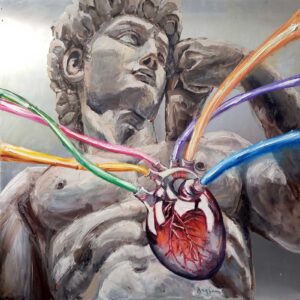
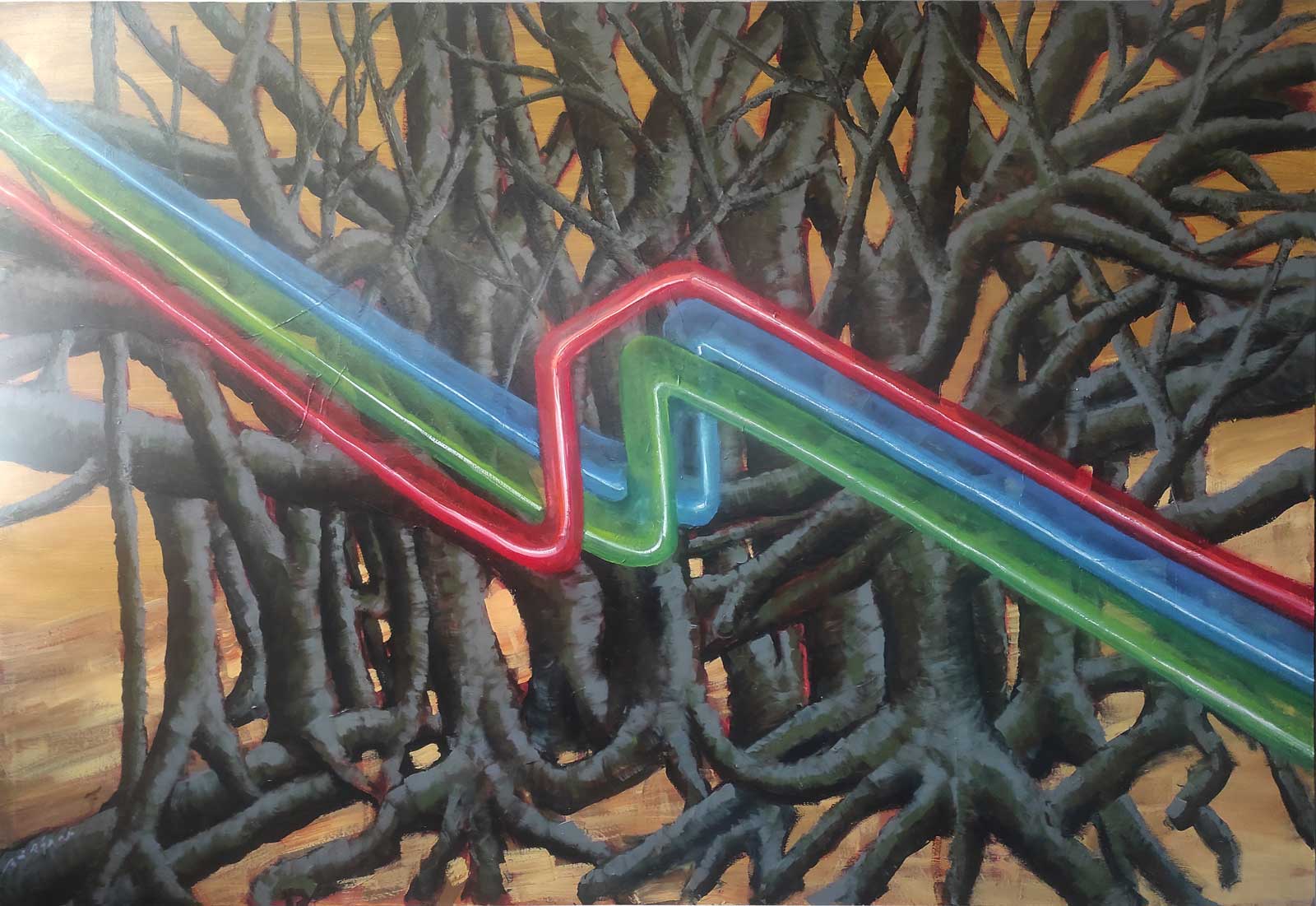
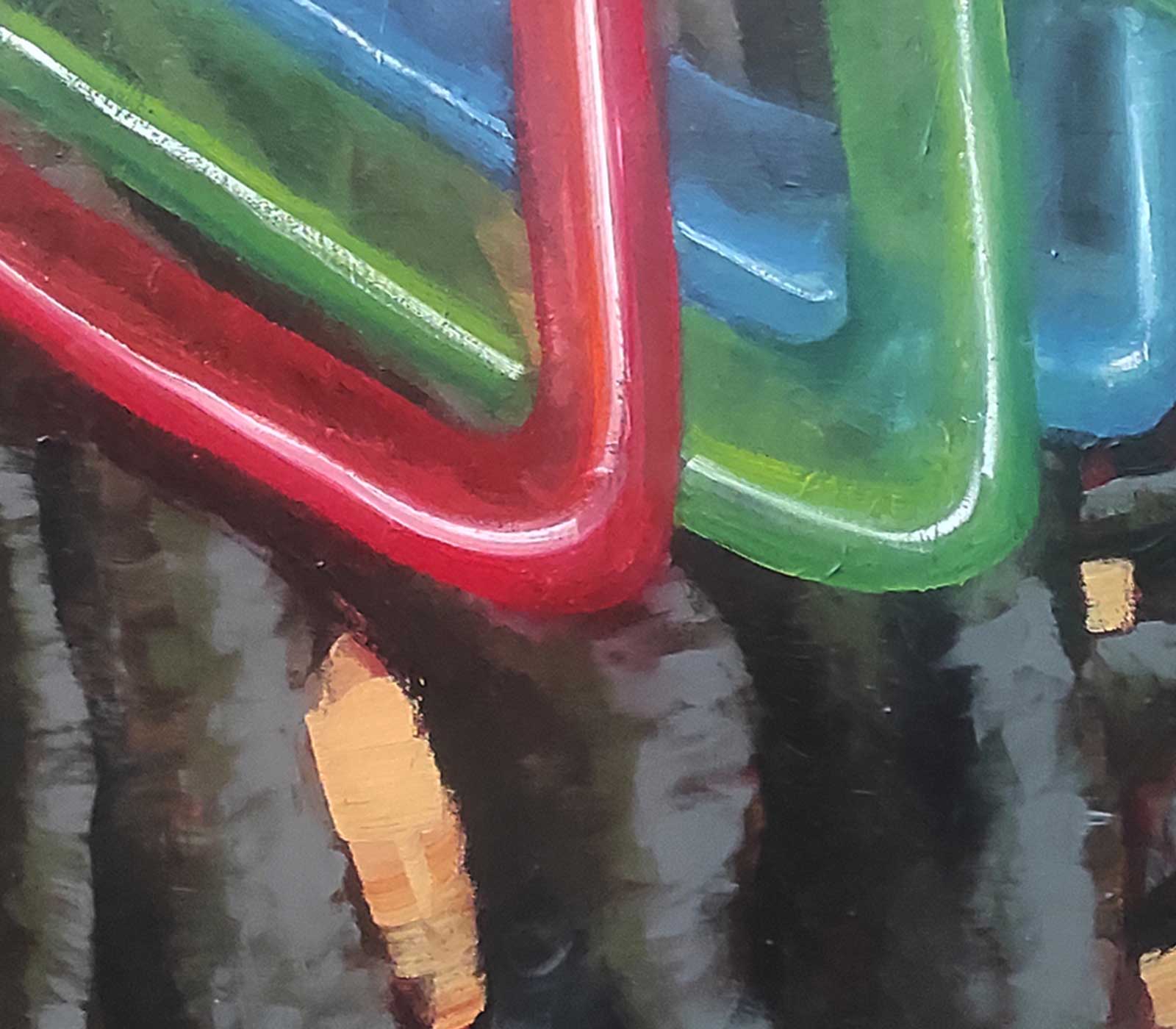
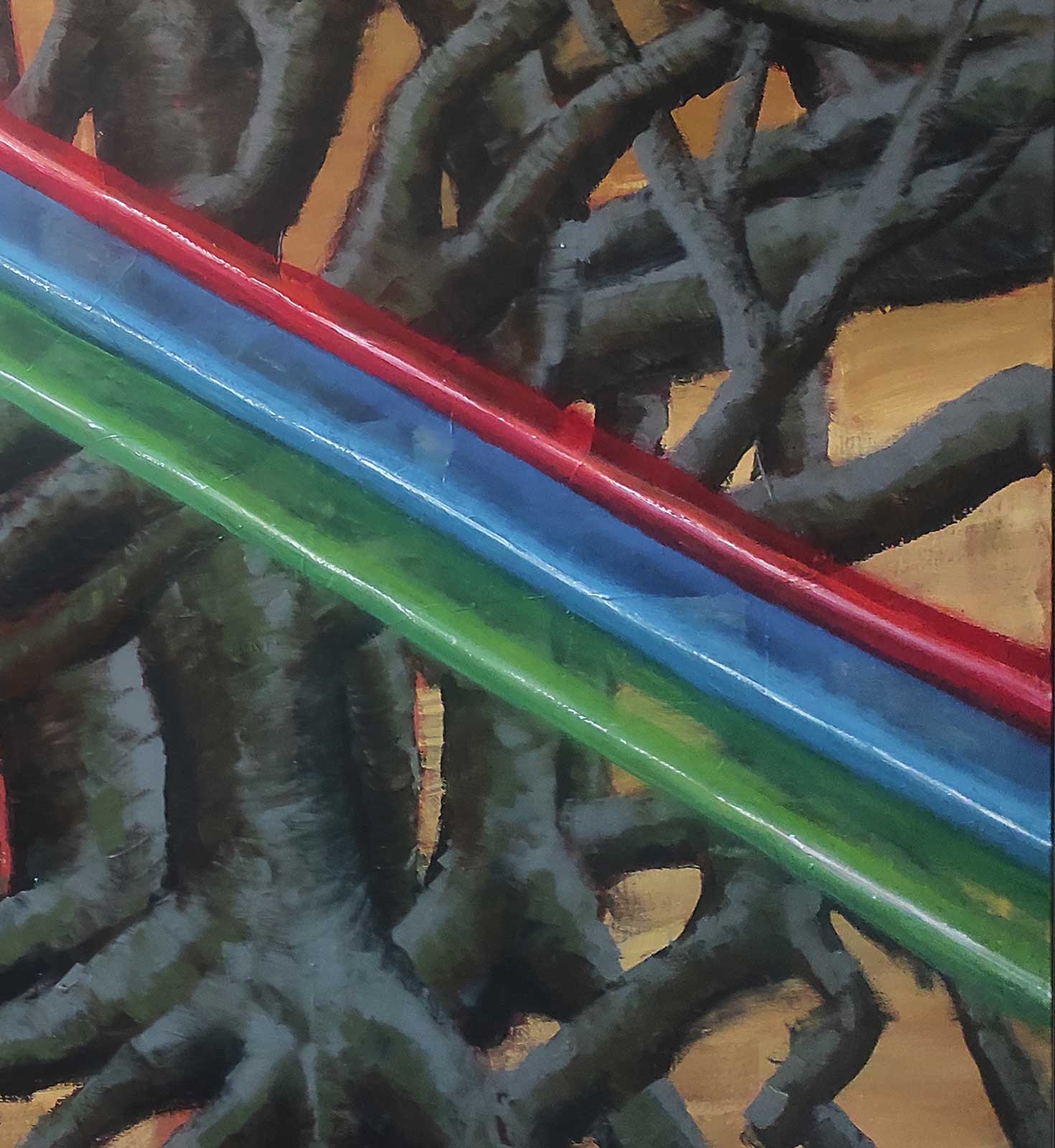
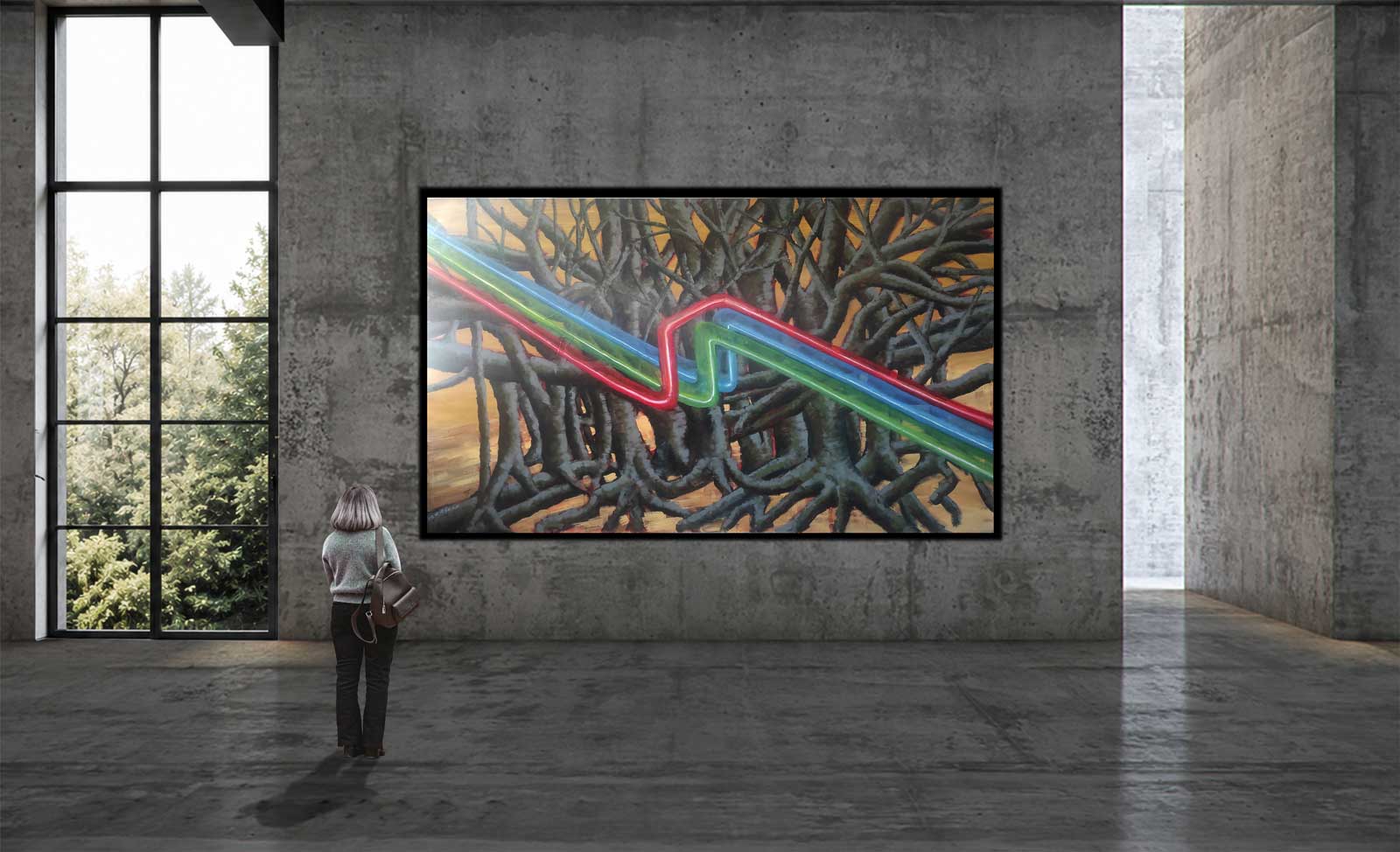
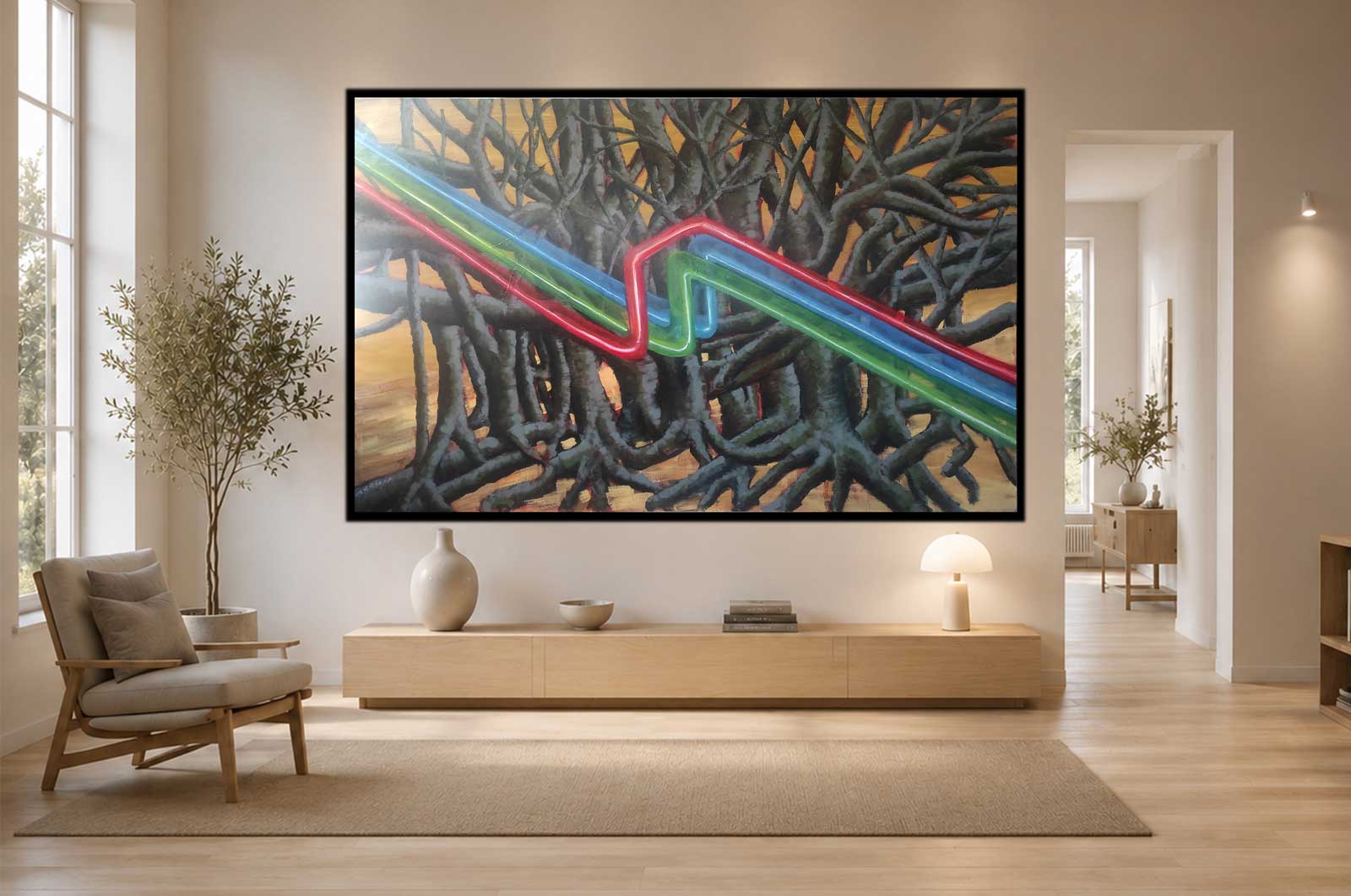
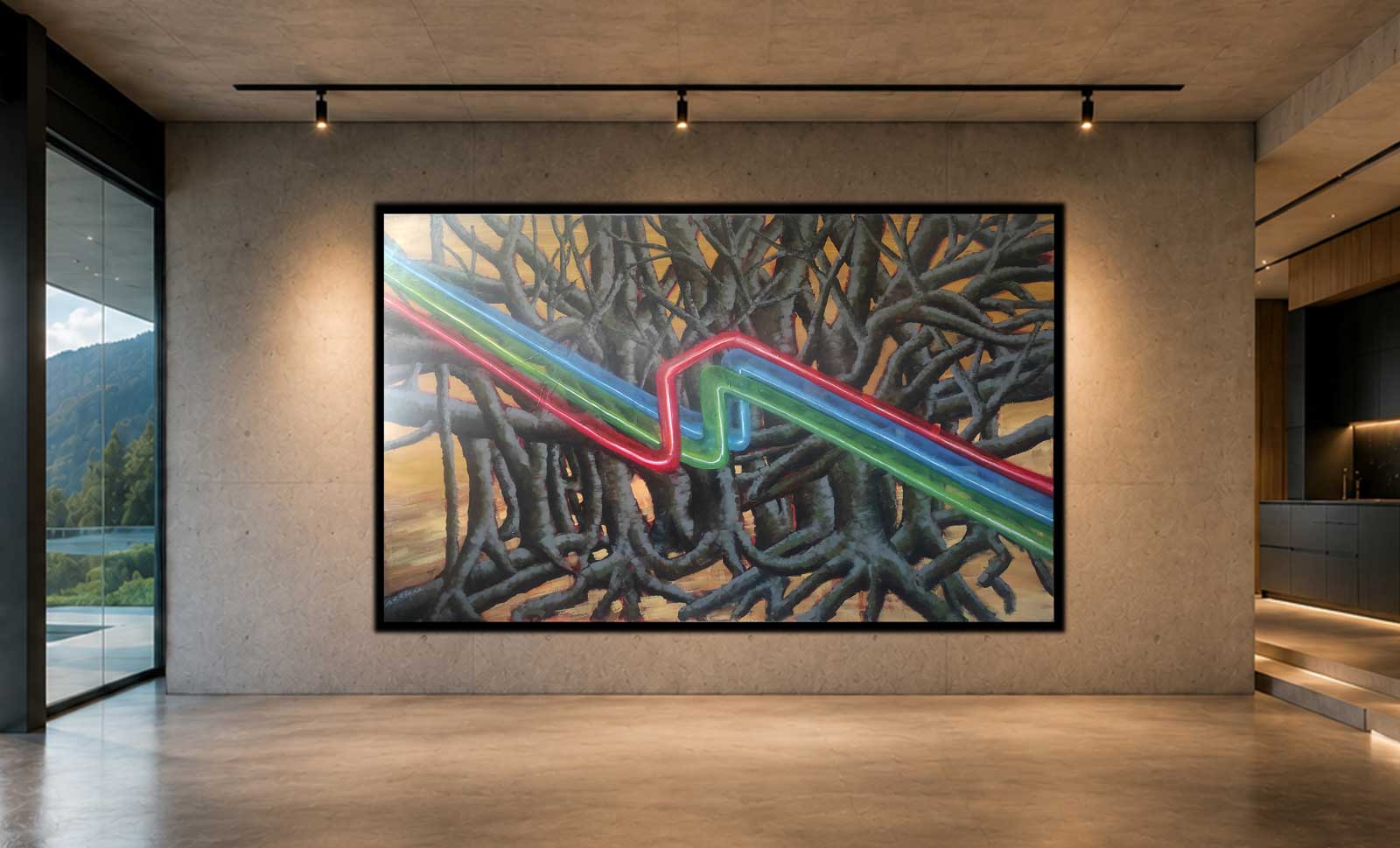
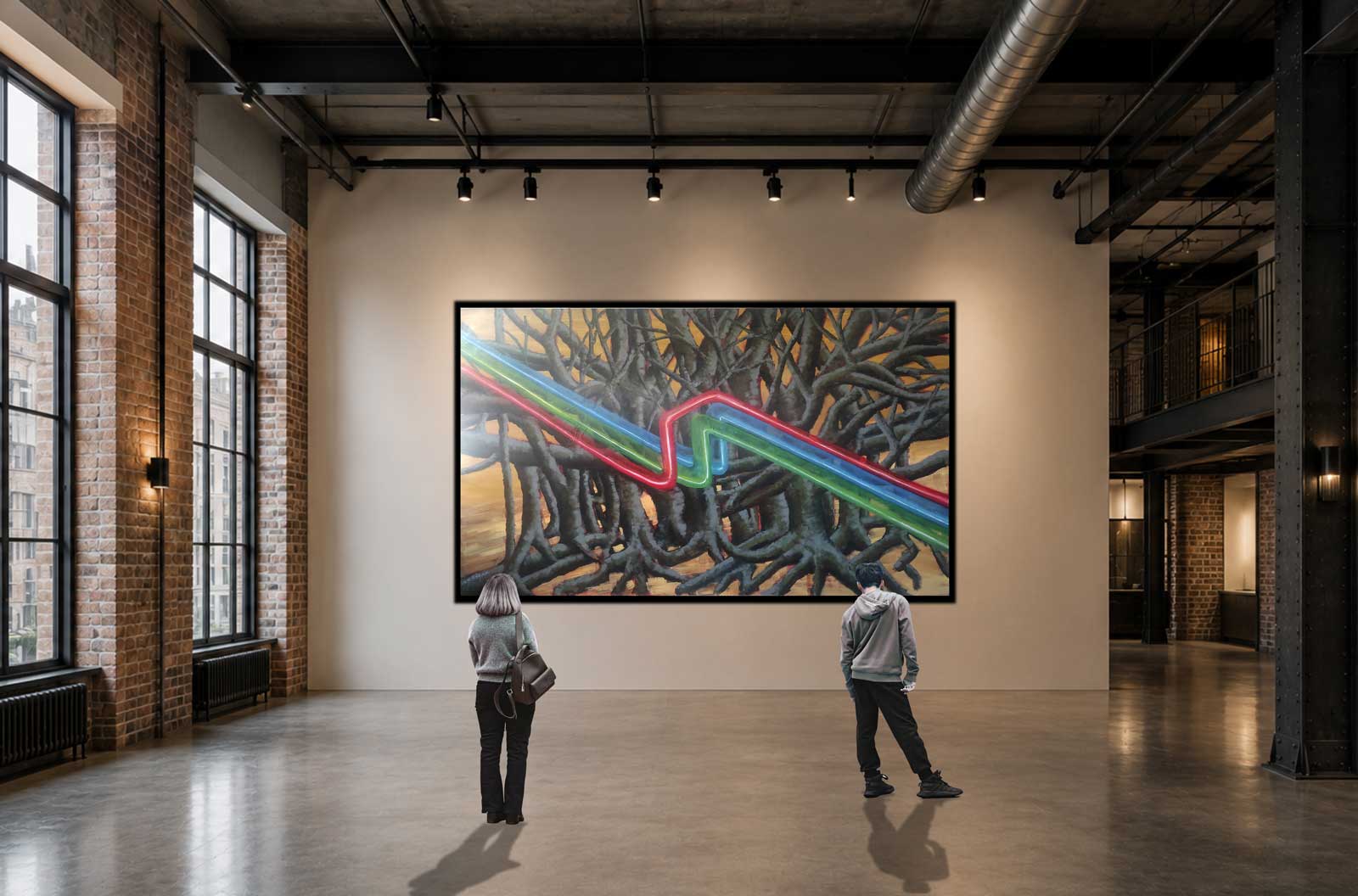
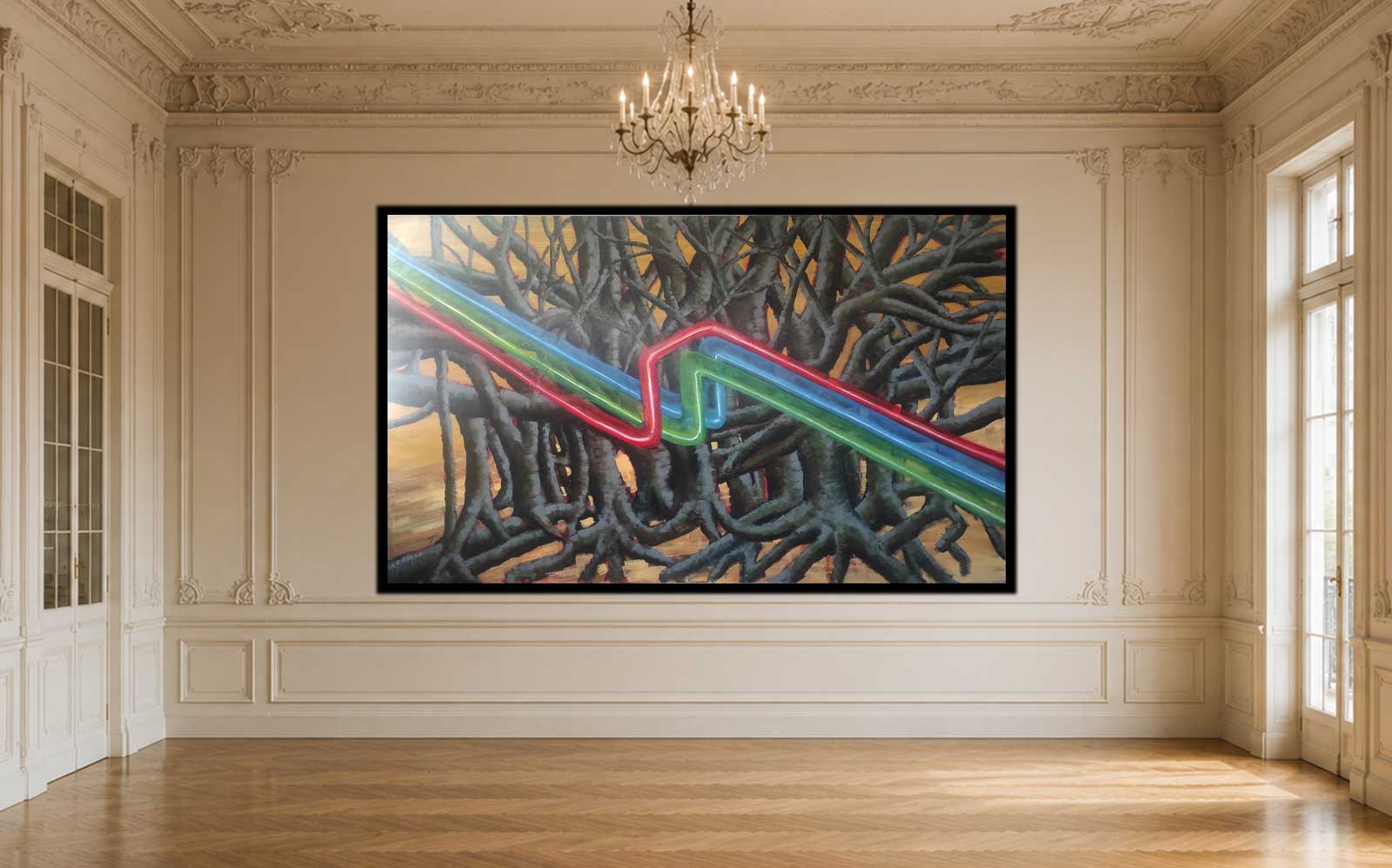
And I began to paint The Tubes of Trees — the tubes of trees, the tubes and the trees, the tubes with the trees, the tubes that learn from trees, the tubes that imitate trees, the tubes that respect trees, the tubes that dialogue with trees, a painting that would be a proposal, a hypothesis, a dream perhaps of possible harmony between two worlds that seemed incompatible, antagonistic, destined to confront each other until one triumphed and the other disappeared, the tree trunks I painted first, these vertical, organic, living cylinders, with their rough bark, their strong physical presence, solid, rooted, and then the technological tubes I superimposed on the trunks, that I intertwined with them, that I made dialogue with them, tubes painted in vivid colors — red, green, blue — the primary colors of light, the RGB colors of digital, but these tubes were not opaque, they were transparent, semi-transparent, you could see through them, you could see the tree trunks behind the tubes, the tubes did not hide the trees, they did not replace them, they did not erase them, they let them be seen, they respected them, they coexisted with them.
This transparency changed everything, completely transformed the meaning of the painting, if the tubes had been opaque, the painting would have been an image of domination — technology crushing nature, hiding it, replacing it — but because the tubes were transparent, the painting became an image of dialogue, of coexistence, of mutual respect, of permeability between two worlds that could see each other, recognize each other, share space without destroying each other, and the tubes effectively learned from the trees, it was visible in the composition, the tubes adopted the shape of trunks, they were cylindrical like trunks, they were vertical like trunks, they rose like trunks, they conducted flows like trunks — not organic sap, but electricity, data, information, technological fluids — but it was the same function, the same structure, the same principle: vertical cylinders that conduct something from one point to another, that allow circulation, transport, communication, life whether organic or technological.
It was biomimicry, technology imitating nature, recognizing that nature had developed through millions of years of evolution optimal, efficient, elegant solutions, and that rather than brutally imposing artificial, geometric, rigid forms, technology could be inspired by nature, learn from it, reproduce its forms, its structures, its principles, and thus integrate rather than impose itself, dialogue rather than dominate, coexist rather than replace, and The Tubes of Trees proposed this alternative vision, this fragile, uncertain but real possibility that another world was possible, a world where technology would not necessarily be the enemy of nature, where digital would not necessarily have to destroy the organic, where tubes and trees could live together, respect each other, dialogue, create a new form of beauty, a hybrid beauty perhaps, artificial-natural, technological-organic, but a beauty nonetheless, a harmony nonetheless, a coexistence nonetheless.
And painting this canvas — probably during one of the Covid lockdowns, probably alone in my studio for weeks without seeing anyone, the whole world locked up, technology become more necessary than ever to communicate, to work, to survive even — painting this canvas I knew well that it was perhaps an illusion, that in reality technology often imposed itself brutally, destroyed nature, replaced the organic with the artificial without scruples, without respect, without dialogue, I had shown it in Microsoft, I would show it again in Escape Game, but The Tubes of Trees proposed something else, an alternative, a different path that perhaps did not yet exist but that could exist if we wanted it, if we chose it, if we decided that coexistence was preferable to domination, that dialogue was preferable to imposition, that mutual respect was preferable to brutal replacement, the transparent tubes let the trunks be seen, the vivid colors dialogued with the natural tones, the technological cylinders imitated the organic cylinders, the two worlds shared space, together, side by side, without destroying each other, for now, in this painting, in this dream, in this proposal.
The Tubes of Trees. Dialogue was possible. Perhaps. If we wanted it. If we chose it. If we finally learned to respect what was there before us, what lived beside us, what could survive after us if we did not completely destroy it first, tubes and trees, together, transparent, dialoguing, coexisting, it was possible, perhaps, I wanted to believe it, I needed to believe it, I had painted this belief, this possibility, this fragile hope, and it would remain there, on the canvas, invisible in my studio, but existing, nonetheless, despite everything, witness to a dream of coexistence that perhaps did not exist in the real world but that existed at least here, in painting, in art, in imagination, in hope, always.